
Modern clothing is shit. It falls apart after the first wash. It doesn’t fit right. Fabrics are literally made of paper and I’m not exaggerating. Google “viscose” and check how much of your wardrobe is made of that stuff.
There’s even a term for it. Pronto-moda. It’s Italian for fast fashion. You buy something, wear it a few times, toss it, buy again, repeat. And the older I get, the more I hate that cycle. Shopping is already a pain. But what really gets me is spending money on something that falls apart in three months. For a long time I figured that’s just how things are now. Turns out, it isn’t.
Some companies looked at this problem and decided to do something about it. Uniqlo is one of them. If you never heard about this company, it’s a Japanese clothing brand that makes simple, everyday basics built to actually last. They built a multi-billion dollar clothing company by completely ignoring fashion.
But not only that. This guy here is Tadashi. He was born in a Japanese mining village and his father wanted him to inherit the family clothing business. Which he didn’t. Instead, he founded his own clothing company that was built on a couple unusual principles, that I’m gonna’ tell about in a moment.
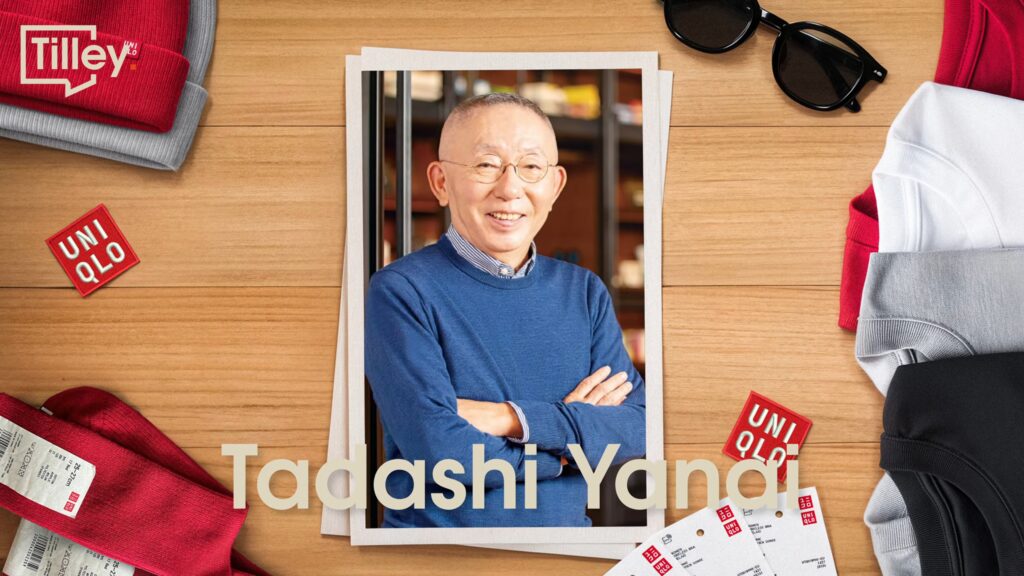
Tadashi is an interesting mix of traditional Japanese values and American pop-culture influence. And this is the beginning of a story about how he built a company that makes what I would call, just good, almost boring clothing that seems to have conquered most people’s wardrobes…including mine. But first I need to give you a little bit of context.
Where It All Started
Post-war Japan. The country is in ruins, the economy is destroyed, people are trying to rebuild their lives. And to make things harder – the country is under American occupation. American soldiers on the streets, American culture flooding in through every crack – movies, music, jeans, rock and roll. Japan is trying to find itself. And it’s doing so under the watchful eye of a country that couldn’t be more different.
In a small mining town called Ube, there lives an ordinary family – tailor Hitoshi Yanai, his wife, and their little daughter. At a time when most families are just thinking about how to make ends meet, Hitoshi opens a small men’s clothing store on the ground floor of his home. He calls it Ogori Shoji. It’s a store built on tradition, and the belief that a man should dress properly. Classic Japanese values.
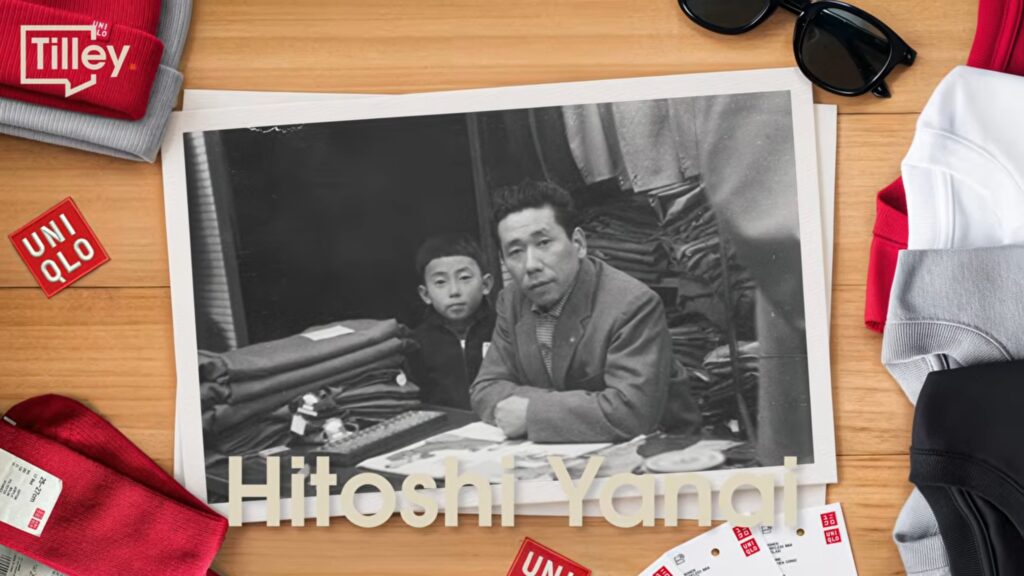
In 1949, the Yanai family grew. Their only son, Tadashi was born. He’s the one who, decades later, will become the founder of Uniqlo and the richest man in Japan. But for now, he’s just a boy growing up above his father’s store, watching suits and work clothes go by.
The relationship between father and son was complicated from the start. Hitoshi was a tough man. He wanted to raise Tadashi to be a true heir, strong and driven. He was strict, sometimes too strict, because he believed that was the only way the boy would grow up worthy of carrying on the family business. But Tadashi grew up to be a very different person – gentle, curious, drawn to things his father never cared about. The American influence that had flooded post-war Japan didn’t pass him by. It shaped him. He became the first student at his school to wear a button-down white shirt and Converse sneakers. For his strict tailor father who sewed traditional suits, it was almost a sign of disrespect.
After high school, Tadashi left for Tokyo. He enrolled in the economics and political science program at Waseda University. But Japan in the late 1960s was not a quiet place. Universities across the country were erupting in the Zenkyōtō protests. Students were striking, occupying campuses, and protesting against rising tuition costs, American military presence in Japan, and other things.
Waseda University was no exception. It was drawn into protests that paralyzed the academic calendar. But Tadashi didn’t really care for any of that. He studied without much enthusiasm – skipping lectures and playing mahjong. And while his groupmates were busy protesting and clashing with police, he was more interested in the new wave of hippie culture and travelling. During the strikes, when classes were suspended and the campus was in chaos, a door opened for him. He began travelling through Hong Kong, Bangkok, San Francisco, London, and other cities.
He watched how people lived in different countries, how they dressed, what they needed from clothing every day. He saw that in the West, there was an entire culture of simple, affordable, comfortable everyday clothing – Gap, jeans, basics that everyone wore without exception. In Japan, that didn’t exist. And somewhere in the back of young Tadashi’s mind, an idea began to form that would change everything. He didn’t know it yet but the seed had been planted.
He eventually returned to Japan, finished his degree – barely – and after a short, forgettable stint at a large retail chain called Jusco, he did what he’d been resisting for years. He went home. In 1972, he joined the family business. Not because he wanted to, he had a very difficult relationship with his father and felt sandwiched between an older sister and two younger sisters. He went back because there was nowhere else to go. But sometimes, the most important decisions in life don’t feel like decisions at all.
The First Step and the First Real Success
By the time Tadashi joined Ogori Shoji, the business had already grown. It wasn’t a small tailor’s shop anymore. It was a whole chain of men’s suit stores across Yamaguchi Prefecture. His father had put years of work into building it, and was now gradually handing more responsibility over to his son. Tadashi started getting deeper into the business – carefully at first, then more and more. And the deeper he got, the harder it became to shake one thought that kept nagging at him.
His father sold suits and business wear – clothes for special occasions. But Tadashi kept looking at the people around him and thinking about something else. What do they wear every day? What do they put on in the morning when they go to the grocery store, take a walk with their kids, or just hang around the house? In Japan in the 1980s, there was almost no answer to that question – affordable, quality basics for everyday life simply didn’t exist on the market. Nobody was filling that gap. Nobody was even really thinking about it.
In 1984, Tadashi opened the first store under the name Unique Clothing Warehouse in Hiroshima. Yes, it’s the same Hiroshima you’re probably thinking of right now. The city that, just decades earlier, had been devastated by the atomic bomb. But by the 80s, it was a place of rebirth, and that’s exactly where Tadashi decided to start his revolution.
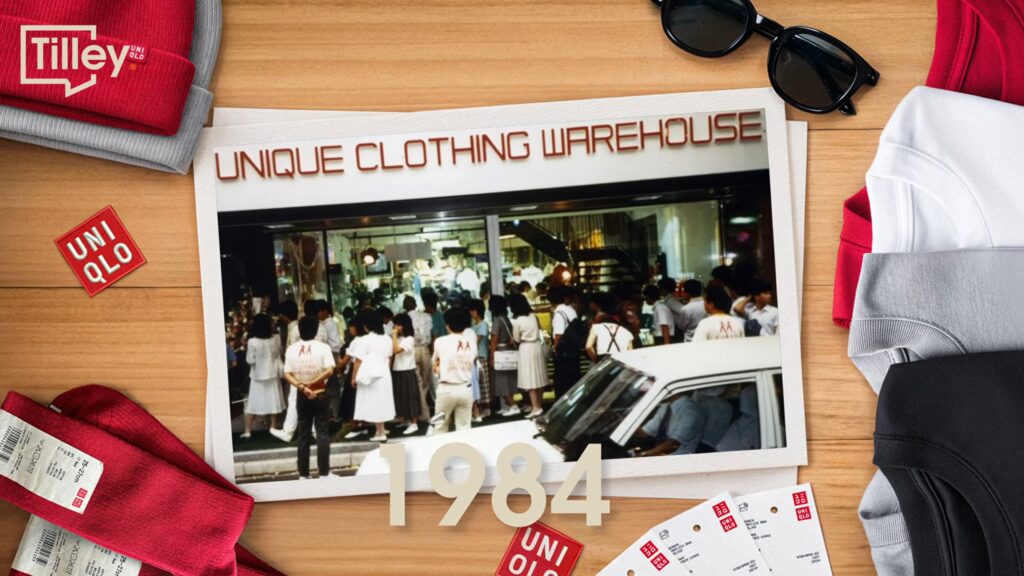
The concept of his first store was simple – lots of variety, affordable prices, and a philosophy with no divisions by gender, age, or size. No complicated collections, no trendy fluff, no clothes that would be out of style in a month – just clothing that people actually wear every day. The store was an instant hit. People came in droves, because they were finally getting what they’d been missing for so long.
The success of the first store energized Tadashi and he started thinking bigger. He didn’t just want to sell other people’s clothes; he wanted to make his own – to control the entire process from design to sale.
In the late ’80s, he tracked down Mickey Drexler, the president of the American company Gap, and literally asked him to share his experience. It was a bold and unexpected move – a young Japanese entrepreneur flying to meet one of the world’s retail leaders just to learn from him. Drexler agreed. He explained to Tadashi the SPA model – one company designs the clothes, manufactures them, and sells them through its own stores. No middlemen, no extra markups – just full control over quality and price at every step. Tadashi returned to Japan with a clear idea: he would build the Japanese version of Gap – only better.
Then, in the early ’90s, Japan entered an economic recession. People started counting every yen, cutting spending, looking for cheap and practical clothing. Tadashi saw the moment clearly and made a move that would define Uniqlo’s next decade. He shifted production to China. Lower costs, higher volumes, prices that ordinary people could actually afford. For most companies, the recession was a time of crisis – for Uniqlo, it became a time of real takeoff. They were offering exactly what people needed in hard times. By the mid-’90s, Tadashi had over two hundred stores across Japan.
And then something happened that changed the way Japan saw Uniqlo forever. The company released a simple fleece jacket – warm, lightweight, no unnecessary details or trendy features. Just a great jacket at an honest price – ¥1,990, or about $15. Roughly one in four Japanese people bought it. It instantly became a cultural phenomenon. The whole country was walking around in the same Uniqlo fleece jacket, and nobody was embarrassed about it. In fact, it became a symbol of common sense.Now Tadashi could safely say that Japan was conquered. And the logical next step seemed obvious. But obvious and right are not always the same thing.
The World Dream and a Painful Wake-Up Call
Tadashi dreamed of global expansion, but before betting the entire company, he needed proof. To see if the world was actually ready for Uniqlo, he sent a small team to New York City for a “guerilla” experiment. By “guerilla,” I mean no fancy focus groups or expensive market research. Just a small team, a camera, and a product. The Uniqlo team brought a box of their popular fleece jackets to Washington Square Park and simply started filming people’s reactions. People were thrilled. Tadashi watched the footage and said simply: “We have a shot.” In 2001, the first London store opened. Then 20 more. Then Shanghai. Then three stores in New Jersey. It all looked like the beginning of a triumphant march. Just it wasn’t.
Over the next few years, 16 of the 21 London stores had to close. Things weren’t going well in Shanghai. All three American stores shut down within a year. The company that had conquered all of Japan couldn’t gain a foothold anywhere else. And the reason wasn’t the product. It was the assumptions behind it.
Uniqlo made the classic mistake. It assumed that what worked at home would automatically work everywhere. The clothes were cut for Japanese body types, and American and European shoppers simply couldn’t find their size. The stores opened not in city centers but on the outskirts – in places with no foot traffic and no brand recognition. In Japan, everyone knew Uniqlo and made a special trip to get there. Abroad, it was just an unfamiliar Asian brand in a strip mall off the highway and shoppers walked right past.
If that wasn’t enough – while the international expansion was already in freefall – a second crisis hit from a completely different direction.
Customers started complaining about quality. While the company had been cutting prices and scaling up production in China, the clothes had gotten worse – fabrics wore out fast, seams split, garments lost their shape after a few washes. People started calling Uniqlo “cheap junk.” For a brand that had built its identity around quality basics, that was a punch right to the gut.Tadashi found himself at a crossroads that he’d built himself. The move to China had fueled the growth but it had also diluted the thing that made growth worth having. Behind him – failure abroad. Ahead – a loss of trust in Japan. It seemed like the company had hit a dead end from both directions at once. But it was exactly at that moment that he made the decision that changed everything.
Technology as the Answer to Everything
In 2004, Tadashi published what he called the Global Quality Declaration. It was a public signal – the era of cheap is over, the company is changing. But words without action mean nothing, and Tadashi knew that better than anyone. Alongside this, he formed a partnership with the Japanese company Toray – one of the world’s leading developers of synthetic fibers and technical materials. This was an alliance between two companies that decided to invent a new kind of clothing together – not beautiful, not fashionable, but functional. Clothing that solves real problems for real people.
The first result of this partnership was Heattech. The idea was simple: make thin underwear that warms you like a thick sweater. Special microfibers absorb moisture from the body and convert it into heat – so a thin t-shirt keeps you several times warmer than regular cotton. They planned to sell 1.5 million units. They sold far, far more. Heattech was followed by AIRism – fabric for hot weather that wicks moisture and keeps you cool. Then Blocktech – waterproof jackets that still breathe. Every technology solved a specific problem that people face every day – not on a runway, not in a magazine, but in real life.This is when something fundamental shifted. Uniqlo stopped being a clothing store. It became a technology company that happened to make clothes. While Zara drops a new collection every two weeks – Uniqlo spends years perfecting a single technology until it’s genuinely the best. H&M chases trends – Uniqlo ignores trends and makes things that will still be relevant ten years from now. In 2013, Tadashi gave this philosophy a name – LifeWear. Clothing for life. Not for the display window. For the person wearing it, every single day.
A Second Chance and This Time, for Real
So, reputation was restored. Technology in place. Philosophy defined. Now there was just one thing left – try going global again. And this time, do it right.
In 2006, Tadashi opened a flagship store in New York’s SoHo. Not on the outskirts – right in the heart of one of the world’s premier fashion districts. Sizes adapted for American shoppers. Honest prices. Heattech on the shelves. And most importantly – Uniqlo didn’t come as a cheap brand from Asia, but as a company with real technology and a real philosophy.
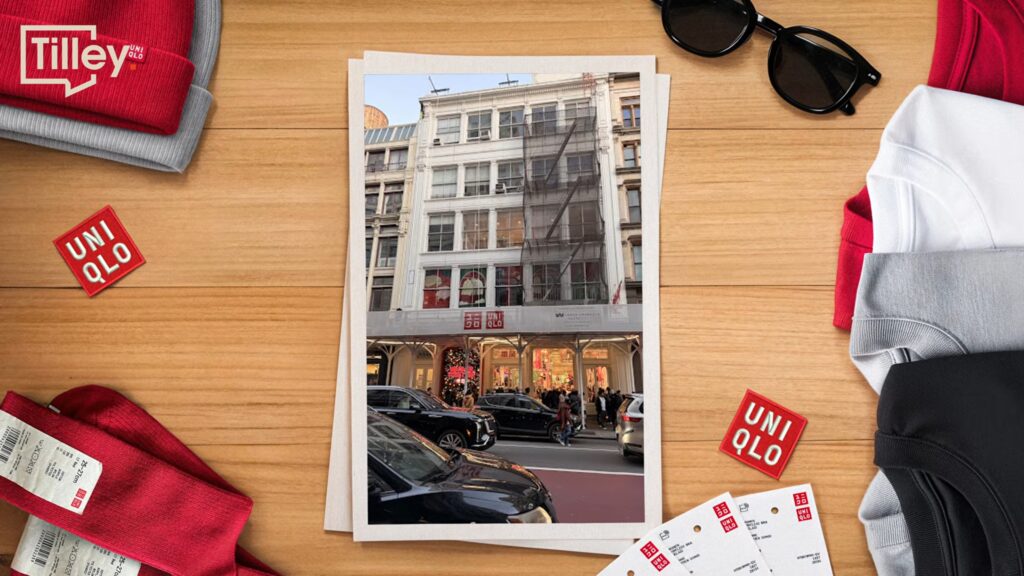
New Yorkers responded immediately. One customer – a finance guy – came in so regularly that employees started joking: does he even wash his clothes, or does he just buy new ones every day? The hipster crowd loved the slim-cut jeans. People from all walks of life – students, managers, retirees – found something for themselves here. People called Uniqlo affordable tech fashion, and that wasn’t a marketing line – it was an honest description of what the company actually did.
After New York, Tadashi changed the expansion strategy. The new rule was simple: first, one strong flagship in an important city. Only then, scale. Slow, deliberate, confident. Today, Uniqlo operates in more than 2,400 stores around the world.Uniqlo’s parent company, Fast Retailing, reported annual revenues surpassing $20 billion – overtaking Gap, the very company whose president Tadashi had once flown across the world to learn from. The student had surpassed the teacher. He did it by taking it apart and rebuilding it from scratch.
What’s Next and Why It’s Not so Simple
Uniqlo today is a company on the rise. Tadashi openly talks about the goal of becoming number one in the world, surpassing Zara and H&M. Looking at the company’s trajectory, that no longer sounds like arrogance – it sounds like a concrete plan. But standing in the way of that goal are two serious issues.
The first one is internal. Tadashi Yanai is 77. The question of succession remains open. And here’s where his American influence shows up one last time – since Tadashi has explicitly rejected the concept of Asian inheritance. He once said that he doesn’t see his sons as suitable candidates. His philosophy is meritocracy beyond family – leadership should go to the most capable person, regardless of bloodline or background. In a country where family succession is still deeply embedded in business culture, that’s a radical stance. The boy who grew up wearing Converse in a tailor’s house never stopped pushing against the tradition he was born into. His right-hand man is COO Daisuke Tsukagoshi – but no official successor has been named. Uniqlo is largely the story of one man’s vision. What happens to that vision when Tadashi’s gone – nobody knows yet.
The second problem is external. It started with a decision Tadashi made decades ago: move production to China. That bet powered Uniqlo’s rise – and turned into its biggest vulnerability when Trump’s first-term tariff wars began.
When Trump first hit China with tariffs, Uniqlo did the rational thing: diversify. More production went to Vietnam, Bangladesh, Cambodia, Indonesia – the classic “China+1” play nearly every global brand followed. But when Trump returned to the White House, the rules changed again. New 2025 tariffs extended to key Southeast Asian exporters too, the very countries Uniqlo and others were using as backups.
On paper, Fast Retailing says the direct impact is “limited” – maybe a low single‑digit hit to profit. But the signal is loud: in a world where one administration can redraw the trade map overnight, every new factory location carries fresh political risk. And right now, there is no clear answer about where the factories go next.
Uniqlo has weathered crises before. Each time, it found a way forward. But the challenges now are on a different scale – and the answers have yet to be found.
Personally, I’m a huge fan of what Uniqlo does. Have you ever worn their stuff? Is there anything that surprised you – good or bad? Let me know in the comments – I read everything. And if you like this story and, in general, enjoy this kind of content, take a look at another one about Barilla. It’s another example of how a family business became global and shaped the way people associate Italy with pasta, family traditions, and everyday rituals around food.