
- You're stuck in firefighting mode, putting out daily customer crises instead of growing your business
- Customers get frustrated because they have to repeat themselves every time they interact with your company
- You struggle with getting customers to come back for a second or third purchase
- Your team is overwhelmed, constantly buried under support tickets, emails, and phone calls
- Most valuable customers are leaving, and you don't know why
For B2B teams doing €1M to €50M in revenue
Are your best customers silently slipping away?
Losing customers isn't inevitable. It's usually a sign of broken internal processes. We help you understand why customers leave, automate support, and build a loyalty system your team will actually use.





Does this sound familiar?
What changes when your customers stop leaving
- Move from reactive crisis management to proactive customer growth
- Create a seamless experience where customers feel known and valued
- Build a base of loyal customers who can't wait to buy from you again
- Simplify support and keep your team from burning out
- Know exactly why customers stay and why they leave
Is this for you?
Built for teams losing customers they shouldn't be
- You're a B2B company or high-ticket B2C business
- Customer churn is costing you real revenue and you know it
- Your support team is overwhelmed and processes are inconsistent
- Your annual revenue is above €1M / $1M
- You're a solo founder with no team yet
- You think your processes are too unique to standardize
- Your revenue is under €1M / $1M

A message from Jeff
 Founder of Muncly
I made all the mistakes so you don't have to.
Dear visitor,
I've spent years helping businesses build customer success and support systems that actually work. Most of my clients come to me after losing customers they shouldn't have lost, with a support team drowning in tickets and no clear picture of why people leave.
Unlike big agencies, you're not just a number to me. I work directly with you to implement proven, personalized strategies, not push generic off-the-shelf software. Every engagement starts with one question: where are you losing customers, and what's the fastest way to stop it?
Every engagement is hands-on, direct, and built around your specific business context.
 Founder of Muncly
How it works
Four steps from frustration to loyalty
No lengthy retainers, no vague deliverables. A clear engagement built around your customer retention goals. Typical timeline: 4 to 12 weeks from first call to a fully operational retention system.
01
Consultation Call
We discuss your business, customer challenges, and goals. You leave with a clear picture of what's possible and a written summary of what we discussed. No obligation to continue.
02
Customer Journey Assessment
We map your customer journey end-to-end and pinpoint friction points and missed opportunities. You get a visual audit showing exactly where customers drop off and why.
03
Action Plan
You receive a prioritised, written playbook with specific steps, tools, and team routines tailored to your business. A strategy to improve retention and loyalty, not a generic template.
04
Implementation Support
Over 4 to 12 weeks, we work alongside your team to make it real. Service desk setup, process automation, training, and ongoing support to embed the change.
Client stories
What others say about working with us
“
We worked with Jeff to organize our sales process for a small sales and service team. He set up pipeline tracking, reports, and dashboards that give me a clear view of tasks, key accounts, and opportunities. The biggest change is visibility. I know what the team is working on remotely, and I have more control and predictability in managing opportunities and forecasting. I recommend working with Jeff and will turn to him again for the next step.
Aleksey Lyutikov
CEO · Meccanica Middle East
“
This is the second time I have worked with Jeff, now I know him for already 6 years. 6 years ago we built a very successful project for a local driving school, now we have created another sales system based on rules and tools. I should say that Jeff is an exceptional professional, a bit opinionated which creates a lot of debates, and sometimes we even argue, but all arguments are purely professional which I love and I definitely could recommend him as a great CRM professional.
Maksims Sroslovs
Marketing Director · Frame House Pre-fab Homes
“
Jeff helped us implement Salesforce to collect and manage leads coming from the stands in Japan. He built a simple process for tracking leads and worked closely with developers of other stand components to ensure the whole project was integrated and ran smoothly. We have worked with Jeff for a long time, and this is already our second project together. He is my go-to person for CRM implementations, and I would definitely recommend Jeff and his team.
Andris Zigurs
Business Development Executive · Vervo
“
Concrete working deliverables on time of what we needed. Extremely knowledgeable about the Salesforce platform. Incredibly smart team that understood our business and objectives right away. Highly recommended!
Julian Ciccale
Co-founder · Nextlane
“
Thank you to Jeff, Vishal, and their team for the support. They prepared the assets in record time, quickly adapted to our feedback, and handled every question with care. We definitely recommend working with them and look forward to the next set of assets together.
Tushar Hora
Global Technology Partnerships · Salesforce
Proven Results
Real results for real businesses

How we helped turn a 1–3%-margin business profitable with a self-service portal
Aleksey, the founder of the Meccanica Middle East, found me through my YouTube channel. A company based in Dubai. Their business is...
Read case study →
How we increased EBITDA by 2% with automation and system
A while back, Andris Zigurs reached out through the form on my website. He is the Business Development Executive at Vervo. Vervo...
Read case study →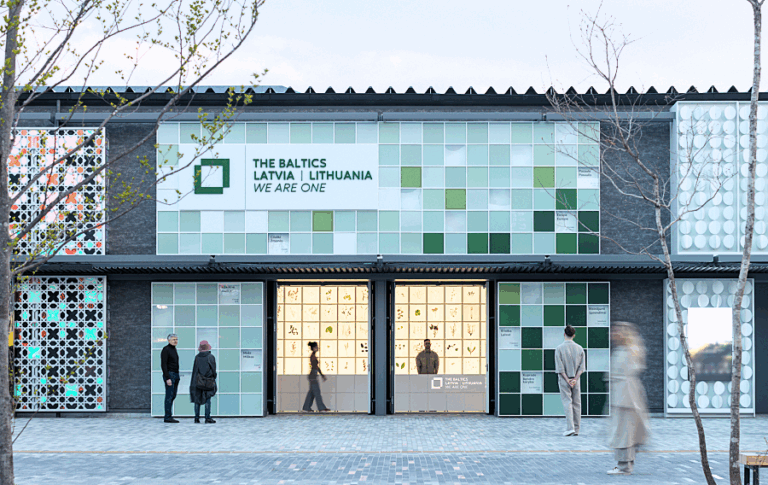
How we processed over a million leads at Expo 2025 for Latvia and Lithuania
In early 2025, the Investment and Development Agency of Latvia (LIAA) reached out to us. They were heading to Japan. LIAA had...
Read case study →
Rebuilding Proks’s sales for 62 markets
We had been sitting in a Proks conference room in Riga for about an hour when one of their senior leaders said,...
Read case study →
Rebuilding Mida’s sales for a field team on rooftops
We met Mida in Gargždai, Lithuania, at a roofing plant where you could hear the extrusion line from the car park. The...
Read case study →
How we moved a child safety nonprofit from Excel to Salesforce NPSP
A few years ago, a call came in from Centrs Dardedze. A nonprofit in Riga, Latvia. Around 25 people. They work with...
Read case study →
How We Scaled Revenue by 254% in 60 Days
A few years ago, I got a call from Credo Autoprieks. It’s a driving school in the Baltics, headquartered in Riga. They...
Read case study →
How we digitised Rio Verti’s catalogue in 26 iterations
A few years ago, a call came in from Rio Verti. It’s a family-owned Italian outerwear brand, founded in 1989 in Florence....
Read case study →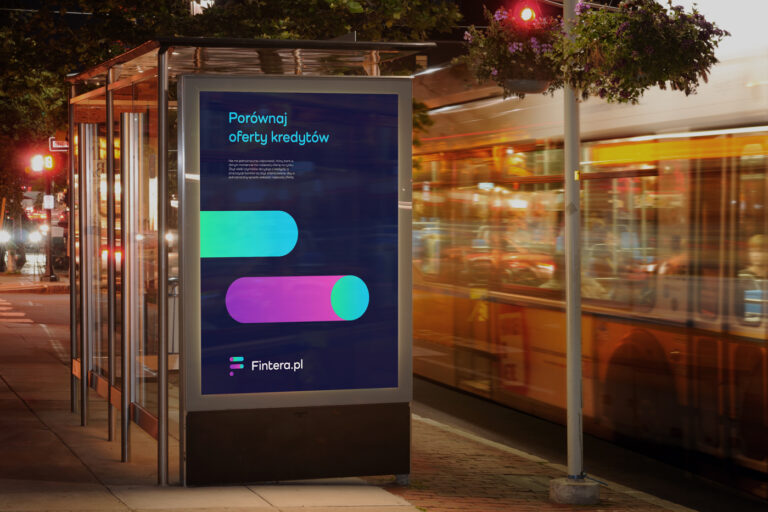
How we shipped a working mortgage portal for Fintera in months
I remember the first long conversation with the Fintera team in Warsaw. They wanted to rebuild their customer portal on Salesforce. Fintera...
Read case study →
Common questions
Everything you're probably wondering
Because it’s rarely about the product alone. Often, it’s because you’re not making customers happy. We’ve seen plenty of examples where the product was really, really good, but the company’s management and employees weren’t working with customers’ subjective perception of the product. One example I love to mention is Rory Sutherland’s story about the British government spending billions of pounds to cut railway travel time by 30 minutes, instead of making the journey more pleasant. People might have actually wanted the trip to last longer if the experience itself had been enjoyable. That shows how much perceived service and experience matter beyond the product alone.
That depends on a number of factors. One common issue is not engaging with customers proactively. But more importantly, depending on the product, you may need to change your strategy. I really like the Nespresso example: their capsules are only compatible with their own machines. Once you buy the machine, you have to keep buying capsules from that brand. That’s product design. While we don’t design products, we help design strategies that encourage repeat business, whether by introducing new products or finding other ways to keep customers coming back.
Often, it’s not the amount of work but the lack of process. For example, we worked with a company getting inquiries from email, their offline store, and phone. They had several mailboxes, and it was chaotic. We implemented a service desk tool to centralize all inquiries in one place, prioritized by first in, first out. Suddenly, the team had visibility, no more task-jumping, and far less stress. They actually ended up with more capacity than expected. Clear processes usually improve productivity more than tools or automation alone. Once the process is structured, you can add automation like knowledge bases supplemented with AI chatbots, so customers can instantly get answers without touching your support staff.
You’ll need reporting in place. Metrics like churn rate, repeat purchase rate, customer lifetime value, and support response times are key. To track them, you’ll likely need to digitalize other areas of your business. As you do that, you’ll discover missing processes or standard operating procedures, which will improve both transparency and operations. When we start working with clients, we try to implement measurements for our work, but often companies don’t have metrics in place yet. That means sometimes we can only measure progress after changes are implemented, but it’s still measurable.
No, not necessarily. What you need first is a strategy. We’ll check if you’re registering inquiries, measuring retention, and whether a customer strategy exists. Software is only a result of that work—the final step to automate and scale. If you start with software, you often end up with gimmicky automations that add no real value. For example, automated “your inquiry is important to us” responses. Everyone hates them, and they don’t solve the issue. You have to start with process first, then implement software.
It depends on your sales cycle. If you sell consumer goods with short cycles, like coffee machine consumables, you might see results in a month or two. If you sell something complex like windows, doors, or facades for large construction sites, your sales cycle could be 16 to 20 months, so you’ll only see retention results after the first cycle is complete. The shorter the cycle, the faster the results.
Customer service is providing after-sales or pre-sales support—answering questions, processing refunds, exchanging products, or helping customers use the product. Customer retention is making sure those customers keep coming back to you instead of going to competitors.
No. Discounts and loyalty programs are only a small part of retention strategy. For example, Lidl doesn’t even have loyalty cards in many countries. Instead, they focus on unique value: products no other stores carry, at prices competitors can’t match. In the Netherlands, they sell certain fish products only available at Lidl. Customers come for those, and while they’re there, they buy other products too. That’s a “locomotive product” strategy, where one flagship product drives overall sales.
Retention strategies work for everyone. As a small company, you’re even more vulnerable, since you don’t have the big marketing budgets of large corporations. You need to be very thoughtful about how you keep customers, and retention strategies can give you a huge advantage.
While industries have their quirks, most processes can be standardized. For example, accounting works the same way for the IRS regardless of industry. Money is money. Similarly, customer support is still customer support, and sales processes are still sales processes. The tools and content may vary, but the underlying approach is universal.
We love when customers already have systems in place. It gives us data to start with. If your system is modern and meets the requirements we set during collaboration, we’re happy to use it. That way, we don’t need to spend extra effort on technical implementation, and we can focus on strategy and results.
Ready to get started?
Every month without a retention system is customers you won't get back.
30-minute call. No obligation. You'll leave with clarity on where your business is losing customers and exactly what to do about it.