
What do you actually know about Dr Pepper? Is it just another version of cola? Some odd, niche soda for people who like being different? Or maybe yet another marketing trick to make us pay a few extra bucks for flavored sugar water?
At least, that’s what I thought. Before writing this article, I assumed Dr Pepper was owned by Coca-Cola or Pepsi. After all, almost every soda on the shelf is one of theirs. But to my surprise, Dr Pepper isn’t part of either empire. It’s an independent brand – with its own bizarre history, strange marketing moves, and a distribution model so unconventional that, at one point, you could find Dr Pepper in both Pepsi and Coca-Cola vending machines – side by side.
This is a brand that thrived in the middle of the soda wars, defeated mighty Coca-Cola in court, hijacked Guns N’ Roses’ album release without paying them a single cent, and once promised a free can of soda to every American – and actually delivered. So I got curious and began piecing the story together. And the first piece of this puzzle is the brand itself.
The Brand
Let’s jump back to the sweltering heat of 1885, Waco, Texas. A pharmacist named Charles Alderton is experimenting in Morrison’s Old Corner Drug Store. He isn’t mixing medicine. He is creating something that will become America’s oldest major soft drink.
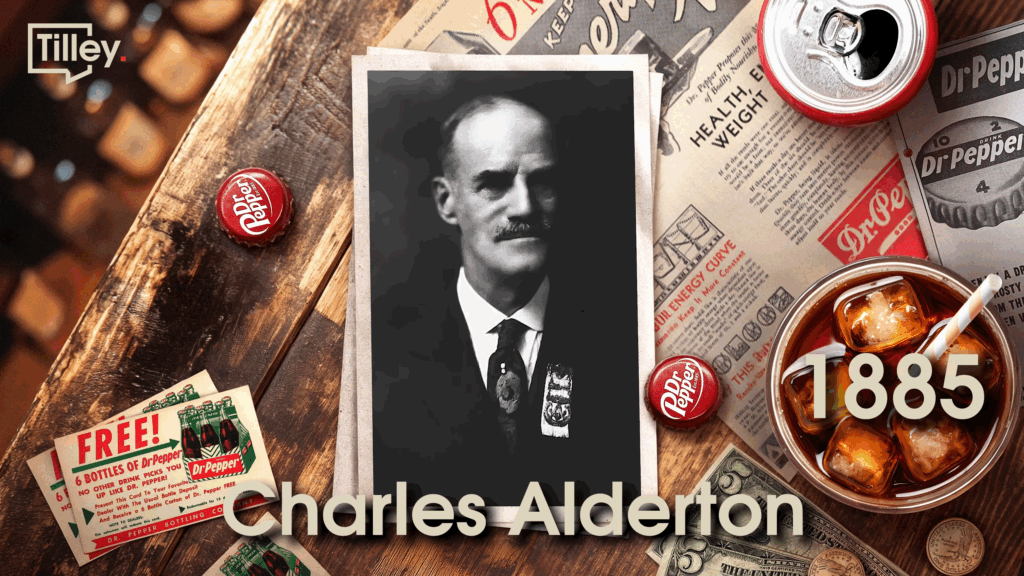
Charles Alderton was a young pharmacist working at Morrison’s Old Corner Drug Store in Waco, Texas. In his spare time, he experimented by blending different soda syrups, searching for a flavor unlike anything else on the menu. The result was a drink his customers instantly loved. It became so popular that regulars began asking for it by the name of the town itself – “a Waco.” The nickname stuck until the drink was eventually bottled and sold under the name we know today: Dr Pepper.
The story behind the name Dr Pepper is tangled. One version claims the shop owner, Wade Morrison, named it after a real physician – Dr. Charles T. Pepper – to win over the doctor’s daughter. Another says he did it out of resentment after she turned him down.
Both tales sound colorful, but none of them hold up. Historians found no connection between Morrison and Dr. Pepper, who lived in another state entirely. The truth is probably simpler: the name was chosen to make the drink sound more medicinal, a clever move when “health tonics” were popular at the time.
Ironically, the man who actually invented the formula, Charles Alderton, never earned any profit from his creation. Which brings us to the second piece of this maze – the drink itself.
The Taste
So what do we actually know about Dr Pepper as a drink? It’s said to be a blend of 23 flavors, but no one has ever cracked the formula since its creation in 1885. The recipe is locked away – some even claim it’s divided between two separate vaults in Texas. Only a handful of people know it, and even they might not know the whole thing.
In the soda world, a stolen recipe could be worth billions. And over the years, small pieces of information have appeared – rumors, leaks, and a few scandals that stirred the mystery even more.
Let’s take one of the strangest mysteries surrounding Dr Pepper – the famous prune juice rumor.
For decades, people have speculated that the secret ingredient behind Dr Pepper’s unique taste is prune juice. The story first appeared in the 1930s and quickly spread across the country. Some say it began as a smear campaign by competitors who wanted to make the drink sound like a laxative. Others think it simply came from confusion – after all, Dr Pepper has a rich, dark, fruity flavor that does remind many people of prunes.
The company has repeatedly denied it, insisting there’s no prune juice involved. Still, the debate refuses to die. Even today, fans argue online, claiming they can taste it, while skeptics dismiss the whole thing as marketing folklore – one of the many myths that helped turn Dr Pepper into a legend.
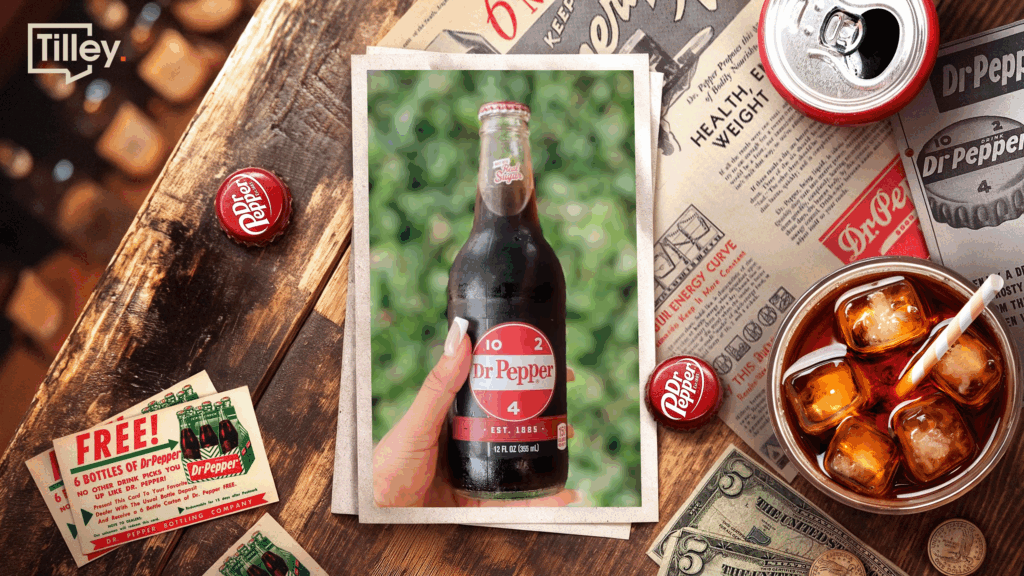
As we know, Dr. Pepper is a blend of 23 flavors. Those 23 flavors sparked endless speculation. Nobody outside the company ever confirmed what they are, and that mystery became part of the brand’s identity. Fans online have tried to decode the taste for decades – suggesting everything from cherry, caramel, and vanilla to clove, pepper, and yes, even tomato. That last one sounds absurd until you realize early soda recipes often used vegetable extracts and spices to balance sweetness. Food experts describe Dr Pepper’s flavor as something between cherry cola and root beer, with a subtle, spiced warmth that keeps it hard to pin down.
In 2009, someone allegedly found an old notebook labeled “Dr Peppers Pepsin Bitters.” It listed caramel, caffeine, vanilla, and – yep – prune extract. The internet went wild. Dr Pepper denied it, saying it was just an old tonic recipe. Conspiracy lovers immediately shouted that it was the real deal. Though skeptics weren’t convinced.
At the end of the day, the mystery IS the magic. The secrecy keeps people talking and buying. Dr Pepper turned a recipe no one understands into one of America’s biggest soda legends. Which brings us to the next piece of the puzzle, what I call The Third Player strategy.
The Third Player Strategy: Not a Cola
Everyone knows the Cola Wars – Coke versus Pepsi. It’s the biggest competition in soda history. Billions spent on ads, celebrity deals, blind taste tests. These two giants have been locked in an all-out battle for decades. But while Coke and Pepsi were fighting each other, behind the scene, Dr. Pepper took advantage of the giants’ attention being stuck to each other and grew their version of a soda empire.
Now, you might have noticed something. Throughout this article, I keep saying “soda” – not “cola.” There’s a reason for that.
When I started researching Dr Pepper, I assumed it was just another cola. Like most people probably do. But it’s not. And at first, I thought – okay, so what? Cola, not cola, does it really matter?
Turns out, it matters a lot.
In 1963, Dr Pepper went to court to prove it. A judge examined the formula and ruled: Dr Pepper is not a cola. It doesn’t contain kola nuts – the key ingredient that defines a cola. Instead, the court officially classified it as a “pepper-type soft drink.”
This classification unlocked three massive advantages.
First, taxation. In many states during the 1960s and 70s, colas were taxed differently than other soft drinks. Some states had specific “cola taxes” or higher rates for cola products. Dr Pepper avoided these entirely. Every penny saved on taxes meant lower prices or higher margins – a direct competitive edge.
Second, competition law. When regulators looked at market dominance and monopolistic practices, they looked at cola manufacturers. Coke and Pepsi faced constant scrutiny over their distribution deals, exclusive contracts, and market share. Dr Pepper, on the other hand, operated in a separate category. They could negotiate deals that might have triggered antitrust concerns for cola companies.
Third, retail and distribution. Stores and restaurants often had exclusive agreements – “Coke products only” or “Pepsi products only.” But Dr Pepper wasn’t a cola, so it didn’t violate those contracts. A restaurant locked into a Pepsi deal could still carry Dr Pepper. A vending machine stocked with Coke products could add Dr Pepper without breaking any agreements. They could be everywhere, with everyone, simultaneously.
Fun fact: Did you know that two vending machines standing next to each other actually boost sales for both – even when they’re competing brands? This happens due to a phenomenon known as “choice architecture.” The question shifts from “do I want a drink or not?” to “which drink do I want?”
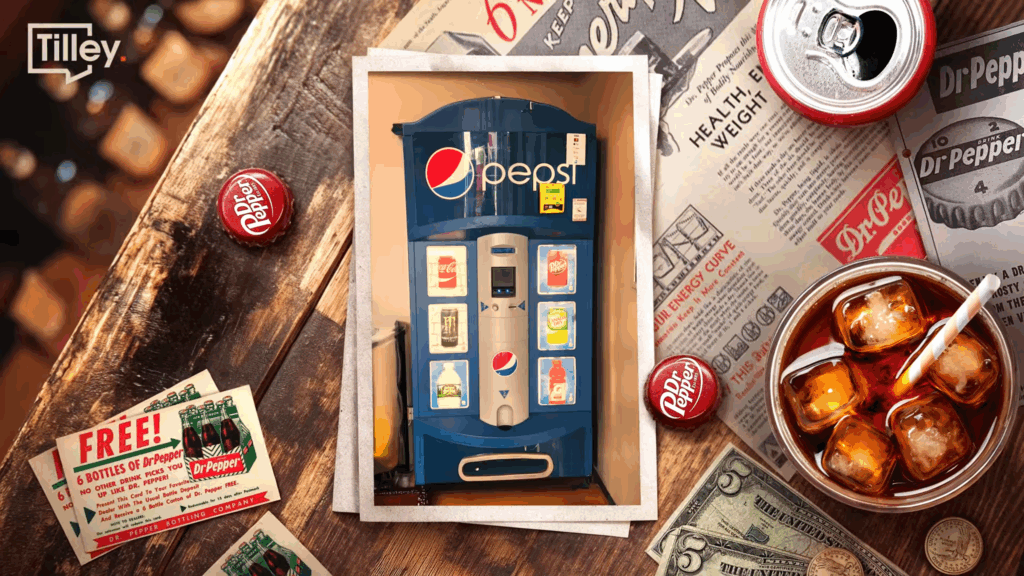
And here’s where Dr Pepper’s advantage becomes crystal clear. In some locations, Dr Pepper could appear in both machines. A Coke machine and a Pepsi machine, standing side by side – and Dr Pepper is in both of them. No matter which machine the customer chose, Dr Pepper was an option.
So being not a cola wasn’t just a legal technicality. This was Dr Pepper’s master key to the entire soft drink industry. Surprisingly, this is not the only legal win Dr Pepper made, and probably not the biggest. To understand that we need to take a look at how Dr. Pepper marketed their product.
Coka-Cola vs Dr. Pepper
Dr Pepper’s early marketing was absolutely genius. They created a slogan: “Drink a Bite to Eat at 10, 2, and 4.” Think about that for a second. They weren’t just selling a beverage – they were programming a daily habit into American culture. Three specific times every day when you should drink Dr Pepper.
Dr Pepper became woven into the American routine. And of course, this didn’t go unnoticed. Coke and Pepsi were watching. And they didn’t like what they saw. Three times a day, people were reaching for Dr Pepper instead of a cola. That was three lost opportunities for Coke and Pepsi to make a sale.
In the 1970s, Coca-Cola decided to fight back. But they didn’t try to innovate. They went for the laziest strategy possible: just copy it.
Remember I told you Coke tried to replicate Dr Pepper? They launched a new drink called Peppo. The name alone tells you everything. Peppo. Almost identical to Pepper. And the drink itself? Basically a Dr Pepper clone – same dark color, same mysterious spiced flavor, same positioning as something different from cola.
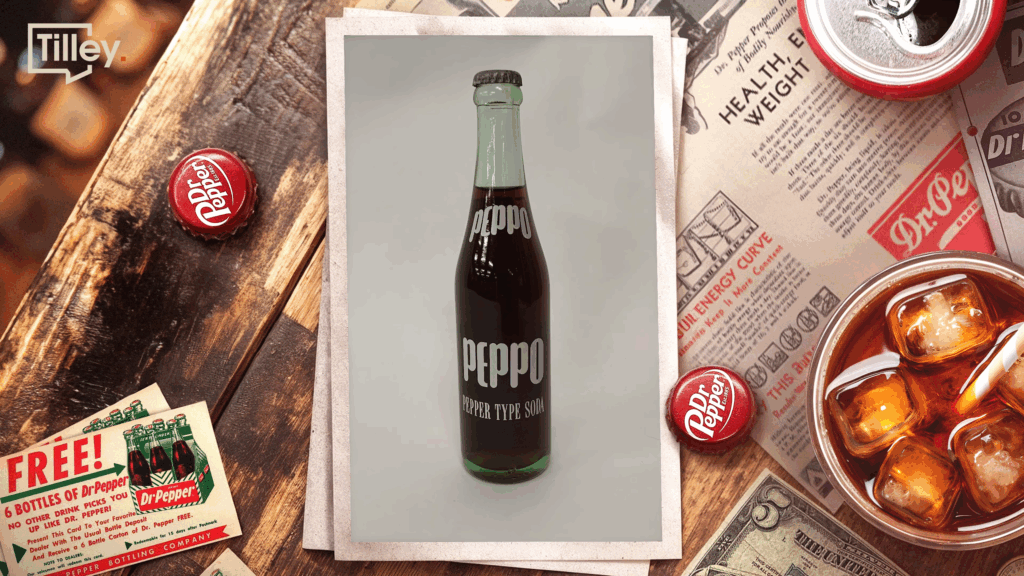
Coca-Cola was betting that consumers wouldn’t notice or wouldn’t care. What could a smaller regional brand like Dr Pepper possibly do about it?
Turns out, quite a lot. Dr Pepper didn’t hesitate for a second. They took Coca-Cola – one of the most powerful corporations on the planet – straight to court. This was David versus Goliath, except David had a really good lawyer and an airtight case for trademark infringement.
And they won. The court sided with Dr Pepper. Coca-Cola was forced to pull Peppo from shelves and rebrand it as Mr. Pibb. More importantly, the legal victory sent a message that echoed through the entire beverage industry: don’t mess with the Pepper.
This wasn’t just about protecting a name. This was Dr Pepper establishing that despite being smaller, despite not being a cola, they had teeth. They could stand up to giants and win.
But winning in court doesn’t win you the market. If lawsuits alone made brands successful, every patent troll would be a household name. You know these companies – they buy up patents, create nothing of value, and just sue people for money. Yet none of them have built billion-dollar beverage empires.
Legal victories protect your brand. They don’t grow it. Dr Pepper needed something else. Something that would actually get their product into people’s hands across the entire country. And that came down to yet another piece of the puzzle: distribution.
Distribution
Everyone knows Dr Pepper today. By 2024, it overtook Pepsi to become America’s second most popular soft drink. Let that sink in for a moment – a non-cola beat Pepsi, one of the most recognized brands on the planet.
Among younger people, the gap is even wider. Almost twice as many Gen Z consumers prefer Dr Pepper’s bold, unusual taste compared to Pepsi. So how did they do it? What’s the secret weapon that allowed a smaller brand to outmaneuver a giant? Independence.
Let me explain. Coke and Pepsi built massive bottling networks over decades. Factories, trucks, distribution centers – entire empires designed to get their products everywhere. These networks have an incredible reach. But they’re also incredibly rigid. Every bottle that rolls off the line is Dr Pepper tied to their brand. Every fountain machine they install only pours their products. Every distributor they work with is locked into their system.
Dr Pepper doesn’t have those restrictions. And they turned that into their greatest advantage.
Instead of building their own massive infrastructure, Dr Pepper made a brilliant strategic choice: they partnered with both sides. In some regions, they work with Coca-Cola bottlers. In other regions, they work with Pepsi bottlers. Sometimes they even work with independent distributors.
This strategy is genius for three reasons. First, it’s flexible – they can choose the best partner for each market. Second, it’s efficient – they use existing infrastructure instead of building from scratch. Third, it’s cheaper – they avoid the massive overhead costs that Coke and Pepsi carry.
Think about the irony here. Coke and Pepsi built empires that made them powerful. But those same empires became chains that limited their movement. They’re locked into their own systems, unable to adapt quickly, burdened by the weight of their infrastructure. Dr Pepper slipped quietly into both camps. They became the Switzerland of the soda world – neutral, nimble, and rich.
That’s why you can walk into any movie theater, gas station, or fast-food restaurant and find Dr Pepper, regardless of whether it’s a “Coke place” or a “Pepsi place.” The fountain machine might say Coca-Cola on the side, but Dr Pepper’s right there in the lineup. The vending machine might be Pepsi blue, but Dr Pepper’s sitting on the shelf inside. They didn’t choose sides. They chose everyone.
The Fountain Wars
But that couldn’t last forever. For years, Dr Pepper was successfully balancing between Coke and Pepsi. It was a fragile peace and in 2025, that peace finally broke. In October, customers noticed something strange at restaurants across California and Nevada. They went to fill their cups, and Dr Pepper is gone. It vanished from Coca-Cola-affiliated fountain machines overnight.
At first, people thought it was a supply glitch. Maybe a shipping delay. But soon it became clear, Dr Pepper had been pulled intentionally. It’s replaced by Mr. Pibb in a petty revenge move. TikTok’s videos, tweets, memes all demanded answers.
“Bring Back Dr Pepper” was trending. Even local news stations were covering what they called The Fountain Wars. Fans were furious. Restaurants were flooded with complaints. But Coke stayed silent. Actually, it’s their another try to squeeze Dr Pepper out of the market. Instead, they gave them the best free publicity that money could never buy. Which brings us to the final missing piece of the puzzle to truly understand Dr Pepper. It’s publicity.
Publicity: Stunts, Scandals, and the Scrappy Brand
Dr Pepper has a history of high-stakes, high-wire marketing.
Guns N’ Roses Free Soda (2008)
In 2008, Dr Pepper’s made what sounds like a genius bet. Remember, Guns N’ Roses has been teasing their album Chinese Democracy for over a decade. So Dr Pepper made a bold promise: “If Guns N’ Roses releases their album in 2008, everyone in America gets a free Dr Pepper.” Honestly, they probably thought that would never happen, and that was a big mistake.
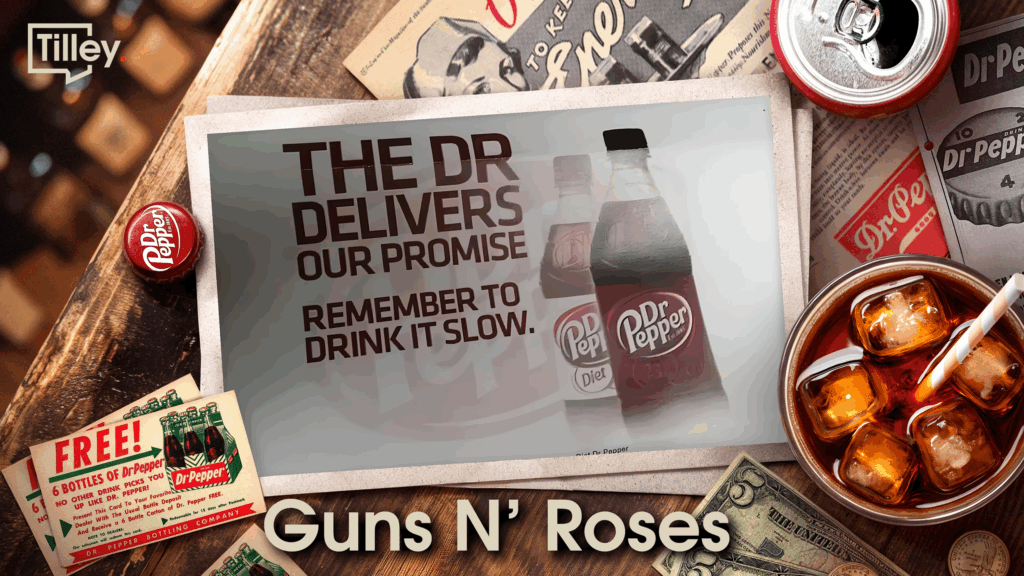
The album actually dropped in November 2008. After seventeen years of delays, studio drama, and millions spent, it was there!! And suddenly, Dr Pepper owes 300 million Americans a soda.
Now here’s where it gets ugly. The company sets up a website for coupon redemptions with a 24-hour window. Naturally, the site crashes almost immediately under the avalanche of traffic. Fans who finally get through discover the coupons have mysteriously run out. Social media explodes – this is early Twitter, remember, when brand failures went viral fast. People are screaming: “Dr Pepper owes me a soda AND an apology!”
But wait, there’s more. The coupons excluded California and certain retailers. And then – and then – Axl Rose himself gets involved. The rockstar threatens to go to court. He claims Dr Pepper disrespects his fans and violates the spirit of the promotion. Overnight, the story jumps from music blogs to CNN.
But surprisingly, this made Dr. Pepper only famous! People were talking about Dr Pepper more than Coke or Pepsi. So, the company eventually issued all the coupons, spent a small fortune cleaning up the mess, and walked away with something priceless. They caught national attention.
Chinese Democracy sold about 650,000 copies in its first month in the U.S. alone, and over a million worldwide in the first few months. In a twisted way, Dr Pepper piggybacked on the success of one of rock’s most infamous albums without paying Guns N’ Roses a single cent for the publicity. Well, except for owing a free soda to every American. That part got expensive.
Facebook Status Takeover (2010)
Next, 2010. These were the early days of Facebook, when no one actually understood very well what it actually meant to “go viral”. But it looked like Dr Pepper thought otherwise. Their big idea was a campaign where fans could sign up to let Dr Pepper post fun updates directly to their Facebook profiles. In return, users got access to exclusive games, giveaways, and special offers. What could go wrong?
Almost immediately, the campaign went off the rails. Instead of posting occasional updates, Dr Pepper’s automated system started flooding people’s timelines with branded messages. Friends saw their feeds suddenly filled with “I love Dr Pepper!” posts. It never stopped. Some users thought their accounts had been hacked.
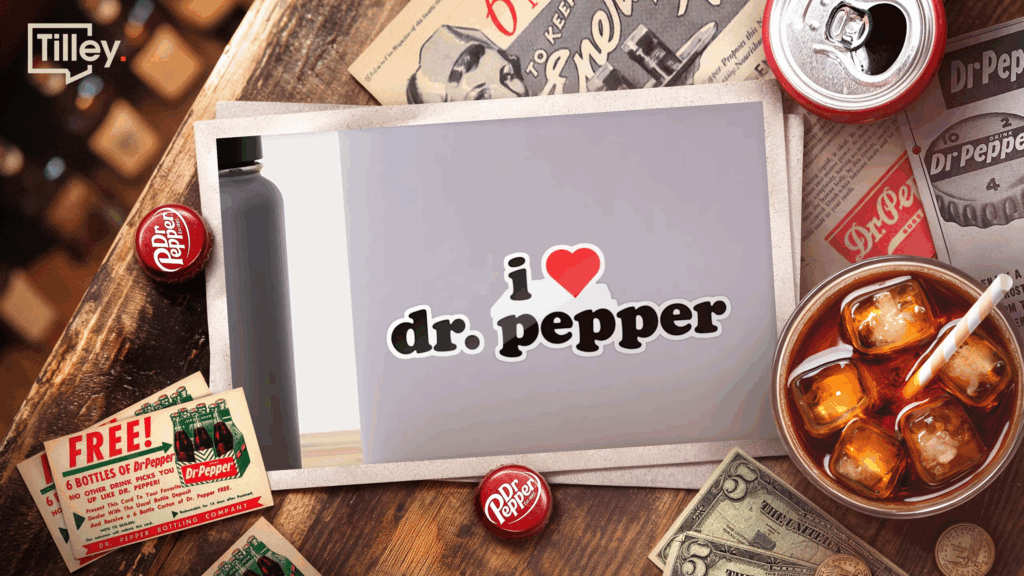
And it didn’t stop there. The system started glitching. People who never gave permission to the app suddenly found Dr Pepper posts on their profiles. Privacy settings didn’t seem to matter. For a lot of users, this crossed a major line. Remember, this was right when people didn’t know how much data Facebook collected. And a soda brand broke the rules of consent.
People freaked out really fast. Tech blogs tore it apart, calling it a total privacy disaster. Facebook users formed groups to discuss the “Dr Pepper invasion.”And a few users even threatened to report Dr Pepper to regulators. Within weeks, the company shut the whole thing down and issued a public apology, promising to review its data policies.
The failure taught Dr Pepper a hard but strong lesson – online trust matters more than reach. After the mess, the company completely changed its social media strategy. They stopped chasing clicks and started building communities.
Today, when Dr Pepper goes viral on TikTok or Instagram, it’s because fans create the content themselves. That wrong step was a crash course in digital ethics that made Dr Pepper smarter, more human, and way more relatable in the online world.
Dr Pepper Ten – “Not for Women” (2011-2018)
Let’s move on. 2011. Diet sodas are everywhere, but there’s a problem: according to Dr Pepper’s research, men aren’t drinking them. The word “diet” just feels… too feminine. So the marketing team decides to fix that. They come up with what seems like a brilliant solution. They decided to create a soda that’s almost diet, but with a macho twist. They call it Dr Pepper Ten – just ten calories, but “manly.” And to make sure you get the point, they stamp it right on the label: “It’s Not for Women.”
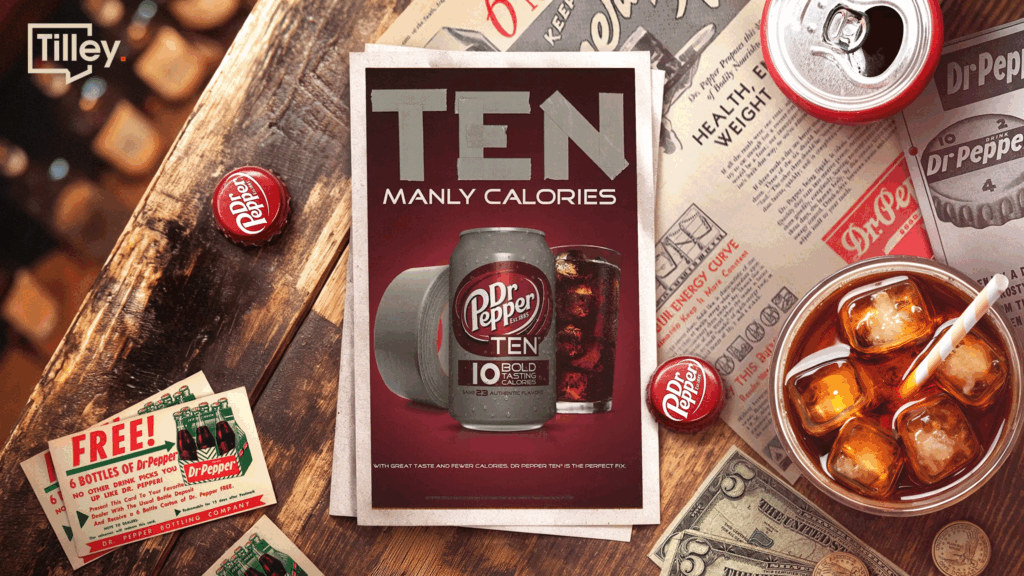
The ads look like a parody of every action movie ever made. Explosions. Tanks. Snakes. Muscles. A gravel-voiced narrator growling lines like, “You can keep the romantic comedies – this is Dr Pepper Ten.” They even built a Facebook app that literally blocks women from accessing “men-only” content. Guess what happens next.
Outrage erupted faster than a shaken soda. At first, Dr Pepper insisted it was just a bit of fun for guys who want flavor without losing their “edge.” But that didn’t help them. Women called it sexist. Marketing experts called it stupid. Social media called it 2011’s worst ad campaign. Hashtags like #NotBuyingIt and #BoycottDrPepper just added fuel to the fire.
Now the aftermath. They invested $100 million into development and advertising, but Dr Pepper Ten failed. Men didn’t love it. Women actively avoided it. It was a fantastic 100-million lop! By 2018, the soda disappeared from store shelves.
Yet again, Dr Pepper learned from it. What could’ve ruined them actually reshaped them, showing a new direction. The company realized people didn’t want a drink that excluded them; they wanted one that included everyone. That insight shaped their next big move years later – Dr Pepper Zero Sugar. This time, the campaign focused on taste, not identity. And it worked.
Evolution Ad (2012)
But it didn’t stop there. In 2012, Dr Pepper posted an image on Facebook. It was a diagram showing the classic “evolution of man”.
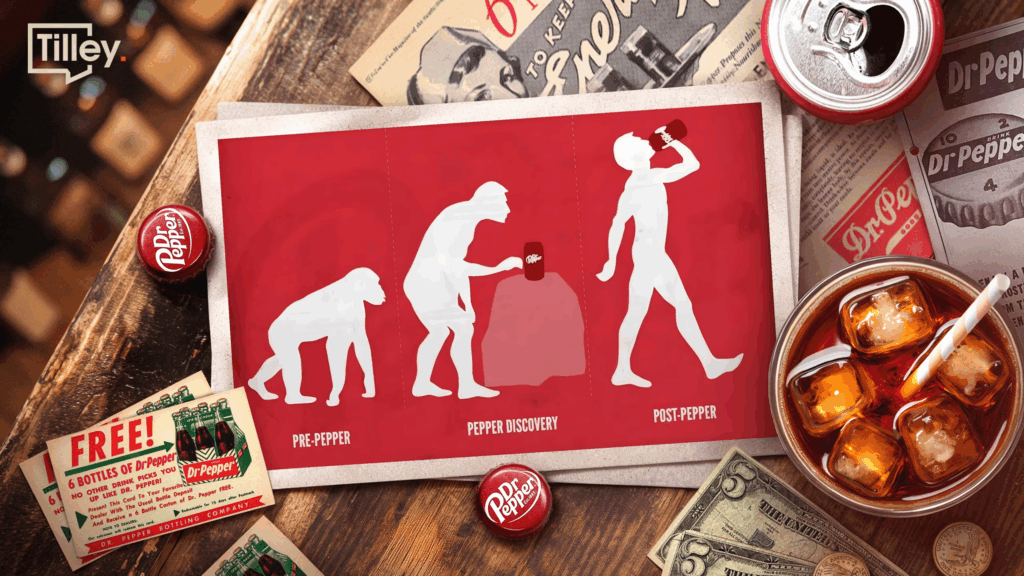
The idea was simple enough – the evolutionary progression was marked by different apes discovering Dr Pepper and becoming human. It’s meant to be funny, nostalgic, just a playful retrospective of the brand’s long history. But this funny meme went incredibly wrong.
Comments flooded almost immediately, thousands of them. Religious groups accused Dr Pepper of attacking Christianity. The meme that was supposed to make people laugh suddenly became a statement on science versus religion. Petitions start circulating. Conservative news outlets immediately joined the run. Within 24 hours, a five-minute meme went viral for all the wrong reasons.
The brand panicked. They quickly deleted the image and issued an apology.
These campaigns cost them millions, eroded trust, but ironically… They kept the brand in the spotlight. Despite all the failure, Dr. Pepper became an iconic brand.
Pop Culture
It’s not just a soda anymore. It’s a cultural chameleon, somehow woven into American pop culture in ways Coke and Pepsi could only dream of. We’re talking movies, TV, music… and a meme empire that’s absolutely blowing up right now. And most of it happened completely by accident.
Dr Pepper in Hollywood
Start with Forrest Gump, 1994. There’s this scene where Tom Hanks is sitting in the White House, meeting President Kennedy, and he just keeps drinking Dr Pepper. Not one can. Not two. Fifteen. It’s such a weirdly perfect detail that fans still quote it today. Was it a paid placement or just a character quirk? Nobody knows. It only makes it cooler.
Or another example, Short Circuit from 1986. The robot, Johnny 5, stares at a Dr Pepper billboard – a cheeky nod to the old “Be a Pepper” jingle.
The “Be a Pepper” jingle was Dr Pepper’s famous advertising campaign from the late 1970s. The song went “I’m a Pepper, he’s a Pepper, she’s a Pepper, we’re a Pepper – wouldn’t you like to be a Pepper too?” It was catchy and became hugely popular in American pop culture.
Even celebrities joined in. Barry Manilow sang for Dr Pepper. Years later, so did Dr. Dre. The ads weren’t always hits – some critics called them cheesy or too commercial. But they kept the brand in the spotlight. Every controversy, every parody, every misstep… kept people talking.
Decades later, the internet rediscovered that clip, and suddenly it was a nostalgia meme. But the product placement game goes even further back. In the 1960s Beach Party movies, Dr Pepper ads were so over-the-top that critics accused the studio of turning the film into a commercial. Even back then, people were asking: Where does art end and marketing begin?
Meme mania
In 2023 alone, Dr Pepper memes reached over 11 million people on Instagram, with 1.3 million likes, comments, and shares. That’s impressive for a drink invented in 1885. And their approach is simple – they let fans take control of the story.
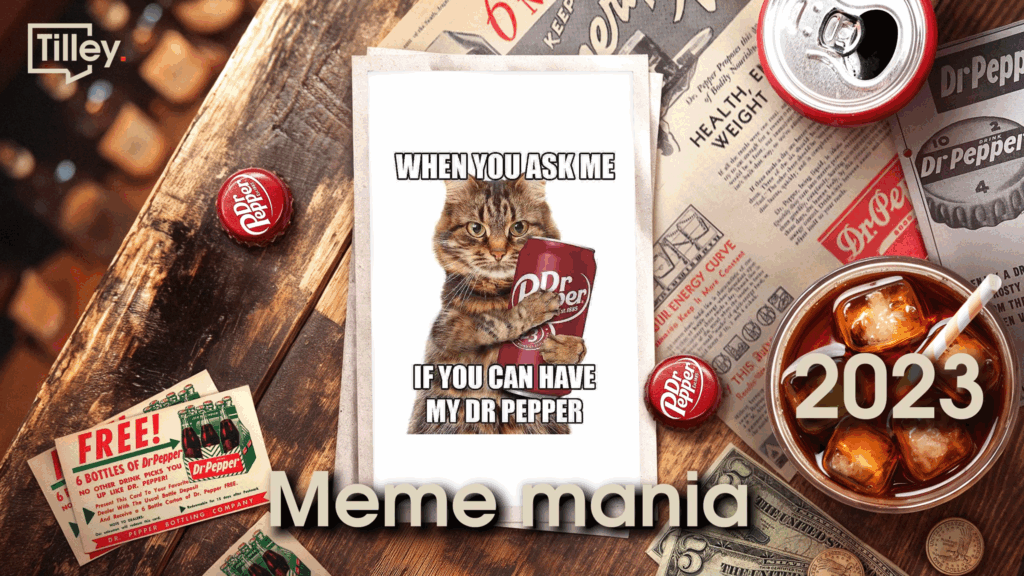
Fans treat Dr Pepper like it can solve any problem, like it’s a religion, like drinking it says something about who they are. Instead of shutting this down or trying to manage it, Dr Pepper just watches. They understand that online, being real matters more than being polished.
Take memes like “Save Water, Drink Dr Pepper.” It makes no sense environmentally, but it’s funny – and Dr Pepper laughs along with everyone else.
On TikTok, fans create elaborate soda debates. They experiment with wild combinations – Dr Pepper mixed with ice cream, lemonade, even whipped cream – and these videos rack up millions of views.
Some memes go too far. But that’s exactly the point. Online, people don’t respond to perfection. They respond to personality.
Conclusion
So what is the secret of Dr. Pepper? Is it the ingenious multi-move strategy of the brand management, or just 140 years of lucky coincidences that made this soft drink so popular? Or maybe it’s more simple than that and it’s the taste?
What do you think? Share your thoughts in the comments below. And for more historical deep dives and visual stories, be sure to subscribe to my YouTube channel!
On that note, thank you for reading this deep dive.
Peace.