
A while back, Andris Zigurs reached out through the form on my website.
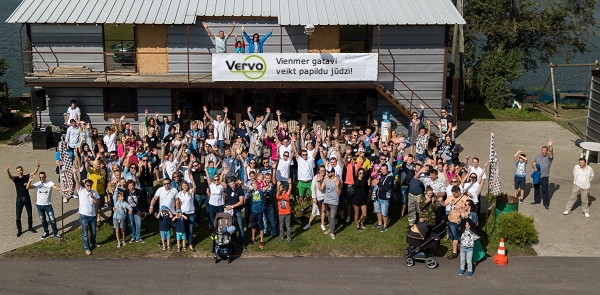
He is the Business Development Executive at Vervo.
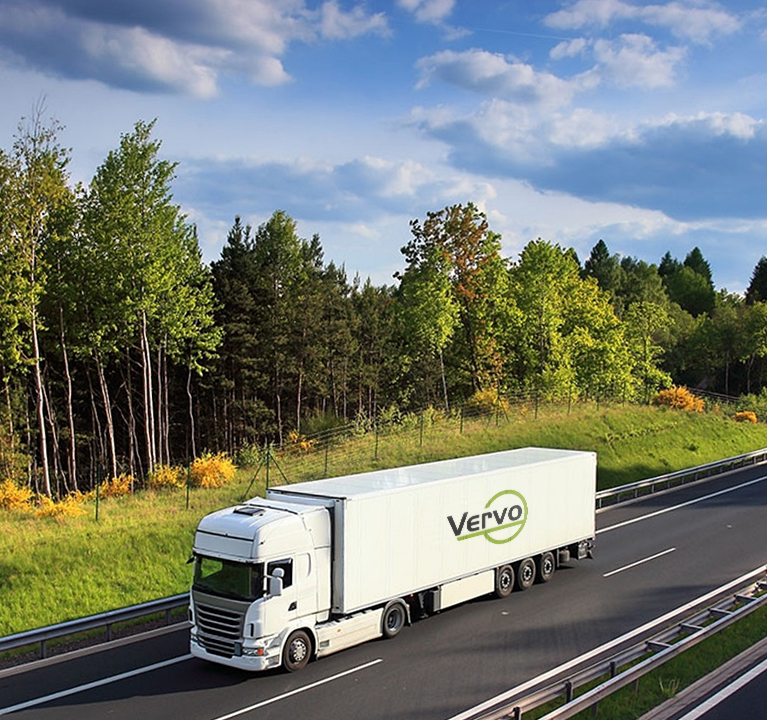
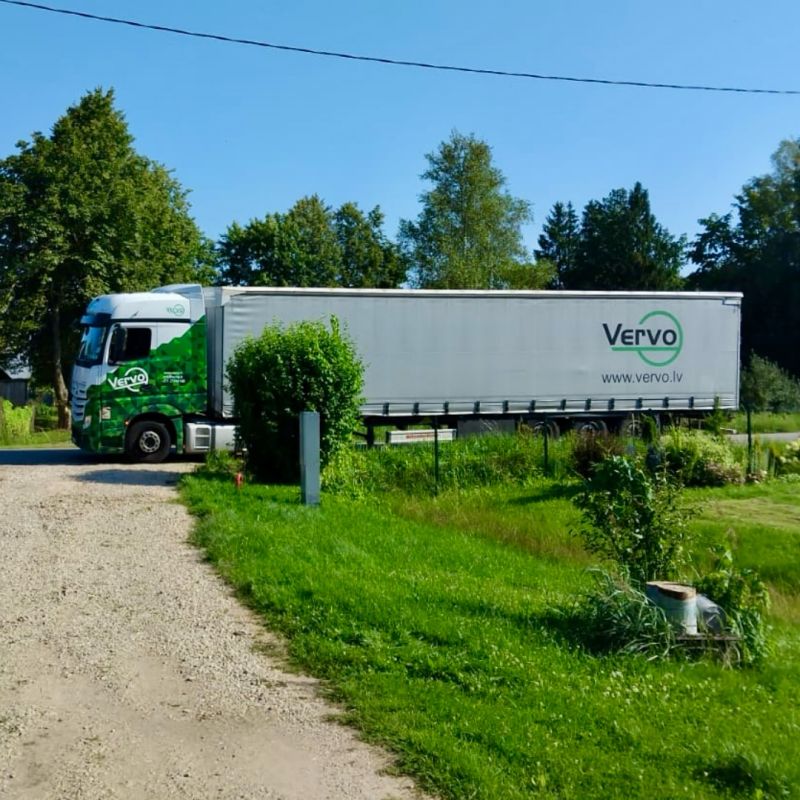
Vervo is a freight brokerage, headquartered in Riga.
They connect clients with haulers across Europe. Mostly FTL (Full Truckload), some LTL (Less Than Truckload).
His ask was simple: he needed a partner who could run a full cycle CRM implementation.

The Challenge
When we sat down, the picture came into focus.
Vervo was growing fast. Order volume was climbing. Revenue was climbing. But operational efficiency was sinking.
They were profitable. Nowhere close to as profitable as they should have been.
Here is why.
Every client inquiry kicked off two very detailed steps:
- Collect everything about the cargo. Dimensions, weight, type (temperature controlled, hazardous, and so on), origin, destination, timeline.
- Find the right hauler for that cargo. Vervo runs some of its own fleet. Most of the time it leans on a massive network of subcontractors.
Then the real time eater kicked in: quoting.
A client sends a request. That request goes out to multiple haulers. Every hauler replies. Every reply has to be saved, compared, stored for later analysis.
Now picture a couple hundred quotes a day. Each one firing 2 to 4 inquiries out to haulers. Deals rarely close the same day, so old quotes stay live. Yesterday’s inquiries need a follow up. Last week’s too.
Thousands of threads open at any given moment. Often with the same people.
Sometimes the cost of processing a job, meaning the time spent quoting and emailing, was higher than the margin on the job itself.
The Real Issue (It Was Not The Software)
Andris came in with a clean pitch: “We need a Transport Management System.”
We looked at a handful of them.
Every standard TMS handled the transport side of things beautifully. The rest of it, meaning document generation for each party, communication tracking, deal history, was unusable.
So we decided to build it ourselves. We used a CRM constructor tool as the foundation.
First, a long workshop. We mapped every object. Every field. Every relationship.
One thing jumped out immediately.
Contact management was the whole game.
- They needed the client’s billing address, the contact at pickup, the contact at delivery, and a separate contact for invoicing. Often four different entities.
- Supplier data had its own tree: driver name, truck number, exact load time, exact location.
We built a clean object model around all of it. One central hub. Everything connected.
The System
With the data model in place, we went after the day to day work of the sales team.
Two automations first:
- Lead-to-Quote. Inquiries from the website landed in the system on their own. They were assigned to a team: a logistics specialist plus a sales manager. Team size scaled with the complexity of the order.
- Credit Control. Before any booking went through, the system checked the client. Overdue invoices? Credit limit breached? The order was blocked on the spot.
Immediate transparency.
This also closed a quiet ethical hole.
Managers used to mix up the client quote and the supplier quote. Occasionally they would send the supplier’s document to the client.
A client sees their quote is €500. Next to it, the supplier’s document shows €460. The client instantly knows the broker is pocketing €40.
Everyone knows brokering is a business. Showing the margin on paper is a trust killer.
That class of mistake stopped overnight.
Smarter Hauler Relationships
Next came one of the more interesting wins: the historical request database.
Step into the shoes of a hauler for a second. You get 10, 20, 30 inquiries from the same broker. None of them convert. Over time you stop replying quickly. Or you start quoting lazily.
The broker still wants you in the network. Different haulers are competitive on different routes. The real question is: which routes?
Answer: look at history.
When a new request came in, the system did two things:
- It checked past requests for the same route.
- It recommended the best fit haulers to send the inquiry to.
What that unlocked:
- Fewer inquiries going out per quote.
- A higher conversion rate for the haulers that did receive them.
- Stronger long term rates, because Vervo became a reliable sender of real business.
The Paperless Promise
Last big piece: kill the paperwork.
We mapped every document the office generated, and every field in the CRM that could fill it in automatically.
- Client sends a request? The system auto-generates a pre-approval form. One click to sign.
- Hauler confirms a price? The system auto-generates the contract for signature.
- Everything downstream, CMR forms, invoices, and internal reports, was generated by the system and signed electronically.
Full documentation. Clean signatures. Full control.
At year end, Vervo saw a tangible bump in EBITDA. As we were told, the increase was 2%.
The Outcome
The final system delivered what Andris was after when he first reached out.
Transparency. Fewer manual errors. A real cut to the operational cost that was eating margin.
Staff could process orders faster. More importantly, they could process them at much higher volumes with close to zero error rates.
At year end, we looked at the headline number: EBITDA (Earnings Before Interest, Taxes, Depreciation, and Amortization).
It was up 2%.
Let that sink in.
On a freight brokerage doing serious volume, 2 points of EBITDA is a very real number.
Is it all down to the CRM work? Hard to say for certain. We are happy to claim our share.
The Conclusion
The real lesson from this build sits outside the software.
It is control. Over the data, over the process, and over the experience for both clients and haulers.
We finished the build, trained the internal team, and handed over the keys. Vervo runs the system themselves now.
In a rapidly growing operation, the winning play is usually the same one. Clean up the model. Tighten the process. Then let software remove the repetitive work.
Thanks for reading this far. Contact us if you want to achieve similar results.
– Jeff.