
I’m sure you played with LEGO bricks when you were a kid, right? What was your favorite set? Was it a Star Wars X-Wing, a giant Fire Station, or maybe a classic Police Jail? I loved those bricks. In fact, when I was about 16, I gave a huge bag of my old LEGO to my younger cousin, and I bet those pieces are still somewhere around his house today.
But the story doesn’t stop there. Recently, my wife used a gift card from work to buy a complex Japanese-themed LEGO set, and it made me wonder: how did a toy company, which was supposed to be just for children, become a cultural phenomenon appealing to virtually every age group?
How did this company manage to stay afloat in an era of immersive 3D games and virtual reality that is sometimes more interesting than real life? How did that simple, static piece of plastic manage to compete with the fleeting attention span demanded by TikTok?
LEGO is one of most powerful toy brands in the world, started as a tiny Danish furniture firm that made toys only as an afterthought. It survived a massive factory fire, battled public mistrust of plastic, and then, after achieving massive global success, nearly vanished completely – losing a million dollars every single day. And then was saved by the radical vision of an outsider: an ex-McKinsey consultant. This is the story of how LEGO brick was born, rose to the top and almost collapsed, yet was saved almost at the last moment. This is the story of LEGO.
If you’re new to this blog, welcome. I’m Jeff Tilley, and here I explore how businesses work, how they shape our culture, and everything in between. If you enjoy thoughtful breakdowns of the stories behind major brands, you’re in the right place. Now, let’s dive into the story!
The Name and the Humble Beginning
Our story begins in the quiet, unassuming village of Billund, Denmark. The year is 1932, and the Great Depression is brutally sweeping across the world. Inside a silent workshop, sits Ole Kirk Christiansen, a highly skilled master carpenter. He is desperate. He’s waiting for work that will never arrive. The local farmers and smallholders who were once his bread and butter can no longer afford his fine furniture. With a heavy heart, Ole is forced to let all seven of his dedicated employees go.
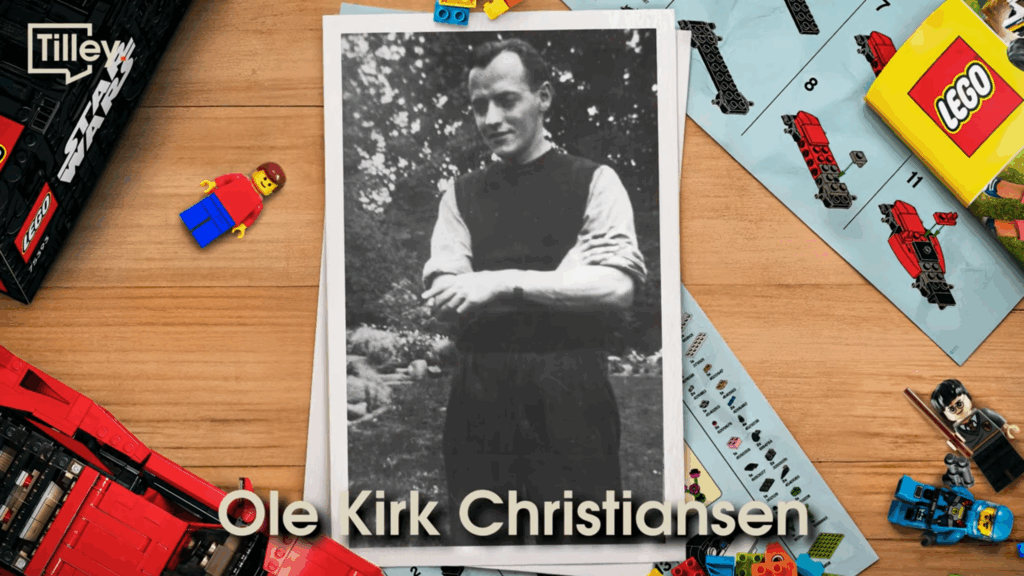
But what makes this tragedy even worse? Ole is raising four young sons alone after the death of his beloved wife. Money is vanishing faster than he can earn it. Bills are piling up, and the banks are relentlessly calling in his loans. For the first time in his life, the man known for his stubborn optimism finds himself truly in despair. But Ole isn’t the kind of man who stays down for long.
If people can’t afford expensive, custom furniture, perhaps they can afford something smaller, simpler, and crucially, cheaper. He begins to carve small household necessities: simple ironing boards, sturdy stepladders, and – almost as an af terthought – wooden toys. He crafts beautiful pull-along ducks, tiny painted cars, and spinning yo-yos. The profit margin is razor-thin, but it is enough. Slowly, steadily, his colorful wooden creations begin to attract attention, and the small business starts to grow.
By 1934, Ole’s little toy operation was doing well enough that he could finally rehire his workers. Shortly after, he gathers his seven employees and announces a challenge: they need a proper, unifying name for the company.
According to one source, one of the suggestions was “Legio,” meaning a whole legion of toys. Not bad, but Ole wanted something more meaningful, something with heart. He pieces together a name from two simple Danish words: “leg godt,” meaning, quite simply, “play well.” He shortens it. It is bright. It is full of hope. LEGO. A name that feels less like a label and more like a promise. And here’s a beautiful coincidence Ole couldn’t have known at the time: in Latin, the word ‘lego’ means ‘I assemble.’ This happy, accidental match perfectly and strangely predicted the company’s entire future.
The small factory thrived, fueled by the joy of children and the unwavering spirit of its founder. But the prosperity would not last.
In 1942, disaster struck the village of Billund. A massive fire, caused by a tragic electrical short circuit, roared through the factory. It was a total loss. The entire production unit and all their precious inventory – every wooden duck, every car, every piece of hard-won progress – was gone. Reduced to ash and smoke.
Most men would have seen this as a sign to quit. The Great Depression, the loss of his wife, the banks, and now this inferno. But Ole Kirk Christiansen didn’t pause for self-pity. He began rebuilding the very next day.
Ole didn’t just rebuild; he rebuilt bigger. He constructed a new, modern, 2,300 square-meter production unit. It wasn’t just a factory; it was Denmark’s first toy factory to feature an assembly line. By Christmas of that same year, the wheels were turning again. This resilience, this absolute refusal to quit, laid the foundation for everything to come. But as he looked for ways to modernize and expand, Ole made a controversial decision – a decision that would be met with massive resistance from the public. He decided that wood was no longer the future. The future was plastic.
Birth of the Plastic Brick
In post-war Europe, plastic was rapidly emerging as the material of the future, except in the toy world. People associated plastic with cheap, flimsy novelty items, things that broke easily and were tossed away. They deeply mistrusted the material and loudly demanded good, solid Danish wood.
But Ole’s keen intuition whispered to him to keep going.
The moment of truth arrived in 1947. At a trade fair in Copenhagen, Ole watched in fascination as a massive injection-molding machine produced dozens of perfect, identical plastic combs in a matter of seconds. Something clicked in his mind. Wood was beautiful, yes, but it warped, it cracked, and carving it was slow and laborious. Plastic was precise. And Ole was more than sure that precision was the future of play.
He made a stunning gamble. He spent almost all his remaining savings – a truly colossal sum – to purchase a state-of-the-art plastic injection molding machine. It was a massive, expensive piece of foreign technology.
When the colossal machine arrived by truck in tiny Billund, the whole village came out just to stare at the impossible object. His own son, Godtfred, was horrified, believing his father had made a terrible mistake, and he tried several times to convince Ole to send the machine back.
Ole simply ignored him and ordered the installation to continue. The machine was so big and heavy they literally had to knock down a wall of the new factory just to get it inside. It was a symbolic move: Ole was demolishing the past to make room for the future.
The first toy to emerge was a simple, hollow plastic duck. It came out glossy, smooth, and cost mere pennies instead of kroner to produce. At that very moment, Ole smiled. He saw what no one else could. He had the future in his hand.
For the next eleven years, the LEGO factory essentially turned into a research lab. Ole and his team tested, tweaked, and tormented every idea they could carve, cut, or mold.
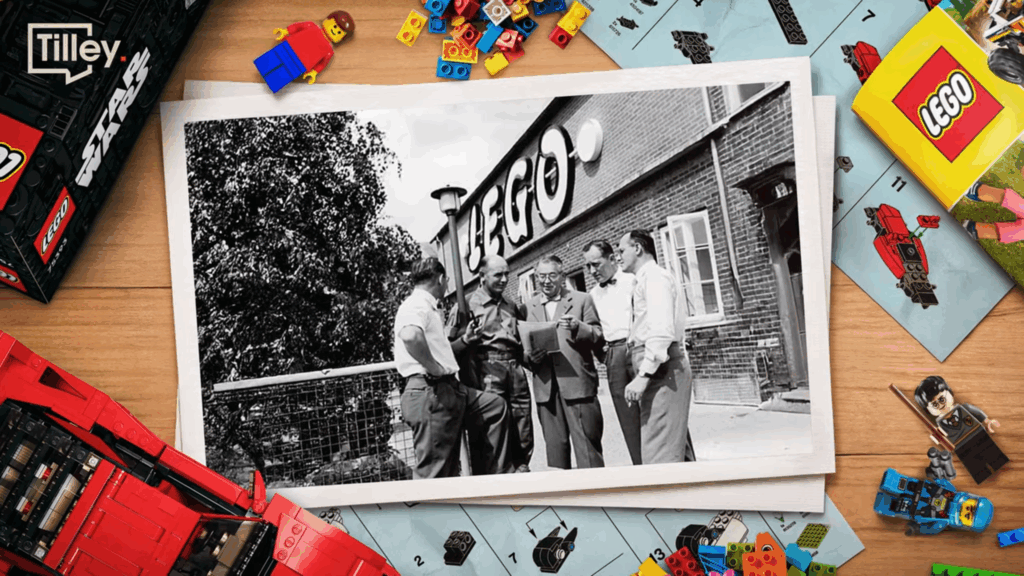
In 1949, they launched their first attempt: the Automatic Binding Brick, a chunky, brightly colored acrylic block with studs on top and little slots on the sides. It looked revolutionary, but kids didn’t like it much. They struggled to put them together and pull them apart. The brick didn’t ‘clutch’ properly. Ole and his team kept experimenting.
By 1953, they switched to cellulose acetate, the same brittle plastic used for old movie film. They redesigned the brick with hollow tubes underneath, hoping to improve the connection. The grip was better, but the material was so fragile that the bricks cracked like eggshells when kids tugged them apart. Day after day, a stubborn entrepreneur watched his expensive experiments fail.
By the end of 1955, the team was exhausted. There were already too many failed ideas. Hundreds of brick designs had been engineered, tested, and thrown out. The frustration was immense. It seemed they were chasing an impossible dream: a toy that was both strong and flexible, simple yet secure. The constant failure weighed heavily on the family business and its resources. They were pouring money into research and receiving only disappointment in return.
Then, one rainy afternoon in 1957, Ole’s son, Godtfred, was sitting at his desk, staring at a stack of failed bricks. He suddenly realized the core problem wasn’t the material, but the geometry. They didn’t need slots or fragile tubes. They needed a simple, elegant system of internal couplings to manage the tension and grip.
He made a crucial, game-changing refinement. In 1958, Godtfred Kirk Christiansen patented the stud-and-tube coupling system that became the modern LEGO brick. The breakthrough was its clutch power: strong enough to hold bricks securely together, yet precisely balanced so they could still be pulled apart by hand, producing the familiar, satisfying click.
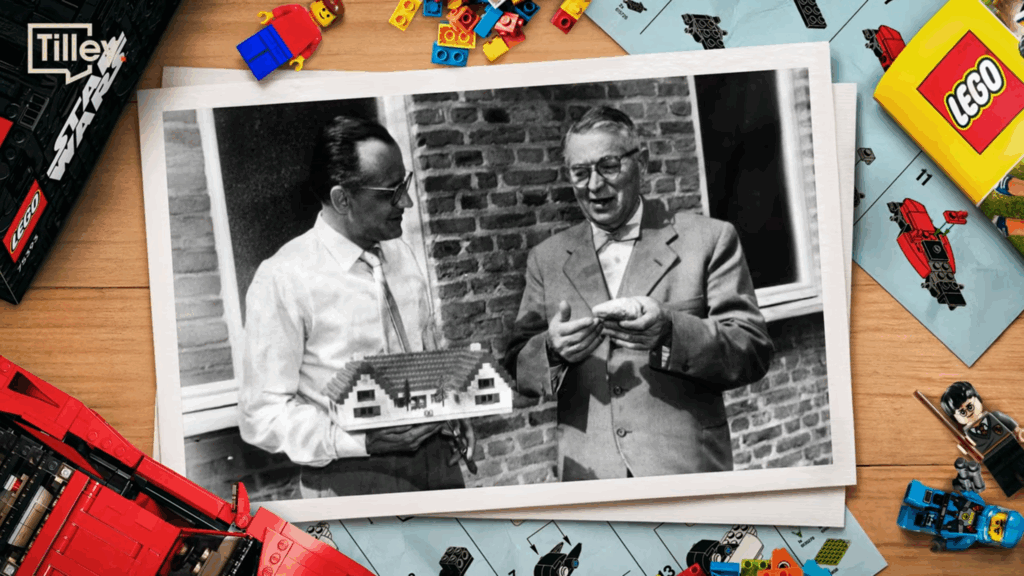
LEGO instantly turned into a true building system with endless possibilities. This foundational design laid the groundwork for generations of kids who would fall in love with the brick, a system so enduring that a brick manufactured in 1958 is fully interchangeable with a brick manufactured today.
Warehouses quickly filled with colorful boxes. Salesmen fanned out across Europe armed with the powerful, guiding slogan: “Only the best is good enough.” This credible breakthrough marked the beginning of the golden age of LEGO. But what happens when you grow too quickly? You risk outgrowing yourself and making very expensive mistakes. And that’s exactly what happened to LEGO.
The Golden Age
The moment the perfect brick was patented, LEGO entered its true golden age, spanning the 1960s and 70s. Fueled by the revolutionary clutch power, the company expanded rapidly across Europe, establishing its reputation as a toy powerhouse.
A crucial moment came in 1961. Recognizing the immense potential of the American market, LEGO licensed its products to Samsonite, a major American luggage company. Samsonite took responsibility for manufacturing, marketing, and sales of LEGO in the United States and Canada, giving the brand its first large-scale foothold in North America. This partnership played a key role in LEGO’s long-term international expansion.
At the heart of their philosophy was the LEGO System of Play, a brilliant idea where every new piece and every new theme worked seamlessly with the older ones. Nothing was disposable.
In 1960, following the end of its initial partnership agreements in certain European territories, LEGO took control of its own international sales. They hired their first foreign salesperson and began a dedicated push into key European markets like Germany, Switzerland, and Austria.
The system unlocked new levels of creativity. In 1962, they introduced the wheel, a simple shape that revolutionized building. This piece unlocked the world of vehicles. For the first time, children could build cars, trucks, trains, and planes that actually rolled.
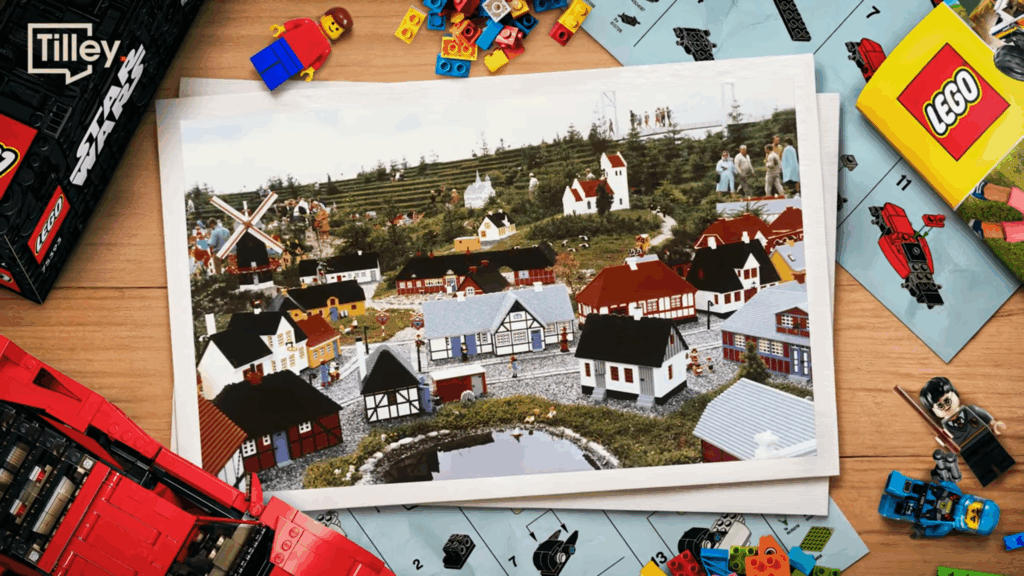
By 1968, LEGO cemented its legacy by opening the very first LEGOLAND. At its launch on June 7, 1968, more than 600,000 people gathered in little Billund to see Miniland, a miniature of Denmark constructed from 46 million bricks. It was a monument to the glory for their simple toy.
By the 1970s, LEGO had fully transformed into a global corporation. Factories opened across the world, and toys like the LEGO trains with real electric motors became the ultimate holiday-wish-list flex.
But the biggest innovation, and perhaps the most iconic, arrived in 1978. It was the minifigure. These little yellow figures gave LEGO bricks personality and a story to tell. The design team deliberately chose yellow so it wouldn’t represent any specific race, and they kept their face simple – a neutral, open smile that lets children imagine the character’s mood. This minimal design immediately made the minifigure one of the most recognizable icons in toy history.
By the 1980s, LEGO was dominating the market. Their iconic themes like Castle, Space, and Pirates were loved by millions of kids. The company seemed untouchable.
Then, in 1999, LEGO launched a bombshell: their first-ever licensed theme. It was LEGO Star Wars. The most famous galaxy in the world met the most beloved toy, and the match was simply perfect. Those sets didn’t just sell well. They sold out instantly.
This massive, instant success should have been a screaming clue about where the toy market was headed. But LEGO’s management was comfortable. They had been successful for so long, riding on decades of easy, organic growth. They barely noticed how important the Star Wars launch really was.
By the turn of the millennium, everything looked spectacular. The Christiansen family was one of the richest in Denmark. Ole’s grandson, Kjeld Kirk Kristiansen, was officially a billionaire. LEGO was a giant, employing 8,000 people and sold in 130 countries. They genuinely believed the party would never stop.
Reaching the top feels incredible, but at that altitude, the air gets thin and your judgment starts to slip. When you start thinking you can’t fail, that is exactly when trouble walks in the door. Success made them cozy. Cozy turned into arrogance. And arrogance is the fastest way to lose any business. When you believe you’re invincible, you stop asking the uncomfortable, hard questions.
The Great Collapse
Then in 1998, the party abruptly ended. The company recorded its first loss since those desperate wooden toy days in the 1930s. The problem arrived in millions of living rooms in the form of the game consoles. Sony playstation alone sold over 160 million units globally. Kids weren’t just choosing pixels and screens; they were choosing immersive, digital worlds. The beloved plastic brick suddenly looked old and boring.
Remember that spectacular Star Wars launch? It was the clear path forward. But instead of focusing on that single, massive success, LEGO management made the corporate equivalent of a panic attack: they decided to diversify and chase every shiny object they saw. They started chasing trends, pouring money into anything that didn’t involve their core product. This included creating a LEGO clothing line – stiff, expensive jackets nobody wanted – and producing LEGO wristwatches that actually cost the company more to manufacture than they sold for. Furthermore, they wasted millions in wasted overhead costs by opening dozens of branded retail stores in premium malls.
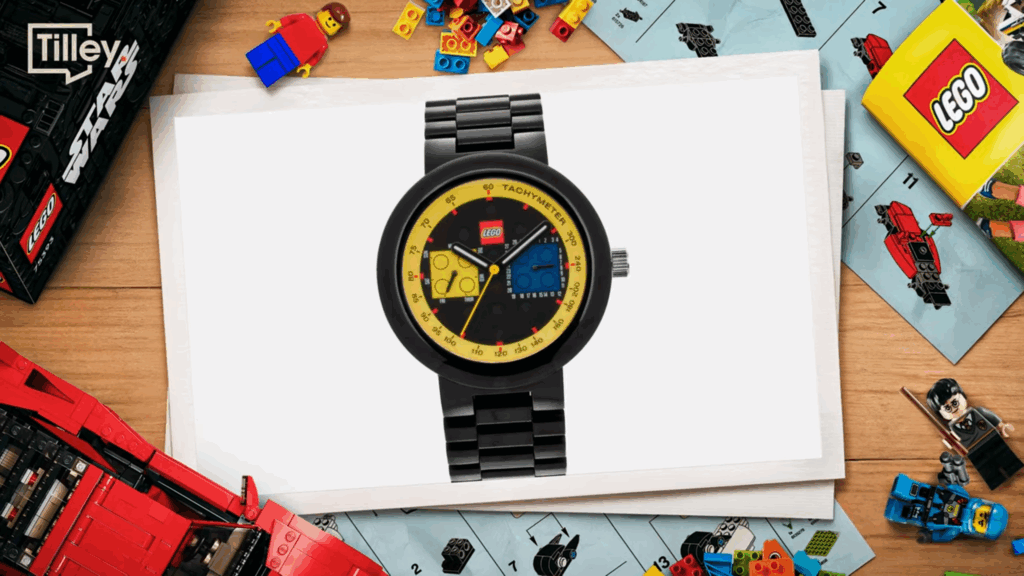
In this panicked state, the reckless spending only escalated. They blew over $100 million on the LEGO Universe massive multiplayer online game, which launched in 2010 and was shut down just 15 months later. Simultaneously, they launched Mind storms robotics, Duplo zoos, and Bionicle movies, with each new project becoming more expensive and more complicated than the last one. They rushed to open four new LEGOLAND parks within a few years in locations like California, Germany, the UK, and Florida. In this chaotic race to become an entertainment conglomerate, they forgot the one thing that made them great: the simple, dependable plastic brick.
They weren’t just diversifying; they were desperately trying to catch up to market trends they didn’t understand by copying their competitors. For instance, in 1998, they tried to copy the popular construction toy K’NEX with a snap-together system called LEGO Znap. It failed spectacularly, with 90% of the sets remaining unsold on the shelves. The 2002 launch of Galidor was even worse, as this was a line of non brick action figures tied to a Fox Kids show – a failed attempt to copy Hasbro’s action figure model, leading to a massive financial failure.
In a misguided attempt to target girls, they launched Scala jewelry and Clikits craft toys. These lines were designed without any proper research into what girls actually wanted to build, resulting in yet another loss. Worst of all was the decision to sabotage their own product. The Jack Stone line, released from 2001 to 2003, replaced the standard LEGO bricks with giant, pre-molded, specialized chunks. The kids immediately looked at it, decided ‘this isn’t LEGO,’ and walked away. These repeated, expensive failures were screaming warning signs that the company had lost its way.
The financial results were nothing short of catastrophic. By 2003, LEGO lost 1.8 billion Danish kroner, or roughly $240 million USD. Sales plunged by 30% in a single year. The beloved company was losing a million dollars every single day. The Christiansen family, who had sworn they would never sell, now sat in silence around the same table where Ole once carved wooden ducks. The choice was brutal: sell the company that their great-grandfather rebuilt from ashes several times, or watch the word LEGO disappear forever. The verdict of industry experts was clear – the end felt inevitable. But thankfully, One man, an ex-McKinsey consultant, would arrive to catch the company from falling into total ruin and obscurity.
The Consultant
The verdict was clear: the end felt inevitable. In a desperate move to save the company, the Christiansen family did the unthinkable: they surrendered control.
In October 2004, they appointed Jørgen Vig Knudstorp as the new CEO. He was the first leader in the company’s history who wasn’t a member of the founding family. Knudstorp was an outsider in every sense: only 35 years old, an ex-McKin sey consultant with a background in economics, and almost zero experience in the toy industry. Wall Street immediately announced he was just there to prepare the company for a sale to Hasbro.
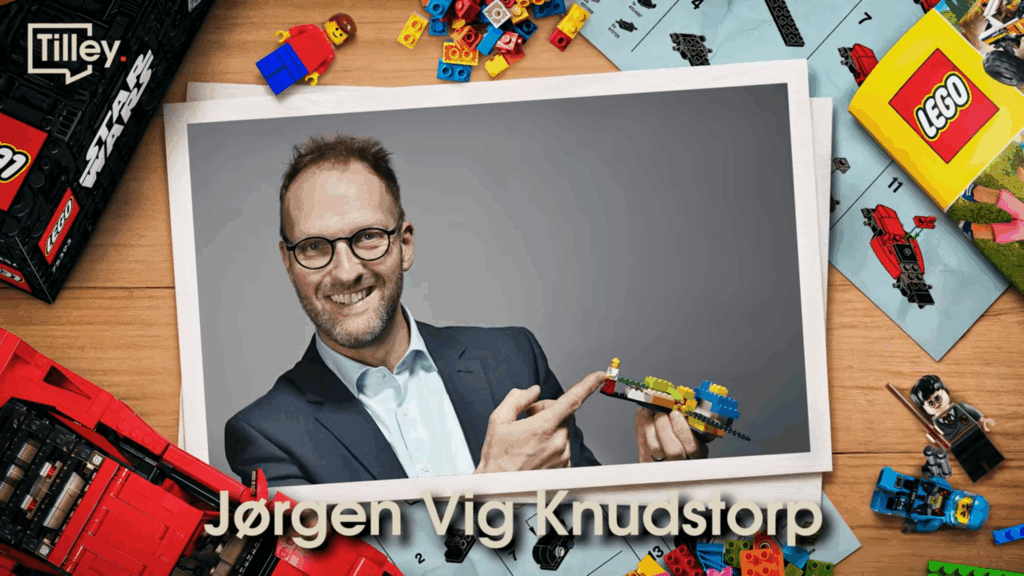
He inherited an absolute nightmare. His famous quote summarized the crisis perfectly: the company was “burning, but also drowning.” It was drowning in massive debt, side projects, and terrible investments.
Knudstorp’s first mission was brutally simple: Shrink or Die. He looked at the bloated, confused empire and asked the single question that everyone else had been too arrogant or sentimental to ask: What is our core business?
The answer was obvious, yet revolutionary for the current management. LEGO can’t be a diversified media giant. Its core business is the brick. Not theme parks. Not clothing. Not million-dollar video games. The entire business must revolve around that small yellow plastic piece. Everything else had to go.
Knudstorp’s vision was merciless: “To save LEGO, we don’t need to be another Nintendo. We need to be the best LEGO.” To save the company, he knew he had to destroy half of it. This was agonizing, but it was necessary. Knudstorp started something no one in LEGO’s history had ever dared to do – he started cutting. And he did it really fast and rough.
First, he made the agonizing decision to sell off all four LEGOLAND parks to Merlin Entertainments. The parks were the family pride, the physical representation of the play system brought to life. But Knudstorp needed two things: immediate cash, and the complete focus of his top 100 executives on toy production only. He made one very clever move, however: 30% of the parks’ stake remained with LEGO, which later brought a steady stream of healthy revenue.
Next, he attacked the massive diversification and the insane growth of the SKU count. He personally ordered a massive cut in the unique number of LEGO pieces. At that time, they had over 12,000 specialized pieces floating in the supply chain. Knudstorp eliminated 70% of them. If a piece only appeared in one or two sets, it was gone. LEGO was returning to its core principle: simplicity.
Then came a shocking discovery. Thanks to aggressive cost-cutting in the late 90s, the bricks themselves had been weakened. Bricks manufactured in 2000 didn’t snap together as well as those from the 1980s. Knudstorp immediately brought the plastic quality back up to the old standard, even if it cost more to manufacture. The company’s founding motto was back: ‘The best is good enough’ was once again the main company rule.
Knudstorp’s next step was recognizing a powerful, untapped resource: he turned LEGO’s fans into a secret weapon.
We mentioned the massive success of the Star Wars sets. That launch didn’t just attract kids; it quietly sparked an explosion among Adult Fans of LEGO, or AFOLs. This community, which had grown massive, was already organizing unofficial trade fairs and pouring incredible passion into designing their own models, all ignored by the old management.
Knudstorp decided to embrace them. In 2008, LEGO launched LEGO Ideas – a platform where dedicated fans could design and submit official sets for production. This essentially turned their most passionate customers into a free, high-quality research and design team. And ordinary fans created true hits – the NASA Saturn V rocket, the Friends Central Perk café, and the detailed Medieval Blacksmith. It was a bold move: LEGO formally admitted the fans could sometimes design better than the company itself.
This brutal transformation worked, and the results were immediate and stunning:
- 2004: A staggering 1.8 billion DKK loss.
- 2005: A +506 million DKK profit – their first profit in seven years.
- 2006: Revenue reached 18% growth, and profit doubled again.
The bleeding stopped. LEGO was alive, focused, and free of crushing debt. Knudstorp had saved the soul of the company. But it was still a toy company in a world that increasingly preferred digital games over plastic bricks. The harder question remained: How do you sustain this growth and win back the entire market you lost in the late 90s and early 2000s?
Toys for Girls
By 2007, LEGO was not only back on its feet but standing tall. The crushing debt was gone, the LEGO System of Play had been successfully re-centered, and the company finally had the money to dream big.
The question was: How could they grow again without repeating the mistake of panicked over-diversification? Knudstorp’s answer was brilliantly focused: he decided to simply repeat the massive, overlooked success of the Star Wars set from the late 90s – he embraced licensing.
In a rapid sequence of deals, LEGO signed up the biggest names in Hollywood. The lineup was relentless and highly effective. They quickly brought in Indiana Jones, Toy Story, and Prince of Persia from 2009 to 2010. By 2011, they launched a massive new wave of sets including Harry Potter, bigger and more detailed than any licensed theme they had previously created. Then came the true giants: Marvel Super Heroes and The Lord of the Rings in 2012. The final stamp came in 2014 with The Simpsons, the full Disney Princess line, and continued massive expansion with Marvel.
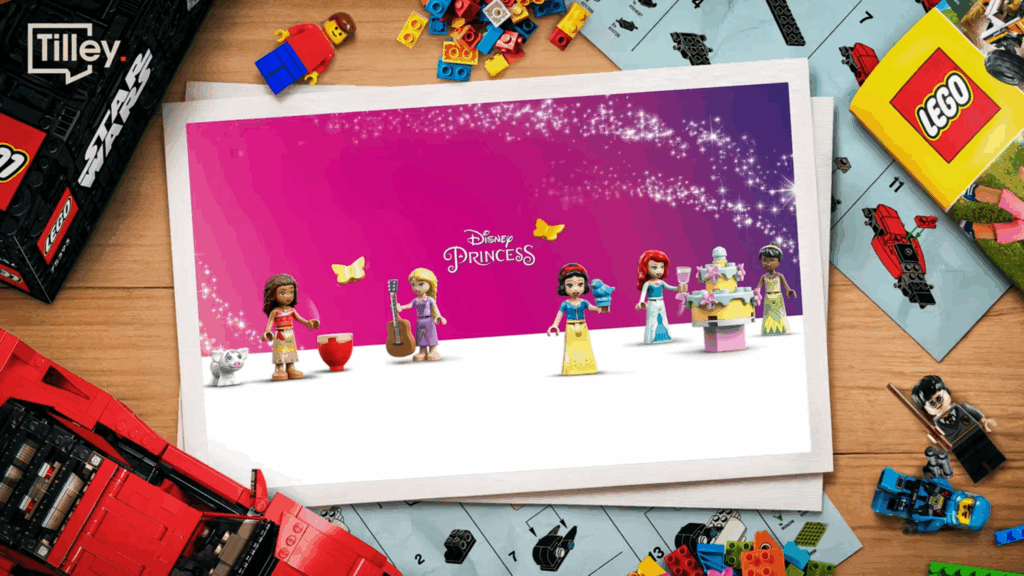
This strategy was flawless. Kids didn’t just want to build with bricks; they wanted to build the Avengers. And perhaps more importantly, adults – the brand-new customer base LEGO had finally recognized – were ready to pay hundreds of dollars for collector items like the 7,541-piece Millennium Falcon. Licensed sets went from zero to over 50% of total revenue in just a single decade. LEGO didn’t have to convince anyone that building was cool – Spider-Man and Luke Skywalker did the marketing for them.
But there was still one glaring, massive gap in LEGO’s dominant new strategy: toys for girls.
For decades, LEGO leadership had believed their product was completely genderneutral. But the sales numbers told a profoundly different story: over 85% of their customers were boys. They realized they weren’t being neutral; they were simply appealing almost exclusively to male interests.
So, LEGO did something unprecedented for the company. They launched four years of intense, detailed research. They studied how girls actually played, what colors they preferred, what kind of stories they created, and how they used characters.
The result was LEGO Friends, launched in 2012. The theme featured new, softer pastel colors, and critically, a new type of figure: the slightly larger, more detailed “Mini-dolls” designed specifically for easier role-play. The sets focused not on fighting spaceships, but on social interaction and community in the fictional Heartlake City.
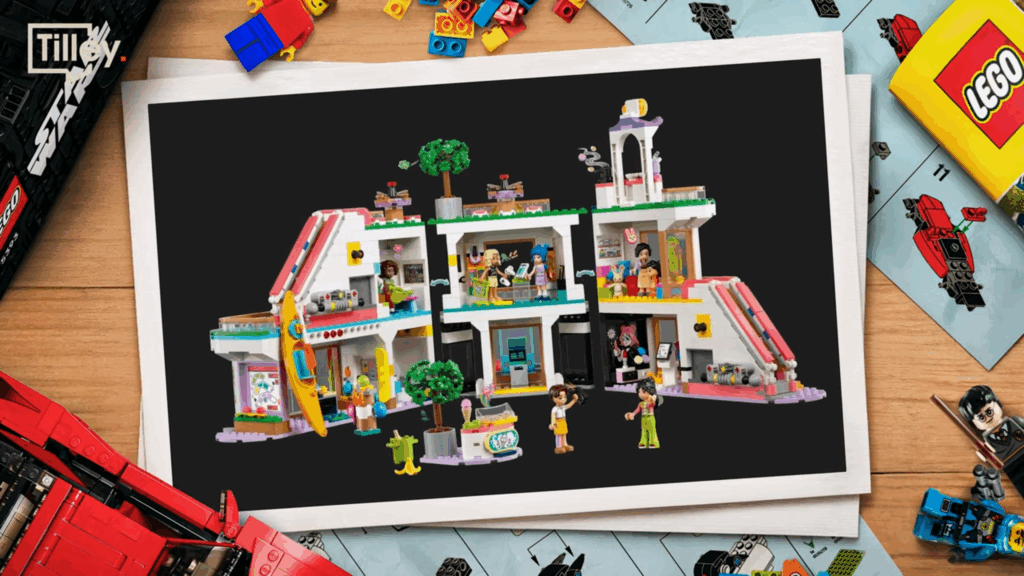
Predictably, advocates of the woke agenda responded with performative outrage. They accused the company of reinforcing negative gender stereotypes: “Barbie LEGO!” they screamed. “Sexist stereotypes!” Petitions circulated demanding LEGO stop the production of this “pink ghetto.”
But guess what. Within months, Friends became the best-selling LEGO theme in history. Sales in the girls’ segment jumped an astonishing 400%. Stores couldn’t keep the sets in stock. Millions of girls who had never touched a brick before now begged their parents for a set. LEGO was dominating every demographic at once – boys, girls, kids, grown-ups, collectors, and casual builders. Everyone.
This strategy sustained the growth the company desperately needed, cementing its position at the very top of the toy world. There was still a gap LEGO hadn’t managed to reach. It needed to evolve from a successful product into a true cultural phenomenon, the way it had been in the 1970s.
The Cultural Turnaround
While CEO Jørgen Vig Knudstorp had expertly stabilized the company, LEGO now had to reclaim its cultural voice.
The perfect tool arrived in 2014: The LEGO Movie.
When it was first announced, critics scoffed, calling it nothing more than “A 100 minute toy commercial.” But the film turned out to be genuinely hilarious, surprisingly heartfelt, and brutally clever. Critics quickly changed their tune, giving it a near-perfect 96% positive review score. The movie didn’t just win over critics; it earned $469 million at the global box office and brought in another billion in merchandise sales. The world fell in love with LEGO all over again, but this time, parents and kids experienced the joy together.
The victory proved the foundation was solid, and in 2017, Niels B. Christiansen officially became the CEO of The LEGO Group. He knew the company couldn’t afford to relax, haunted by the memory of how quickly arrogance had brought them to their knees.
So, LEGO works relentlessly to stay ahead, focusing on sustainability and new demographics. They have pledged to make all their products from sustainable materials by 2030 and are spending over $150 million on that research alone. They also strategically focus on their growing adult fan base, creating massive, highly detailed sets like the 9,000-piece Titanic, a giant Colosseum, and complex botanical models.
The results of this focused, humble approach are simply staggering: in 2022, LEGO officially overtook the luxury car giant Ferrari to become the world’s most powerful brand. In 2023, they achieved a phenomenal financial milestone, becoming more profitable than their two closest rivals, Mattel and Hasbro, combined. And in 2024, while the rest of the traditional toy industry saw sales shrink by roughly one percent, LEGO posted a remarkable 13% revenue growth.
The company’s global footprint is rapidly expanding: in 2025 alone, a new carbon neutral factory opened in Vietnam, construction began on a massive $1 billion factory in the US, and the company was named one of TIME’s Most Influential Companies.
So next time you step on yet another lego brick laying around in your house, remember – you just stepped on a cultural phenomenon we all love and we all were raised upon. Now, I’m curious what do you think? Do you still love LEGO? What’s the set you are looking to buy next? Share your thoughts in the comments below.
On that note, thanks for exploring the story of LEGO with me. If you liked this, take a look at some of our other articles like the one on Nespresso. I’m sure you’ll enjoy it too. And stay tuned, there are plenty more stories to come!