
I bet you’ve heard the phrase at least once: “We need to bring in consultants.” Maybe it was your boss at a meeting. Or you saw in the news how yet another company is hiring “outside experts” to solve problems. And you probably wondered: what the hell do these consultants actually do? They show up with briefcases, expensive suits, talk in fancy words, take millions of dollars, and leave. And the problems? Sometimes they get solved. Sometimes they don’t. But the money’s already paid.
Now imagine there’s a company that’s been doing this for almost a hundred years. A company that’s worked with 90% of Fortune 500 companies. A company that’s advised presidents, kings, and dictators. A company whose former employees run the world’s biggest corporations and hold key positions in governments. This company is called McKinsey & Company. And their annual revenue exceeds 16 billion dollars. For advice. Yeah, you heard that right. For advice.
How do you even build a billion-dollar empire on what is essentially just talking? How did a company that most people don’t even know about become one of the most influential organizations on the planet? And most importantly: what does this tell us about how modern business actually works?
Today I’m going to tell you a story that will change how you think about who’s really making decisions in the corporate world. A story about how intelligence became a product that could be mass-produced and sold. And a story about a man who turned a simple accounting firm into a machine that shapes the decisions of trillion-dollar companies. Ready to dive deep? Let’s jump into the story of McKinsey!
The Professor Who Saw the Future
The year was 1926 in Chicago – the city of jazz, speakeasies, and unbridled capitalism. America’s experiencing a boom that’ll later be called the “Roaring Twenties.” Companies are growing at an incredible rate, money’s flowing like water, everyone wants a piece of the American dream. But in the classrooms of the University of Chicago, one professor sees what others don’t. He sees chaos disguised as success. He sees companies growing not because of strategy, but despite its absence. And he understands this can’t continue forever.
This professor’s name was James Oscar McKinsey. Forty years old, accounting professor, a man with a sharp mind and an even sharper understanding of how money works. He looked at American corporations and saw the same pattern again and again. Companies were making decisions based on the owner’s intuition, on “gut feeling,” on what worked in the past. No planning. No analysis. No data. Just “I think this’ll work.” And sometimes it did work. But more often – it didn’t.
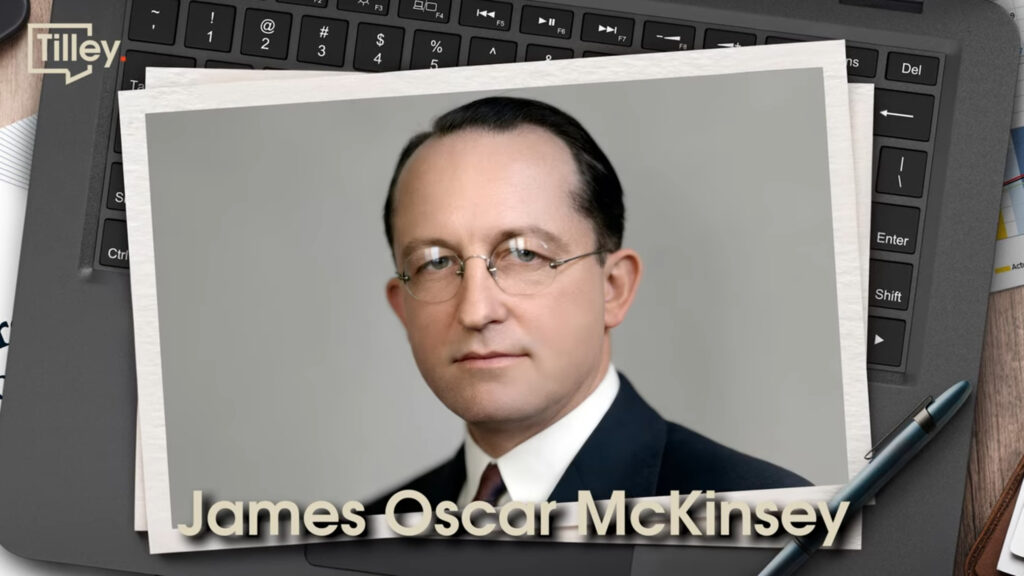
McKinsey understood something fundamental: business was becoming too complex for intuitive management. Companies were growing, new markets were opening, competition was intensifying. And the methods that worked when you had a little shop on the corner stopped working when you had factories in five states and thousands of employees. They needed a new approach. Systematic. Data-driven. Scientific. And McKinsey decided he would create this system.
That same year, 1926, he opened the firm “James O. McKinsey & Company” in Chicago. Not in New York, the financial center of the country. Not in Detroit, the heart of industry. In Chicago. Because Chicago was the city where money and industry met. A city where meatpacking, railroads, and finance created the perfect storm of opportunities. And McKinsey knew that this was where companies needed his services most.
What exactly was he offering? A revolutionary idea for that time – the corporate budget. Today this sounds ridiculously obvious. Of course a company should have a budget. How else? But in the 1920s, this was a revelation. Most companies just made money and spent it as needed. No planning a year ahead. No understanding where exactly the money was going. McKinsey told his clients: “You manage your personal finances, plan expenses, save for the future. Why doesn’t your company do the same thing?”
His approach was based on what would later be called “scientific management.” This was the idea that business processes could be analyzed the same way a scientist analyzes an experiment. Break it down into component parts. Measure the efficiency of each part. Find bottlenecks. Optimize. And most importantly – do this based on data, not hunches. For an era when most businessmen made decisions over cigars and glasses of whiskey, this was revolutionary.
And companies responded. Because deep down, every business owner knew they were flying blind. That there were leaks, inefficiencies, problems they couldn’t even see. McKinsey promised not just to show these problems, but to give a precise plan to solve them. In numbers. With evidence. With a guarantee that this wasn’t just someone’s opinion, but the result of deep analysis. Within a few years, McKinsey’s firm started working with the biggest corporations in America. Railroad companies, manufacturers, banks. Everyone wanted this new scientific approach to management.
But in 1937, something happened that could have destroyed everything. James McKinsey suddenly died. He was only 48 years old. Pneumonia. In the era before antibiotics, this was deadly. The founder was gone when the company was just gaining momentum. The firm had two paths: slowly fade away, like happens with most companies after the founder’s death, or find someone who wouldn’t just continue the work, but take it to a completely new level. Fortunately for McKinsey, that person was already working at the firm.
His name was Marvin Bower. A young Harvard-educated lawyer who’d joined McKinsey just a few years earlier. At first glance, he was an unlikely choice for leader. He wasn’t a charismatic salesman. He wasn’t a brilliant orator. But he had something more valuable. A vision of what consulting could become. And the iron will to make that vision reality. What Bower did next changed not only McKinsey forever, but the entire consulting industry.
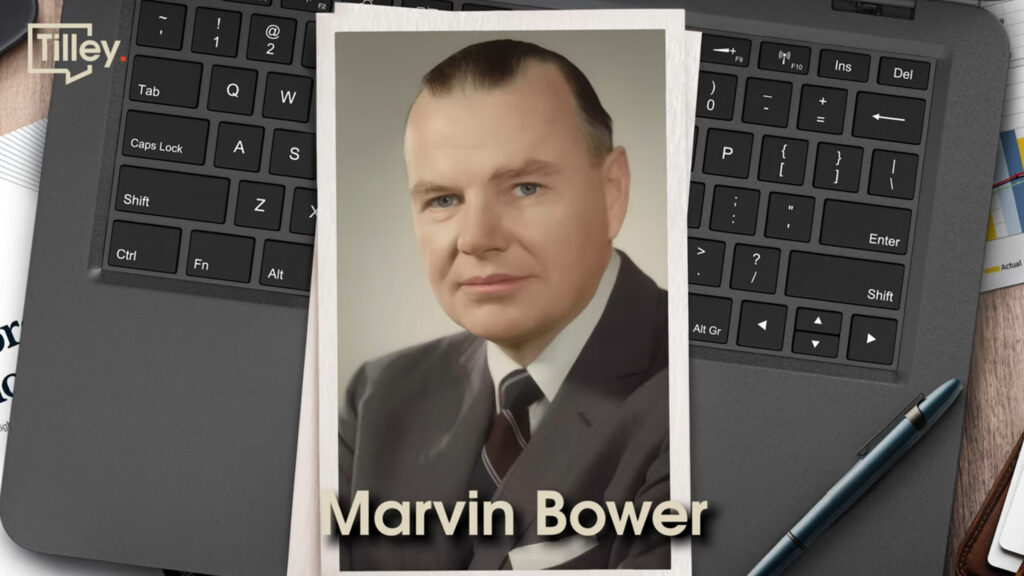
He looked at McKinsey and asked himself: what should we be? An accounting firm that helps companies keep books? Or something bigger? Bower saw a future where consultants weren’t just technical specialists. They were trusted advisors to top management. People CEOs turned to the most important, most strategic decisions. People whose opinions carried weight at the board level. In 1939, Bower made a bold move. He bought McKinsey’s New York practice and began a transformation that created modern consulting.
The first thing he did – raised the bar of professionalism to the sky. Bower was obsessed with the idea that consultants should be like doctors or lawyers, not salesmen. Professionals bound by an ethical code. People who could be trusted with a company’s most confidential secrets. He introduced rules that seemed insane for the business world of that time. Consultants had to put the client’s interests above their own profit. They had to tell the truth, even if the client didn’t like it. And they had to refuse projects where they couldn’t add real value.
Second – he completely changed the hiring approach. James McKinsey hired experienced businessmen and managers, people in their forties with decades of experience. Bower started hiring graduates. Twenty-year-olds from Harvard, Yale, Princeton. People with no experience but brilliant minds who could be trained to think a certain way. Young, energetic, ready to work eighty hours a week and prove their worth. This was a radical experiment. And it worked brilliantly.
Third – he created a culture of elitism. McKinsey didn’t just hire smart people. They hired the best of the best. The selection process became legendarily difficult. Multiple rounds of interviews, cases that tested analytical thinking, cultural fit. Getting into McKinsey became harder than getting into Harvard. And this created an incredible effect. Working at McKinsey became a badge of honor. Proof that you belonged to the intellectual elite of the business world. People literally dreamed of getting into this firm.
Fourth, and perhaps most important – he introduced the “up or out” rule. You either advance, showing exceptional results, or you leave. No “comfortable” workplace. No people just putting in time. This created incredible competition within the firm, but also guaranteed that only the most capable rose to the top. And those who didn’t succeed at McKinsey still left with an incredible resume that opened doors at top companies worldwide.
Fifth – he made consultants look and act like the elite. Expensive suits. Impeccable manners. Billing like lawyers – hourly rates, no fixed prices. McKinsey consultants weren’t just employees. They were partners with the client. People whose time was valuable because their advice changed companies’ fates. All this created an aura of exclusivity. When a McKinsey consultant walked into a room, everyone knew: this person represents the best consulting firm in the world.
The results speak for themselves. In 1950, McKinsey was a firm with revenue of about 2 million dollars a year. Seventeen years later, in 1967, revenue exceeded 200 million. A hundred-fold growth in less than two decades. McKinsey opened offices all across Europe. They advised governments, restructured entire industries, shaped strategies of the biggest corporations. Marvin Bower didn’t just save the firm after the founder’s death. He created an empire. And at the center of this empire was one simple but powerful idea: expertise can be standardized and scaled.
But there was a problem. How do you scale intelligence? One consultant can only work on a limited number of projects. They can only be in one place at one time. Traditional consulting was a craft business. Each project unique, each solution individual. How do you turn this into a machine that can serve hundreds of clients simultaneously? McKinsey needed to invent a way to industrialize thinking itself. And they did it.
Industrializing Intelligence
Imagine a factory. It produces cars. Every car goes through the same assembly line. The same standardized processes. The same quality checks. The result? Thousands of identical high-quality machines, produced efficiently and predictably. Now imagine you’re trying to do the same thing with human intelligence. Sounds impossible, right? Every problem is unique. Every client is different. Every situation requires an individual approach. How can you standardize something that by definition should be creative and flexible?
McKinsey found the answer. And this answer changed not only consulting, but how we think about knowledge work in general. They created what you could call a “brain factory.” A system that takes smart young people and turns them into highly efficient problem-solving machines. Not through experience, which takes years, but through frameworks. Thinking structures. Proven methodologies that can be applied to any problem in any industry.
It all started in the 1960s with a woman named Barbara Minto. She was one of the first female consultants at McKinsey, which was rare in that era. Minto faced a problem every consultant saw: how to structure your thoughts so the client instantly gets the point? How to avoid confusion, repetition, illogical jumps? Her solution was a principle she called MECE – “Mutually Exclusive, Collectively Exhaustive.”
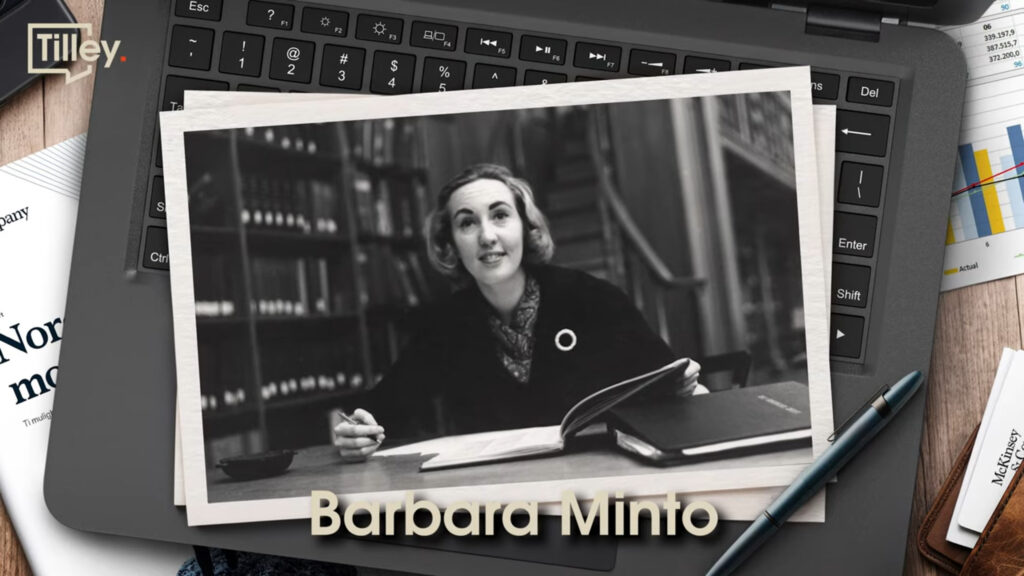
Sounds academic, but the concept is brilliantly simple. When you analyze a problem, break it into categories that don’t overlap with each other and completely cover the entire problem. Imagine you’re analyzing a company’s sales. Instead of chaotically listing factors, MECE forces you to think systematically: sales can be divided into new and existing customers. These are mutually exclusive categories – a customer can’t be both new and existing. And they’re collectively exhaustive – every sale falls into one of these categories. No sales go unaccounted for.
Why is this so important? Because it gives structure to thinking. Now any McKinsey consultant, wherever they were, could approach a problem the same systematic way. A newbie from Chicago and an experienced partner from London used the same mental model. This created predictability. Quality. And critically – it meant McKinsey could hire young graduates with no experience and quickly turn them into effective consultants. Not through years of on-the-job learning, but through mastering frameworks.
MECE was just the beginning. McKinsey started creating a library of proven approaches to solving business problems. The 7-S Framework for analyzing organizations: strategy, structure, systems, shared values, skills, style, and staff. Seven elements that need to be aligned for a successful organization. “Three Horizons of Growth” for strategic planning: managing the existing business, developing emerging opportunities, and creating innovations for the future. The BCG Matrix for portfolio analysis, which, by the way, was developed by a competitor, but the principle’s the same – turn complex reality into a simple, understandable structure.
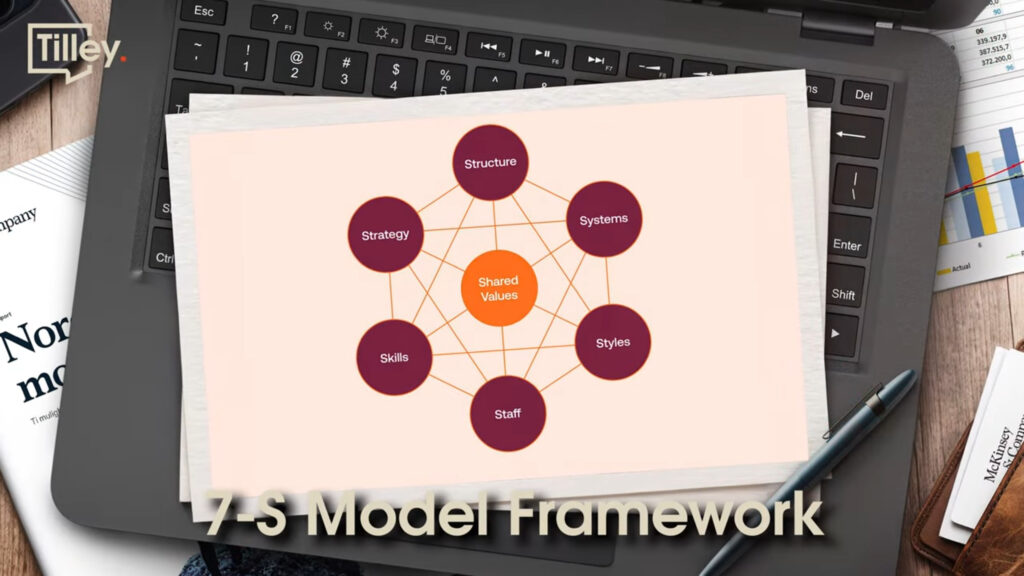
Each of these frameworks was tested on hundreds of projects. Refined. Systematically taught to every new consultant. McKinsey created what was essentially an operating system for business thinking. And this operating system spread through their employees throughout the corporate world. Former McKinsey consultants became CEOs, vice presidents, heads of strategy at the biggest companies. And they brought these ways of thinking with them. McKinsey frameworks became the language of modern business.
But frameworks were only part of the system. McKinsey also created something even more powerful – a global knowledge management system. Imagine: a consultant in Singapore is working on a retail problem. Before, they’d have to start from scratch, relying on their own experience and intuition. But at McKinsey, they can instantly access all the firm’s previous projects related to retail. Presentation slides. Analyses. Reports. Data. And even more importantly – contacts of experts who’ve already solved similar problems.
The result of this industrialization of intelligence was stunning. McKinsey could promise clients not just “a good consultant,” but access to best practices from around the world. When you hired McKinsey, you weren’t getting one person, but the full power of a global knowledge machine. A problem in your Texas oil company? McKinsey had already solved a similar problem for an oil company in Saudi Arabia. Restructuring your bank in Germany? McKinsey had done this for dozens of banks worldwide. This approach created incredible value and justified the premium prices the firm charged.
The Price of Influence
By the early 2000s, McKinsey had become more than just a consulting firm. They were the architects of corporate America. Their recommendations shaped industries. Their alumni occupied CEO chairs at the world’s biggest companies. They advised not only corporations, but governments, nonprofits, even international institutions like the World Bank. Their influence was all-encompassing. And with that level of influence came a dangerous question the firm preferred not to ask: where does advice end and responsibility begin?
The first major crack appeared with the Enron case. For those who don’t remember: Enron was an energy company that in the late 1990s was considered one of America’s most innovative enterprises. They traded energy as a commodity, created complex financial instruments, revolutionized the industry. McKinsey worked with Enron for years. They helped design the business model. Developed strategy. One of Enron’s key executives, Jeff Skilling, was a former McKinsey partner. McKinsey publicly praised Enron’s innovative approach. They used the company as a case study in their presentations.
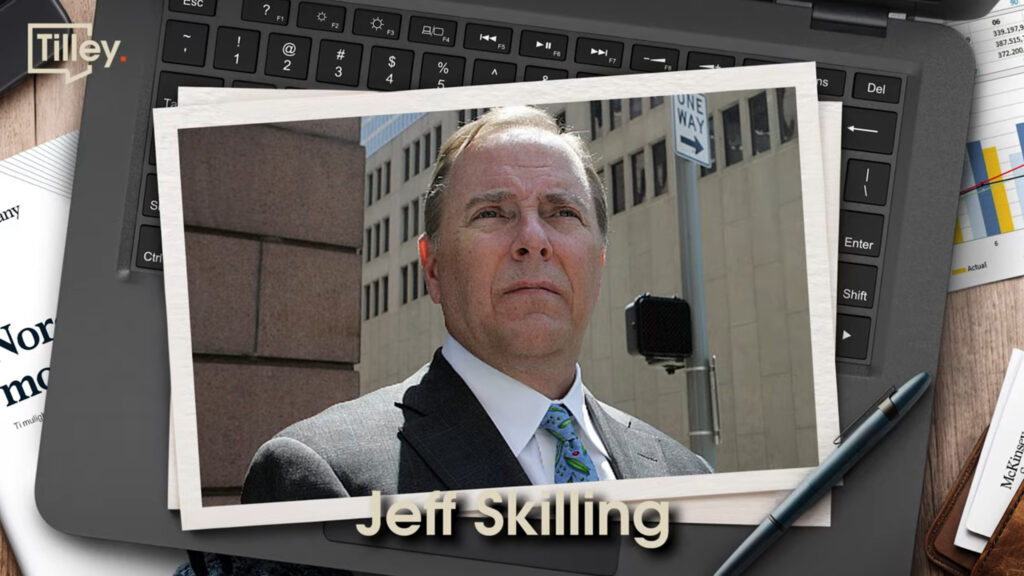
And then, in 2001, everything collapsed. Turns out Enron had been engaged in massive accounting fraud for decades. They hid debts, inflated profits, deceived shareholders. When the truth came out, the company went bankrupt literally within weeks. Thousands of employees lost their jobs. Pension funds were destroyed. Investors lost billions. And McKinsey? They said they just gave advice. That the client made the decisions. That they weren’t responsible for how their recommendations were used. Technically this was true. But it raised the question: if your advice helped create a monster, don’t you bear some of the blame?
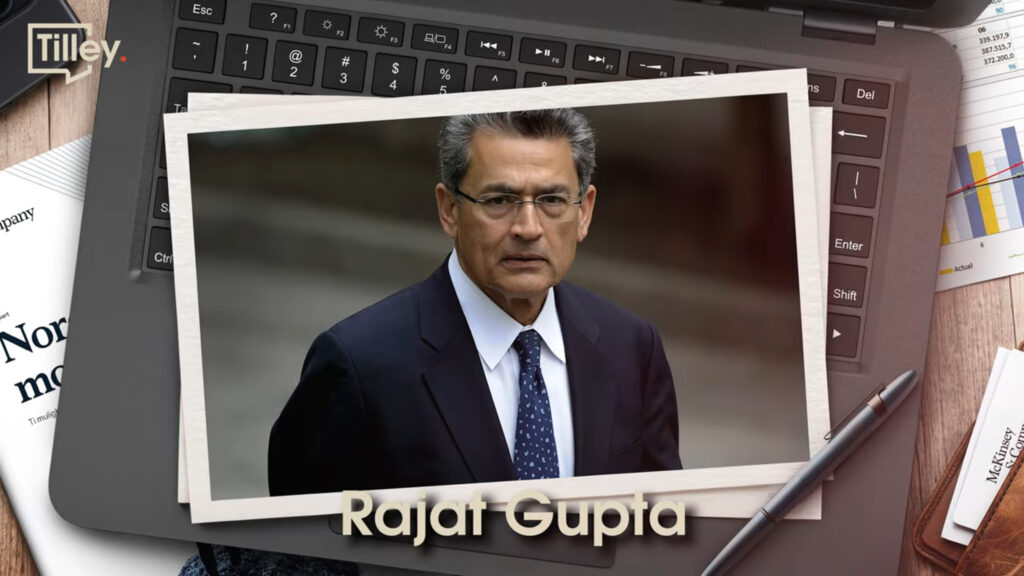
Then came personal scandals. In 2012, Rajat Gupta, former global managing director of McKinsey, was convicted of insider trading. The man who had led the world’s most prestigious consulting firm, a firm built on principles of ethics and confidentiality, turned out to be passing secret information from boardrooms to a hedge fund manager. For money. This was a blow to the firm’s reputation. If even the person at the very top doesn’t follow ethical principles, what does that say about the company’s culture?
But nothing damaged McKinsey’s reputation as badly as the opioid crisis. This is a story that shows what happens when a consulting firm puts profit above everything else. Throughout the 2000s and 2010s, McKinsey advised Purdue Pharma, the maker of OxyContin. OxyContin is an opioid painkiller that was marketed as a safe alternative to other painkillers. The problem is, it was incredibly addictive. People who were prescribed OxyContin after surgery or injury became dependent. And when they were denied prescriptions, many switched to heroin.
McKinsey advised Purdue on how to increase sales of OxyContin. Internal documents that later became public showed that consultants suggested ways to “counter emotional messages from mothers who had lost children.” They developed strategies for convincing doctors to write more prescriptions. They even discussed the idea of paying “rebates” to pharmacy chains for each overdose case to compensate them for negative publicity. Yeah, you heard that right. They discussed the idea of paying money for overdoses.
All this was happening while the opioid crisis was destroying American communities. From 1999 to 2020, over 500,000 people died from opioid overdoses in the US. That’s more than all American casualties in World War II. Entire towns turned into disaster zones where people were literally dying on the streets. And McKinsey was helping companies sell more of the drugs that were killing these people. For them it was just a business strategy. For the victims’ families it was a tragedy.
When this information became public, the consequences were devastating. McKinsey eventually apologized and agreed to pay nearly 600 million dollars in settlements with states across America. In 2024, they reached an additional settlement with the US Department of Justice for almost 650 million. The firm announced it was ending all opioid-related work. But money doesn’t bring back lives. Apologies don’t change the fact that one of the world’s most prestigious consulting firms helped exacerbate one of the worst public health crises in American history.
And this wasn’t the only controversial work. In 2018, information leaked that McKinsey had done analysis for the Saudi Arabian government, tracking public sentiment on social media and allegedly identifying regime critics. Some of these people were later detained. McKinsey claimed they didn’t know how the information would be used. But the fact remains: they provided data to an authoritarian regime that then used it for repression.
Work with China also raised concerns. McKinsey advised Chinese state-owned companies and government agencies, including those working in “sensitive” sectors like security and technology. This raised questions in Washington about national security. Should an American consulting firm help a US strategic competitor? Where’s the line between commercial activity and potential threat to national interests?
All these scandals revealed a fundamental problem in McKinsey’s business model. The firm positioned itself as neutral. They don’t do policy, only efficiency. They help clients achieve goals, whatever those goals are. But in the real world, neutrality is a myth. When you help a tobacco company sell more cigarettes, you’re not neutral. You’re contributing to a health problem. When you help a pharmaceutical company sell addictive opioids, you’re not neutral. You’re part of the crisis. When you advise authoritarian regimes, you’re not neutral. You’re supporting repression.
McKinsey learned a hard lesson. When your advice shapes the world, when your influence is that great, you can’t hide behind “we’re just consultants.” You bear responsibility. And that responsibility includes choosing who to work with and who not to. Some money isn’t worth taking. Some projects aren’t worth accepting. No matter how well they pay. Because ultimately, a reputation built over decades can be destroyed by one scandal.
The firm faced a choice. They could continue in the same vein, risking even greater reputational damage. Or they could transform. Acknowledge the problems. Change policy. Find a new path forward. Under new leadership, McKinsey chose transformation. And what they did next may define the future not only of themselves, but of the entire consulting industry.
Transformation and The Future
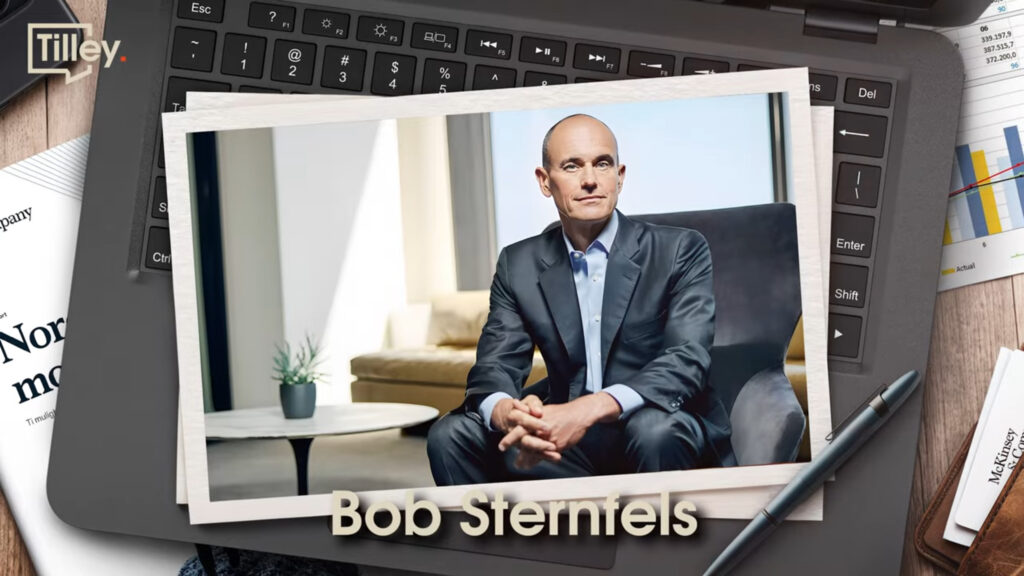
Around 2019, something started changing inside McKinsey. After a series of scandals, settlements, Congressional hearings, the firm realized: business as usual was no longer possible. They needed a fundamental reassessment. Not cosmetic changes, but real transformation of culture, processes, the very understanding of the consultant’s role in the modern world. In 2021, new global managing partner Bob Sternfels took the helm. And he faced a choice that would define the firm’s future.
The first step was ethical reassessment. McKinsey tightened client vetting. Before, the decision to accept a project was made mainly based on profitability. Now every potential project had to go through expanded risk and ethics teams. Questions that were previously considered unimportant came to the forefront. Who is this client? What do they do? What impact will our work have on society? Are there potential conflicts of interest? McKinsey started refusing entire categories of work. Opioids? Never again. Tobacco companies? No. Projects with authoritarian regimes where there’s risk of human rights violations? Highly questionable.
This wasn’t just a PR move. Refusing profitable projects cost the firm money. Real money. But leadership understood: long-term reputation is more important than short-term profit. The firm that once worked for anyone who paid was learning to say “no.” Some money isn’t worth taking. This was a radical shift for an organization whose culture for decades had been oriented toward growth at any cost.
But the deeper shift was strategic. McKinsey realized something fundamental: the world had changed, and the traditional consulting model was dying. Clients no longer wanted thick reports with recommendations. They didn’t want to pay millions for PowerPoint slides that would then collect dust on a shelf. They wanted results. Real, measurable, tangible results. And if a consultant couldn’t guarantee results, why pay them?
So McKinsey made a radical move. From consulting to implementation. From advice to results. Today about a third of McKinsey’s revenue comes from outcomes-based contracts. This means the firm gets paid not for time spent on a project, but for achieving specific metrics. Increasing revenue by X percent. Cutting costs by Y millions. Launching a new product by a certain date. If the client doesn’t reach these goals, McKinsey earns less. If they exceed them, earns more. This alignment of interests creates a completely different dynamic.
But this also required fundamental changes in how the firm works. Before, a consultant could come in, give advice, and leave. Now consultants had to stay and help implement changes. Work side by side with client employees. Get their hands dirty in real operations. This required new skills, new people, a new way of working. McKinsey started hiring not just analysts and strategists, but implementation specialists, project managers, technical experts.
And then came the next big challenge. Artificial intelligence. In the 2020s, it became clear that AI would change everything. And consulting was no exception. In fact, consulting was the perfect industry for AI disruption. Think about what consultants do. They analyze data. Find patterns. Apply frameworks. Give recommendations. All of this – things AI can do faster and cheaper. A large language model can analyze financial statements in seconds. Can find trends in huge data sets. Can even generate strategic recommendations based on best practices.
For many consulting firms, this was an existential threat. If AI can do what consultants do, why pay consultants? McKinsey could deny this threat. Bury their head in the sand and hope it passes by. But they chose a different path. They decided to lead the transformation. In 2023, McKinsey launched Lilli – their own AI assistant. This isn’t just a chatbot. It’s a sophisticated system connected to more than 40 internal McKinsey knowledge sources. Decades of research. Hundreds of thousands of documents. Expertise of thousands of consultants.

The results were immediate. About 72% of McKinsey’s staff now use Lilli regularly. Over 500,000 queries are performed monthly. Consultants say it saves them up to 30% of the time they previously spent searching for information. No more spending hours digging through old presentations trying to find a relevant case. Just ask Lilli, and she instantly provides all related materials, summarized and organized. This makes every consultant more productive. And frees up time for what AI can’t yet do well – deep strategic thinking, managing client relationships, navigating complex organizational politics.
But McKinsey went further. They realized that the experience of creating Lilli wasn’t just an internal tool. It’s a product they can sell. Now a significant part of McKinsey’s business is helping companies create their own AI systems. Not just implementing ready-made solutions, but creating custom AI agents tuned to a specific company’s specifics, industry, tasks. By 2024, McKinsey was managing more than 12,000 AI agents inside various client organizations. These agents work like specialized digital employees, automating routine tasks and freeing people for more valuable work.
By 2024, about 40% of McKinsey’s revenue came from technology and AI consulting. This represents a fundamental shift. McKinsey, which for decades was synonymous with strategic consulting, is now becoming a technology company. They don’t just give advice about technology. They create technology. Implement it. Train people to use it. This is a completely new business model.
And here’s what’s interesting: despite all the scandals, settlements, criticism, McKinsey’s revenue kept growing. In 2021 they hit 12 billion dollars. By 2024 – 16 billion. How is this possible? How can a company that’s been at the center of so many controversies continue growing? The answer is complex, but it says something important about the nature of modern business.
First, McKinsey is too deeply rooted in corporate DNA. Their alumni are everywhere. In boardrooms, in governments, in startups. When these people face a problem, they naturally think: “Let’s hire McKinsey.” It’s a reflex. A network of relationships built over decades doesn’t disappear because of scandals.
Second, despite the problems, McKinsey still represents a quality brand. When a CEO hires McKinsey, it’s a signal to the board: we’re taking this problem seriously. We’re using the best. If the project fails, well, we hired McKinsey, so the problem must have been really complex. It’s reputation insurance. And in the corporate world where personal career risks are high, this insurance has huge value.
But what’s ahead? The world is changing faster than ever. AI continues developing. New generations of leaders who grew up with technology may not need consultants the way previous generations did. There’s growing skepticism about elite institutions in general. People are asking: do we need these expensive intermediaries? Or can companies solve problems themselves?
McKinsey is betting the answer is somewhere in the middle. Yes, technology will make some consultant work obsolete. But it’ll also create new, more complex problems. Problems of AI implementation, business model reorganization, managing ethical dilemmas of new technologies. And for these problems, companies will still need help. Not old consultants with PowerPoint. But new consultants who understand technology, can implement change, and are willing to take responsibility for results.
Conclusion
So what’s the takeaway from McKinsey’s century-long story? For me, it’s a story about the power of systems. Most people and most businesses fail not because they’re not smart enough or don’t work hard enough. They fail because they don’t have a system. They solve problems ad hoc, relying on intuition, repeating the same mistakes. McKinsey showed the world that you can industrialize excellence. That you can take something seemingly unsystematizable like human intelligence and create a machine that produces consistently high-quality results.
They did this through frameworks. Through knowledge management. Through a hiring and training system that turns smart graduates into effective consultants. Through a culture of excellence that doesn’t tolerate mediocrity. It’s no accident McKinsey has dominated consulting for almost a hundred years. It’s the result of systems built, tested, and constantly improved over decades.
McKinsey’s story is a story of human genius and human flaws. Genius in creating a system that turned consulting from a craft into an industry. Flaws in forgetting that behind every business decision are real people with real lives. Ultimately, this is a story about power and responsibility. About how with great influence must come great care. And about how even the most powerful machines need a compass to point the right direction.
McKinsey continues shaping the business world. Their alumni become CEOs of the biggest companies. Their ideas are taught at the best business schools. Their methods are copied by competitors. Like it or not, McKinsey remains one of the most influential organizations in the corporate world. And understanding how they work, how they think, how they achieved such success, gives us a window into how modern business actually works at the highest level.
Now it’s your turn. Have you ever worked with consultants? What was your experience? Or maybe you’ve worked in consulting yourself? Share your thoughts in the comments below. I read every comment, and I’m genuinely interested in hearing your perspective!
And if you enjoyed this article, I highly recommend checking out the story of Singer – another company that quietly helped build the modern world by introducing innovations like consumer credit. Take a look and see for yourself how one bold idea reshaped everyday life.