
I bet you’ve assembled IKEA furniture at least once in your life. Remember that feeling? You open the box, see dozens of parts, those mysterious wordless instructions, and think: “Well, that’s it, I’m never gonna figure this out.” But a couple of hours later, you’re standing in front of a finished bookshelf with the kind of pride you’d feel if you’d built a house with your bare hands.
That feeling is no accident. It is a brilliantly designed strategy by a company that turned a simple Swedish farm into a global empire with revenue exceeding 40 billion euros a year.
I’m sure you’ve wondered: why IKEA specifically? Why not some other furniture store? Everyone makes furniture, but it’s that blue-and-yellow logo that triggers the same emotions in millions of people worldwide. This isn’t just a store. It’s an entire life philosophy, packed into flat boxes. And today, in this article, I’m going to share the story that started with five matches and ended with a revolution in how we furnish our homes.
If you’re new here, I’m Jeff Tilley, and I explore how businesses work, how they influence our culture, and everything in between. If you enjoy deep dives into the world behind famous brands, be sure to follow our blog. Ready to dive in? Let’s get started!
The Boy Who Sold Matches
Picture Sweden in the 1920s. The Småland region in the south. Harsh climate, poor soil, where every krona counts. Here, on a small farm called Elmtaryd, a boy named Ingvar Kamprad was born in 1926. His family wasn’t wealthy, like most families in the region. But this kid had something special. Something you can’t buy with money. An entrepreneurial streak that showed up so early it was borderline miraculous.
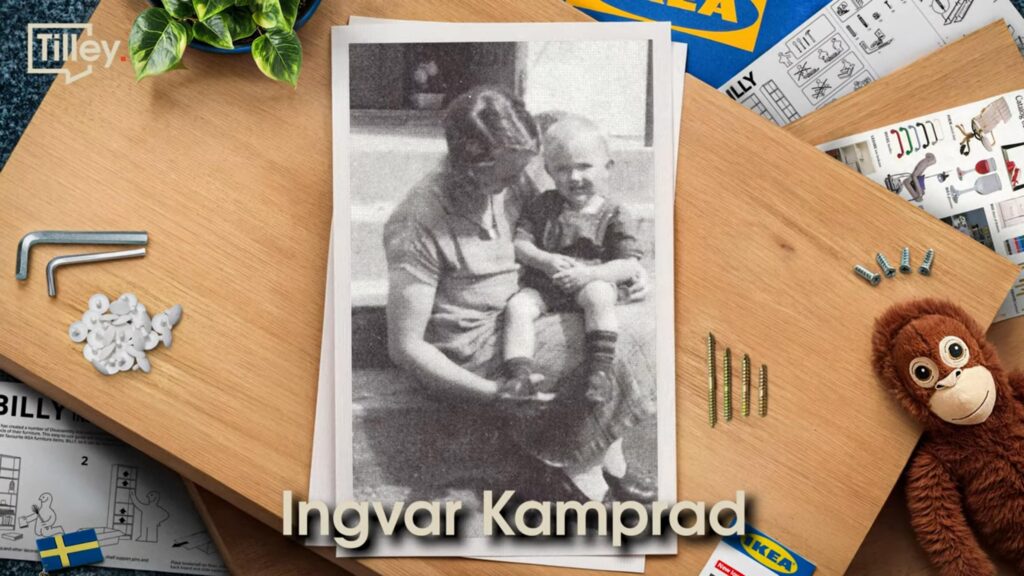
At five years old, when other kids were playing with toys, Ingvar was already running his first business. He’d buy matches wholesale in Stockholm and resell them to neighbors with a small markup. Imagine a five-year-old understanding the concept of wholesale purchasing and retail. This wasn’t just a clever kid. This was a future industry revolutionary. And the interesting thing is, he didn’t stop at matches. Fishing gear, Christmas decorations, garden seeds. Anything that could be bought cheaper and sold for more ended up in his little empire.
But what really set Ingvar apart from other kids was his obsession with efficiency. He wasn’t just selling. He was optimizing every step of the process. How to deliver goods faster? How to pack them more compactly? How to make customers want to come back? These questions were spinning in the head of a boy who hadn’t even finished school yet. And this obsession would become the foundation of the future IKEA empire.
By seventeen, Ingvar had accumulated enough knowledge and a small capital to officially register his company. The year was 1943. The world was engulfed in World War II, and this young Swede decided to start a business. He came up with the name from his initials: I and K from Ingvar Kamprad, E from the farm name Elmtaryd, and A from the village Agunnaryd. IKEA. Four letters that would be recognized in every corner of the planet within a few decades. But for now, it was just a small company selling everything: pens, wallets, picture frames. Nothing special. Just another small business in post-war Sweden.
And here’s where it gets interesting. Because in the late 1940s, Ingvar made a decision that would forever change his life and the lives of millions of people. He decided to start selling furniture. But why furniture specifically? Post-war Europe had a massive demand for affordable housing and everything related to it. Destroyed cities needed rebuilding, young families were creating new homes, and they all needed furniture. But quality furniture was expensive. Too expensive for ordinary people. And Ingvar saw this not just as a problem. He saw it as an opportunity.
He started working with local craftsmen from Småland, ordering simple but solid furniture from them. No frills, no luxury. Just functional pieces that serve their purpose and cost reasonable money. And most importantly, he understood something fundamental: if you want to sell a lot and cheap, you need to optimize every stage of the process. From production to delivery. From packaging to assembly instructions. Every detail mattered. Every krona counted. And this philosophy would become the DNA of the company for decades to come.
By the early 1950s, IKEA wasn’t just a company selling furniture. It was a company with a vision. With a mission. To make quality furniture accessible to everyone. Not just for the rich. Not just for the middle class. For everyone. And Ingvar Kamprad knew that to achieve this goal, he’d have to break all the rules of the traditional furniture industry. He’d have to invent a completely new way of producing, selling, and delivering furniture. And he was ready for that challenge.
But the path wasn’t smooth. Ahead of him lay obstacles that could have broken any other entrepreneur. Boycotts from competitors, supplier problems, cultural barriers when entering new markets. The IKEA story isn’t a fairy tale about instant success. It’s a story of struggle, innovation, and relentless pursuit of better solutions. And now we’re gonna dive into exactly how Ingvar Kamprad turned a small Swedish company into a global giant that forever changed how we furnish our homes.
The Flat-Pack Revolution
So, early 1950s. IKEA is selling furniture but facing a serious problem. Traditional furniture factories start boycotting the company. Why? Because IKEA’s low prices threaten their business. They agree among themselves not to supply goods to this upstart from Småland. Imagine the situation: you’ve got a growing business, customers ready to buy, and suppliers refuse to work with you. What would you do? Most entrepreneurs would’ve given up. But not Ingvar Kamprad. Instead of giving up, he decided to go further. If existing factories don’t want to work with him, he’ll find new ways of production. Or create them himself.
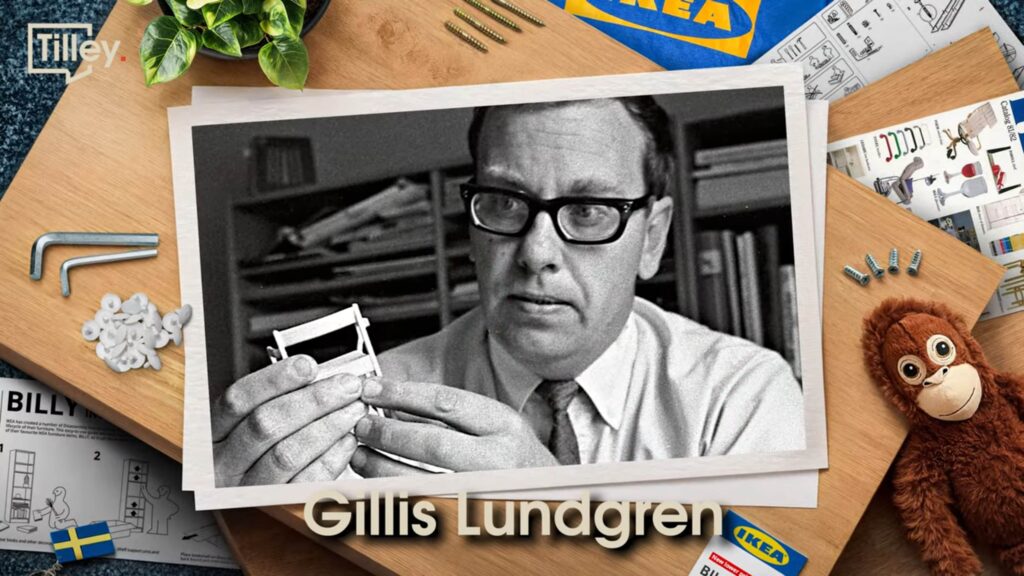
And then something happens that would forever change the furniture industry. In 1956, one of IKEA’s employees, Gillis Lundgren, faced a problem. He needed to transport a table, but it wouldn’t fit in the car. And then Gillis had a brilliantly simple idea: what if we just unscrew the legs? The table becomes flat, takes up way less space, and can be easily transported. This simple thought became the starting point for one of the most revolutionary concepts in furniture industry history. The concept of flat-pack.
Imagine you could cut transportation costs by 70-80% just by changing how you package things. Imagine that instead of transporting bulky assembled furniture, you’re transporting neat flat boxes that can be stacked on top of each other. This isn’t just saving money. This is a complete transformation of logistics. Now one truck could fit two to three times more goods. Warehouses became more efficient. Delivery got cheaper. And all that saved money could be returned to the customer in the form of even lower prices.
But there was another side to this concept. If furniture comes disassembled, someone has to assemble it. And here IKEA made a move that many thought was insane. They decided that the customer would assemble the furniture themselves. Think about that for a second. Before IKEA, furniture always came ready to use. It was a status product, crafted by masters and delivered to your home in perfect condition. And now some Swedish company is suggesting you mess around with screws and instructions yourself? Many thought it would fail. But something amazing happened.
People started valuing furniture they assembled themselves even more than ready-made. Psychologists would later call this phenomenon the “IKEA effect.” When a person invests their labor in creating something, they automatically value it more. Even if it’s just screwing four legs onto a table. It creates an emotional connection between the buyer and the product. You didn’t just buy a table. You created it. With your own hands. And now this table has special meaning for you. It’s part of your story. Part of your home.
But for this concept to work, they needed to solve a technical problem. How to make it so an average person with no carpentry experience could assemble furniture without mistakes? The answer was visual instructions. No words. Just pictures. Numbered parts, step-by-step illustrations, and universal symbols understandable to people of any nationality. It was a genius move. No need to print instructions in dozens of languages. No need to worry about translation. Pictures worked everywhere: from Stockholm to Tokyo, from New York to Mumbai.
And IKEA went further. They started designing furniture from scratch with the flat-pack concept in mind. Every part was developed to be easily packaged, transported, and assembled. Special fastening systems that didn’t require complex tools. Dowels that simply insert into holes. Conformat screws that reliably connect parts without special skills. Everything was thought out to the smallest detail. And the result? By the end of the 1950s, IKEA’s sales had almost doubled. The company that traditional manufacturers boycotted found a way to not just survive, but thrive.
Moreover, flat-pack solved another critical problem. Ecology. Fewer trucks on the roads meant less CO2 emissions. More compact packaging meant less waste. Efficient use of warehouse space meant less need for new buildings. IKEA accidentally created one of the most eco-friendly business models in the furniture industry. And this was just the beginning.
By the 1960s, the flat-pack concept had become IKEA’s calling card. But Ingvar Kamprad understood that one innovation wasn’t enough. Furniture has become more affordable and easier to transport, but how to get it to customers? How to explain to them that they’re not just buying cheap furniture, but quality, functional design? For this, they needed a new philosophy. A philosophy that would unite five key elements: form, function, quality, sustainability, and low price. IKEA called this democratic design. And this concept would become the foundation of everything the company does to this day.
The Philosophy of Democratic Design
Democratic design. Sounds nice, right? But what does it actually mean? For IKEA, this isn’t just a marketing slogan. It’s a system of thinking that permeates every aspect of the company’s work. From the designer’s first sketch to the moment when a customer opens the box at home. Let’s break down exactly how this works, because this philosophy is what turned IKEA from a Swedish company into a global phenomenon.
First element – form. Furniture should be beautiful. This seems obvious, but in the 1960s, beautiful furniture was a privilege of the wealthy. Ordinary people settled for what was functional but not necessarily aesthetic. IKEA challenged this status quo. They started working with talented designers who created simple but elegant forms. Clean lines, minimalist Scandinavian style that doesn’t go out of fashion. And most importantly – these designs were available to everyone. You didn’t need to be a millionaire to have a beautiful interior.
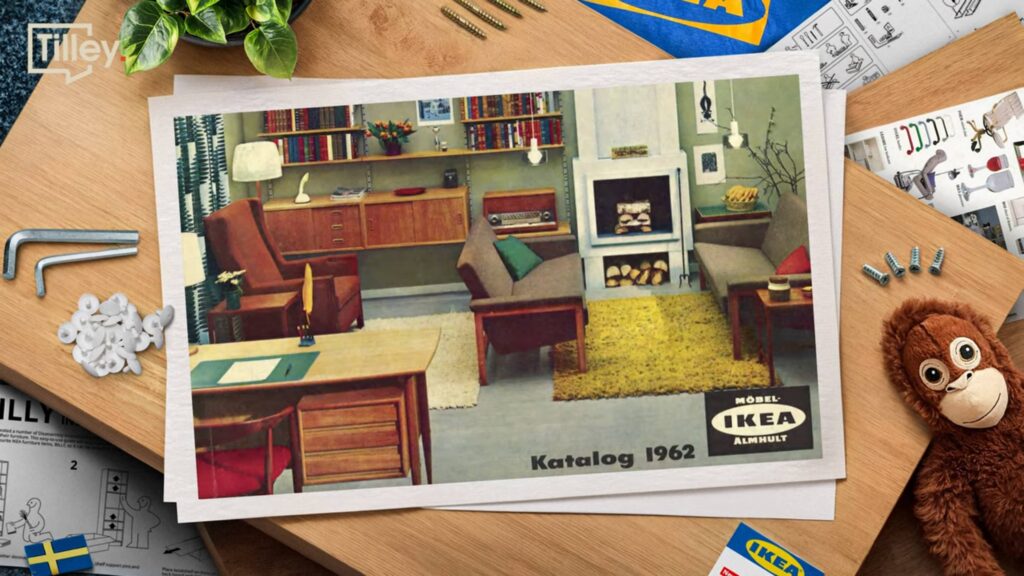
Second element – function. Beauty without functionality is useless. And here IKEA showed itself as a master of ergonomics. Every wardrobe was designed considering standard clothing sizes. Every kitchen was developed considering the average person’s height and standard appliance dimensions. Tables were at a height comfortable for working. Chairs supported the back properly. Even children’s furniture was designed with child safety and comfort in mind. This wasn’t just furniture. These were life tools that made everyday tasks easier and more pleasant.
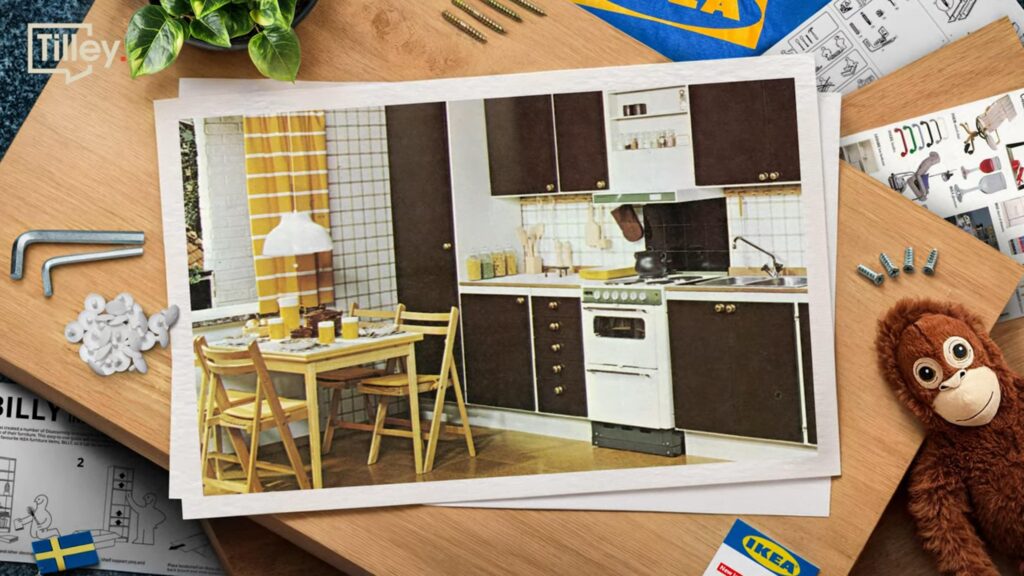
Third element – quality. When you sell cheap furniture, people automatically assume it’s low quality. IKEA needed to break this prejudice. And they did it through rigorous testing. Every product went through a series of strength tests. Chairs? A special machine sat on them thousands of times, simulating years of use. Tables? Heavy loads were placed on them to check if they’d hold. Drawers were opened and closed tens of thousands of times. And only after a product passed all these tests did it make it to stores. The result? Furniture that cost little but lasted for years.
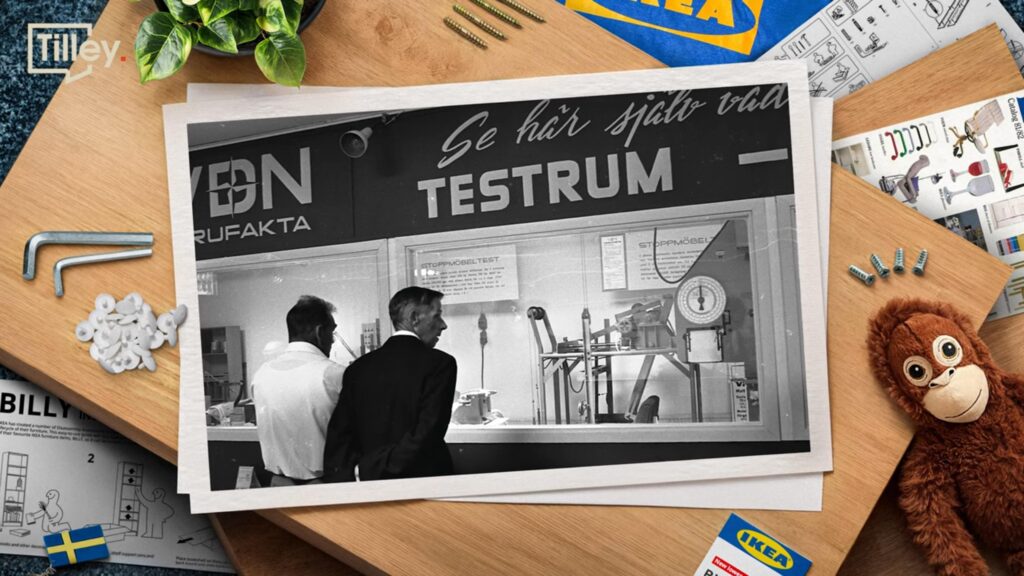
Fourth element – sustainability. And this is a topic that became critically important long before everyone started talking about climate change. IKEA, being one of the world’s largest wood consumers, understood its responsibility. The company started cooperating with the Forest Stewardship Council, guaranteeing that all purchased wood is sourced responsibly. They invested in their own forestry operations, growing fast-growing tree species like eucalyptus and bamboo. They started using recycled materials: plastic from oceans, recycled wood, eco-friendly fabrics. By the 2020s, over 60% of all IKEA products were made from renewable or recycled materials. And this isn’t just a number. It’s a commitment to future generations.
And finally, the fifth element – low price. This is the foundation of everything. Because without an affordable price, this entire philosophy is meaningless. But how do you make quality, beautiful, functional, and eco-friendly furniture cheap? Here IKEA applied what they call “design from the start with price in mind.” This means price isn’t something determined at the end of the process. It’s determined at the very beginning. The designer knows how much the product should cost and designs it with that constraint in mind. What materials can be used within the budget? How to simplify production? How to optimize packaging? Every decision is made considering the final price.
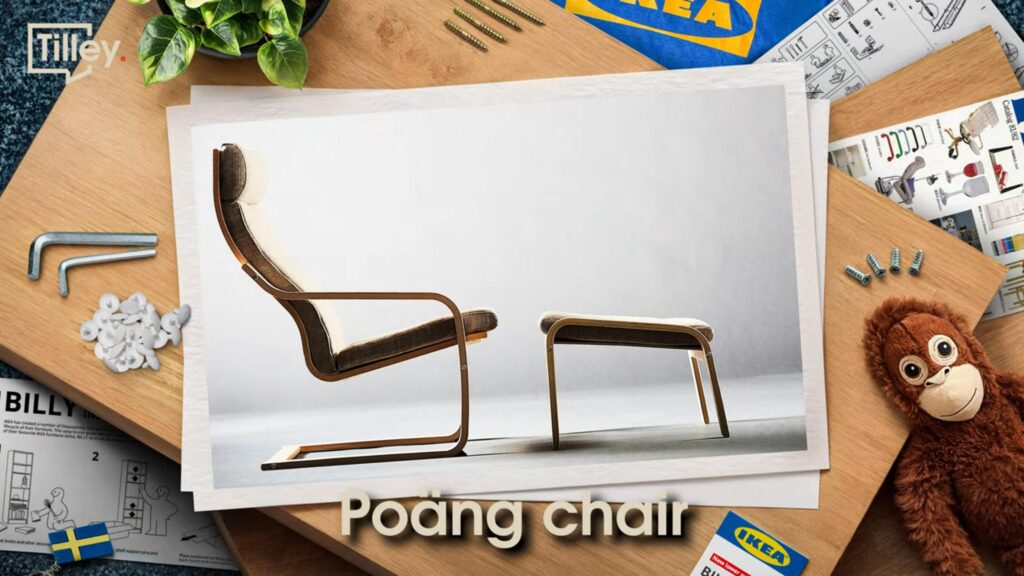
Let’s look at a specific example. The famous Poäng chair. It appeared in 1976 and remains one of IKEA’s most popular products to this day. Over one and a half million units are sold every year. Why? Because it embodies all five principles of democratic design. Form: elegant curved bentwood frame that looks modern even almost 50 years later. Function: ergonomic chair that supports the back and is incredibly comfortable for reading or watching TV. Quality: the frame supports up to 110 kilograms of weight and lasts for decades. Sustainability: made from wood sourced from responsible sources. And price: depending on the region, the chair costs between $80 and $150, which is many times cheaper than similar designer chairs.
But democratic design isn’t just about products. It’s about the entire experience of interacting with IKEA. From the moment you enter the store to the moment you tighten the last screw at home. Every detail is thought out. Stores are designed like a maze that leads you through all departments. You see finished rooms styled for different apartment sizes. A small 25-square-meter studio? Here’s how to use space most efficiently. A large family apartment? Here are ideas for kids’ rooms, living rooms, kitchens. And while you’re walking, getting inspired and coming up with ideas for your home, the cart fills up.
Statistics speak for themselves. Over 60% of IKEA visitors buy more than they initially planned. The average check increases by 20-30% precisely because of these showroom areas. People don’t just see furniture. They see possibilities. They see what their home could become. And that’s a powerful motivator for purchase. And at the end of the journey? The famous food court with Swedish meatballs, hot dogs, and cinnamon buns. This isn’t just food. It’s part of the experience. It’s a reason to stay longer. Bring the family. Make a trip to IKEA not just a purchase, but an event.
And here we come to the key point. Democratic design is a story about making good design accessible to everyone. Not for the elite. Not for the middle class. For everyone. A student renting their first apartment. A young family expecting a baby. A retiree who wants to update their home. IKEA says: a beautiful, functional home isn’t a privilege. It’s a right. And we’ll do everything to make this right accessible to everyone. This philosophy resonates with millions of people worldwide. And it’s what turned IKEA from a furniture store into a cultural phenomenon.
Global Expansion and the Future
By the 1970s, IKEA already dominated the Scandinavian market. But Ingvar Kamprad wasn’t someone who stopped at what he’d achieved. He looked at the world map and saw endless opportunities. Millions of people in Europe, America, Asia needed affordable quality furniture. And IKEA was ready to give it to them. But entering new markets isn’t just opening stores in other countries. It’s a cultural challenge. Every country has its traditions, its preferences, its ideas about what a home should be. How can a Swedish company adapt to this diversity while maintaining its identity?
The first steps beyond Scandinavia were taken in the 1960s. Norway in 1963, Denmark in 1969, Switzerland in 1973. European countries were a logical choice. Cultural proximity, similar living standards, a growing middle class looking for affordable home solutions. But the real breakthrough came in 1974 when IKEA opened its first store in Germany. This was a huge risk. Germany had a developed furniture industry with strong local brands. Why should Germans buy Swedish furniture? But IKEA bet on its main strength – price and design. And it worked. Germans appreciated the functionality, quality, and affordability. The store was successful, and Germany became one of IKEA’s largest markets outside Sweden.
The next big step was the United Kingdom. In 1987, IKEA opened a store in Croydon, a London suburb. And what happened next exceeded all expectations. In the first week, the store was visited by over 100,000 people. Roads were blocked, parking lots overflowed, and chaos reigned in the store. The British had never seen anything like it. A huge store where you could spend an entire day. Showrooms showing how to furnish even the smallest apartment. And prices that were many times lower than local competitors. It was a triumph. And from that moment, IKEA became not just a furniture company. It became a cultural phenomenon.
But not all markets were easy to conquer. Take Japan, for example. The first attempt to enter the Japanese market was made in 1974. And it failed. Completely. Why? Because IKEA didn’t account for cultural specifics. Japanese were used to furniture being delivered ready to use and installed by professionals. The “assemble yourself” concept seemed strange and inconvenient to them. Apartments in Japan were smaller than in Europe, and IKEA’s standard sizes didn’t fit. Plus, Japanese expected exceptional service, and IKEA with its self-service model didn’t meet those expectations. The company closed stores and left the market.
But IKEA didn’t give up. They learned. Analyzed. Adapted. And in 2006 they returned to Japan. But this time everything was different. Stores were smaller and more compact. The assortment was adapted for small Japanese apartments: narrow wardrobes, folding tables, multifunctional furniture. Assembly instructions were even more detailed, with emphasis on visualization. And most importantly – IKEA offered assembly and delivery services for an additional fee. Japanese could choose: assemble themselves or pay professionals. This flexible approach worked. Today IKEA successfully operates in Japan, and sales grow year over year.
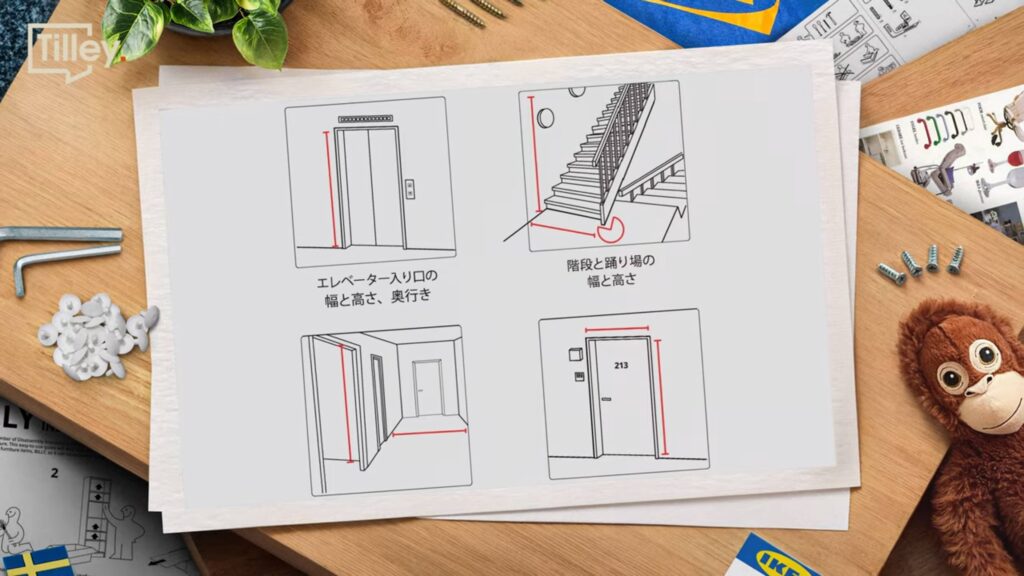
This example shows an important lesson: globalization isn’t copying one model to all countries. It’s an adaptation. Understanding local needs. Respect for cultural specifics. IKEA learned to balance between global identity and local relevance. Core principles remained unchanged: democratic design, low prices, flat-pack. But details adapted. In India, IKEA offers more bright colors and textiles that match local traditions. In the US, bed and mattress sizes are adjusted to American standards. In China, restaurant menus include local dishes alongside Swedish meatballs.
But how do you manage such a huge global network? By the 2000s, IKEA had hundreds of stores in dozens of countries. Thousands of suppliers worldwide. Millions of products in circulation daily. Logistics at this scale is an incredibly complex task. And here IKEA applied what they call “centralized control with local autonomy.” At first glance this sounds like a contradiction. How can you simultaneously control everything and give freedom?
The secret is in balance. IKEA headquarters in Sweden sets global standards. Product design, quality requirements, environmental standards, pricing policy. These are things that aren’t subject to change. Every IKEA store, whether in Stockholm or Sydney, must meet these standards. But at the same time, local managers have freedom to adapt marketing, assortment, and operations to local conditions. They know their market better than anyone at headquarters. They understand what their customers need. And this freedom allows IKEA to remain relevant in very different cultures.
And now we come to today. IKEA has over 450 stores in 63 countries. Over 800 million visitors annually. Revenue over 40 billion euros. Over 200,000 employees worldwide. These are impressive numbers. But behind them is something bigger. IKEA changed how we think about home. It proved that a beautiful, functional interior isn’t a privilege of the chosen few. It’s an opportunity for everyone. A student can furnish their first apartment. A young family can create a cozy space for a child. A retiree can update their home. And all without needing to take out a loan or save for years.
Moreover, IKEA became a symbol of a certain lifestyle. Scandinavian minimalism. Functionality. Practicality. Sustainability. When people see that blue-and-yellow logo, they don’t just think about furniture. They think about an entire life philosophy. That good things don’t have to be complicated or expensive. That home is a place we create ourselves. With our own hands. Our own choices. And IKEA gives us the tools for that.
But the story doesn’t end here. New challenges lie ahead. Climate change demands even greater environmental responsibility. IKEA set an ambitious goal: to become a completely circular company by 2030. This means all materials will be renewable or recycled. All products will be designed to be easily repaired, updated, or recycled at end of life. IKEA is already testing furniture buyback programs. You can return old IKEA furniture, get credit for it, and buy something new. Old furniture is either sold at a discount or disassembled and recycled. This isn’t just business. It’s an investment in the planet’s future.
Digitalization also continues to develop. More and more people shop online, and IKEA is adapting to this trend. They’re opening small urban stores in major city centers where you can see samples and place an order, and goods are delivered from the nearest warehouse. They’re experimenting with express delivery for small items. They’re developing virtual showrooms where you can explore entire rooms in VR. The future of retail is changing, and IKEA remains at the forefront of these changes.
Competition is also growing. New players, from online giants like Amazon to local manufacturers offering customized solutions, are fighting for market share. But IKEA has something many competitors don’t. Emotional connection with customers. For millions of people, IKEA isn’t just a place where they bought a sofa. It’s a place where they found inspiration for their first home. Where they spent a Saturday with family, walking through showrooms and dreaming about the future. Where they first felt pride assembling something with their own hands. These memories create loyalty that money can’t buy.
And so we return to the beginning of our story. A boy who at five sold matches to neighbors. A young man who founded a company with 300 kronor capital. An entrepreneur who invented flat-pack and democratic design. A visionary who built a global empire of 450 stores. Ingvar Kamprad passed away in 2018 at age 91. But his legacy lives on. In every home with IKEA furniture. In every family that was able to create a cozy space thanks to affordable prices. In every person who assembled their first furniture and felt pride in what they accomplished.
IKEA is more than a furniture company. It’s proof that good design can be affordable. That business can be successful and responsible at the same time. That a global company can maintain its values while adapting to different cultures. And that sometimes the simplest ideas – selling furniture in flat boxes, giving people the ability to assemble it themselves, making design accessible to everyone – can change the world.
So next time you’re assembling an IKEA table or sitting in a Poäng chair, remember this story. The story of how one boy from a poor region of Sweden changed how billions of people furnish their homes. And how a company founded on principles of honesty, functionality, and accessibility became a global phenomenon that continues to inspire today.
Now I want to hear your story. What IKEA furniture did you assemble first? What memories do you have connected to this brand? Share your thoughts in the comments below!
And by the way, if you want to dive into other fascinating brand stories, we highly recommend taking a look at the evolution of LEGO. It’s a captivating journey from a small wooden toy workshop to the world’s most famous brick – perfect for anyone who loves the art of building!