
This is a scalpel. Surgeons have used tools like this for thousands of years. But there’s a massive problem. It’s a very invasive toll. It makes relatively large cuts, causes heavy blood loss, and leaves patients in recovery for months.
To fix this, scientists invented the laparoscope – a tiny camera that lets doctors operate through small holes. It’s a miracle for patients. After surgery, in some cases patients can leave the hospital the next day. But it became a nightmare for surgeons. The movements are tiny and unforgiving. Even a microscopic hand shake can mean total failure. It takes a decade to master, and most people simply can’t do it.
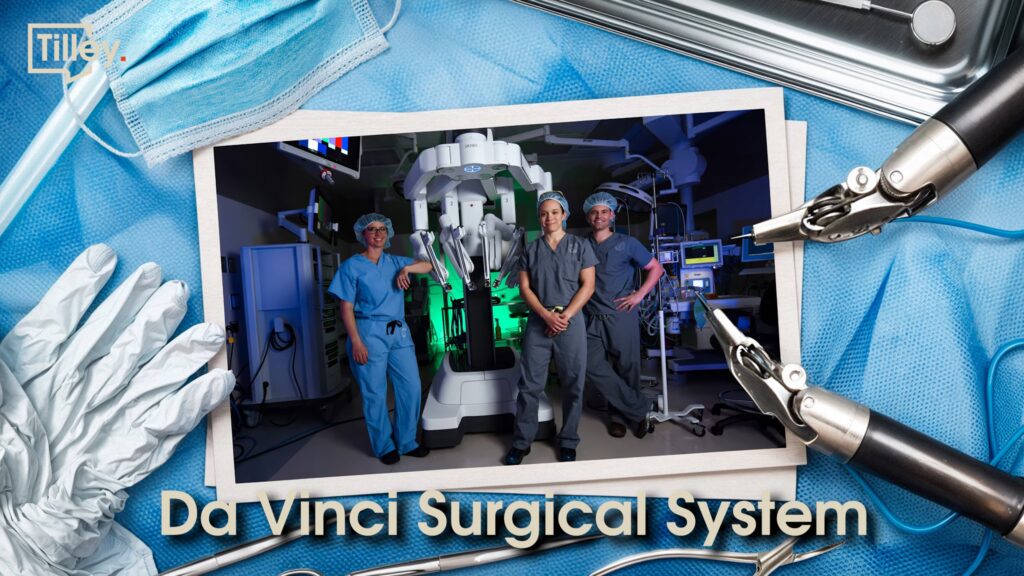
But one company seems to have found a solution to that problem. This company is Intuitive Surgical. It invented a robot that promises to solve all the problems with laparoscopy while keeping all its benefits. Allegedly, the robot filters out human tremors, making every move perfectly steady. It’s fast to learn. It turns a ten-year training process into just a few years making operations more accessible. Finally, the robot promises to be much less demanding to doctors themselves. It filters in precise movements which increases numbers of doctors we could train and make it accessible to even more people.
Lastly, this is a deeply personal and even intimate topic to me. Every man on this planet including you and me has a prostate. Given that 96% of you reading this article are men, there’s a real chance this robot could save your men’s health one day. So is Intuitive Surgical holding up to its promise?
Part 1. The Problem Nobody Could Solve
For context. In the late 1980s surgery was going through a revolution. For the first time in history, doctors started doing operations through tiny incisions instead of slicing patients open from edge to edge. It’s called minimally invasive surgery, or laparoscopy. The concept is simple: instead of one huge incision, you make several small holes. Through one hole goes a camera. Through others – long, thin instruments. The surgeon watches a screen and manipulates the tools from outside the patient’s body.
The advantages were obvious. Less trauma for the patient. Less blood loss. Less pain after surgery. Faster recovery. In other words – less risks. Patients who used to stay in hospitals for weeks now went home in a few days. It was a real revolution. But there was one massive problem: laparoscopic surgery was insanely difficult. Imagine trying to tie your shoelaces using two long chopsticks while looking at a TV screen. That’s exactly what doing laparoscopic surgery was like, just twice more difficult.
Surgeons looked at a flat two-dimensional image. No depth. No perspective. Instruments were rigid, straight sticks with no flexibility. A human wrist can rotate and bend in seven directions. Laparoscopic instruments? Four directions at best. And the worst part: any tremor in the surgeon’s hand outside the body got amplified at the instrument tip inside. One millimeter of hand movement became three millimeters of instrument movement. In surgery, where you’re working next to critical structures, that was dangerous.
Laparoscopy required incredible skill. The learning curve was steep. Really steep. Laparoscopy was so difficult that only the most talented and persistent surgeons could master it. Which in turn means that most patients couldn’t access the benefits of minimally invasive surgery.
At the same time, a group of engineers was working on a problem that at first glance had nothing to do with civilian medicine: how to operate on soldiers on the battlefield without putting surgeons in danger? The military faced a simple but brutal reality: most soldiers died from bleeding in the first hours after injury. If only a surgeon could get to them faster, many would survive. But how do you get a surgeon to the front line where combat is happening?
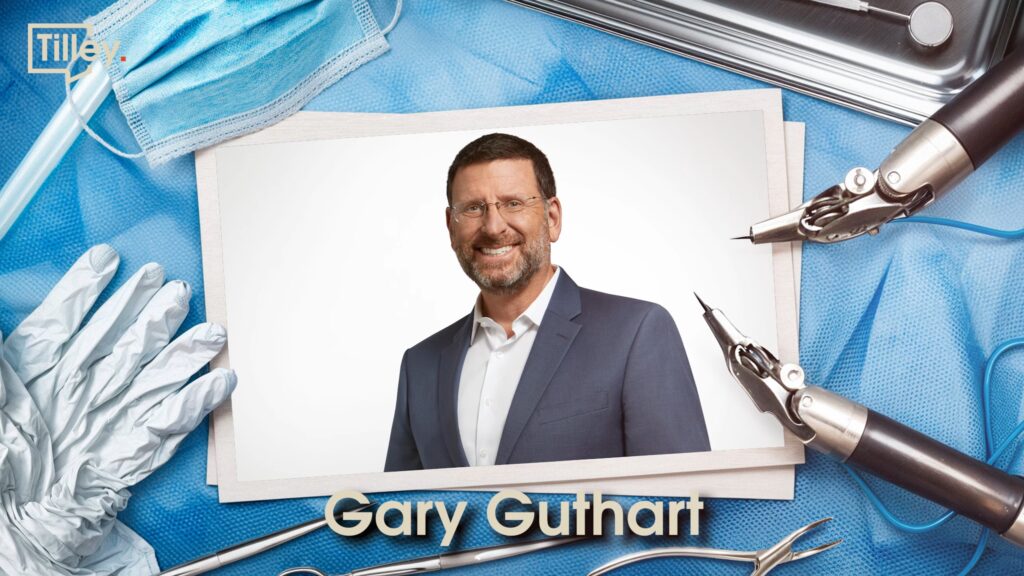
The solution seemed crazy: telesurgery. What if a surgeon could operate on a soldier remotely? Sitting in a safe place several kilometers away, controlling a robot that performs the surgery at the battlefield? In the late 1980s, the Defense Advanced Research Projects Agency (DARPA) – the same organization that created the internet – funded research at Stanford Research Institute (SRI). A team of engineers, including a young researcher named Gary Guthart, started work on a telesurgical system prototype.
The idea was elegant: create a master-slave robotic system. The surgeon sits at a console, which is a master, and manipulates control handles. His movements are transmitted to robotic arms, or in professional terms slave, that precisely replicate them on the patient. But not just replicate. The system could scale movements – a surgeon’s five-centimeter hand movement became a one-centimeter instrument movement. The system filtered tremors. The system gave the surgeon a three-dimensional image with 10x magnification. It was like giving a surgeon super abilities.
The military project was never fully realized. But the technology persisted. And one man saw its potential for civilian medicine. His name was Frederick Moll. He was a surgeon and entrepreneur, already successful in the field of minimally invasive technologies. And when he saw the SRI prototype, he had an idea: what if this technology was used not for telesurgery, but to make laparoscopy easier? What if surgeons got tools that move like human hands, but without all the limitations?
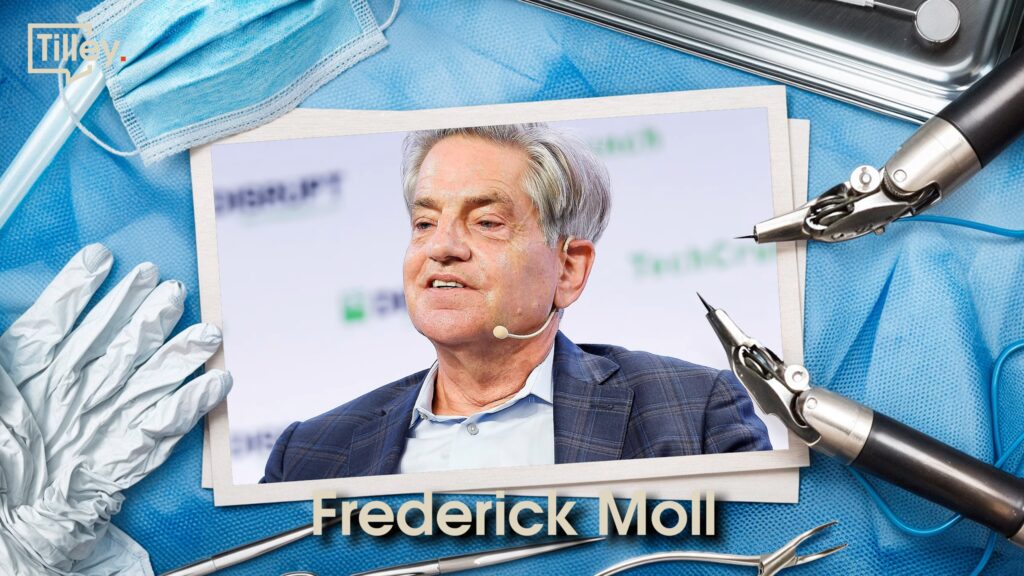
In 1995, Mr. Moll, together with John Freund (a physician and venture capitalist) and Robert Younge (an engineer), founded a company. They called it Intuitive Surgical Devices, Inc. They licensed the technology from SRI. Raised initial venture capital from Mayfield Fund, Sierra Ventures, and Morgan Stanley. And started working on a commercial product. The first prototype was called “Lenny” – short for Leonardo da Vinci, the Renaissance genius who drew mechanical devices and studied human anatomy. The name stuck. Next prototypes were called “Leonardo,” and “Mona.” And when the final version was ready, they named it the da Vinci Surgical System.
Guthart started writing software code that allowed the robot’s elements to connect smoothly. But he hit a wall: “I just couldn’t work fast enough. There weren’t enough hours in the day. I’d come in early, work all day, drive home to have dinner with my wife and drive back to the office.” Guthart asked to hire help. The founders agreed but added: “We have no revenue, so hire someone good.” He found Gunter Niemeyer from MIT. “He could do in a few hours what took me a full day. It was a humbling choice. It taught me that being a manager starts with hiring really great people and letting them push you out of the way.”
By 1997, Intuitive had a working prototype ready for testing. But the company faced a problem: the FDA, which stands for Federal Drug Administration in the U.S. hadn’t yet approved the system. So they turned to a different market – Europe. The first commercial sale of the da Vinci system happened at Leipzig Heart Center in Germany in late 1998. With it, surgeons were able to perform heart valve surgery and coronary artery bypass that were significantly less invasive than standard sternotomy – cutting open the chest.
In 2000, Intuitive Surgical went public with an IPO, raising $46 million. That same year, the FDA approved the da Vinci system for general laparoscopic surgery. The company was in the market. And it seemed like a success, but…
Part 2. War, Survival, and Breakthrough
Shortly before going public, Intuitive Surgical was sued for patent infringement by Computer Motion, Inc., its main rival. Computer Motion had actually gotten into robotic surgery earlier than Intuitive Surgical, with its own system – the ZEUS Robotic Surgical System. ZEUS was approved in Europe and was already working there, but when it came to the U.S., the FDA somehow chose da Vinci and approved it first, leaving ZEUS out of the American market.
The ongoing litigation created a cloud of uncertainty that weighed heavily on both companies’ growth. Hospitals were reluctant to invest millions in technology that could be banned overnight. Investors grew nervous. Intuitive’s stock price swung wildly. The company slipped into crisis. Its shares fell to $14 per share – a number worth remembering, because it will matter shortly.
In 2003, after years of bruising legal battles that drained time, money, and momentum, both companies reached an unavoidable conclusion: the war had to end. Intuitive Surgical acquired Computer Motion, folding its rival into the company and finally putting an end to the litigation. The ZEUS system was eventually phased out in favor of the da Vinci system. And suddenly Intuitive had a monopoly on robotic surgery. After the merger, the stock price rose significantly. By 2015 it was around $500. Remember, just a decade earlier it was 15$. They also grew in systems sold: 60 in 2002 compared to 431 in 2014. And the number of surgical procedures: less than 1,000 in 2002 compared to 540,000 in 2014. But these numbers do not demonstrate the effort the company has invested in transforming the industry.. Behind the explosive growth was a fundamental human problem that no merger could solve. To see it, we have to go back in time when da Vinci wasn’t a gold standard, but a perceived threat.
Surgeons are people with big egos. They spent decades perfecting their skill. And now some company is telling them: “Hey, use our robot and you’ll be better.” Many surgeons felt threatened. It’s very human. What would you think in their situation: “Will a robot replace me?”
A young surgeon once said at a conference: “I just spent seven years of my life learning to do surgery laparoscopically with these sticks, and now” – he points at a security guard – “he can do it.” Intuitive had to explain over and over: the robot doesn’t replace the surgeon. It extends the surgeon’s capabilities.
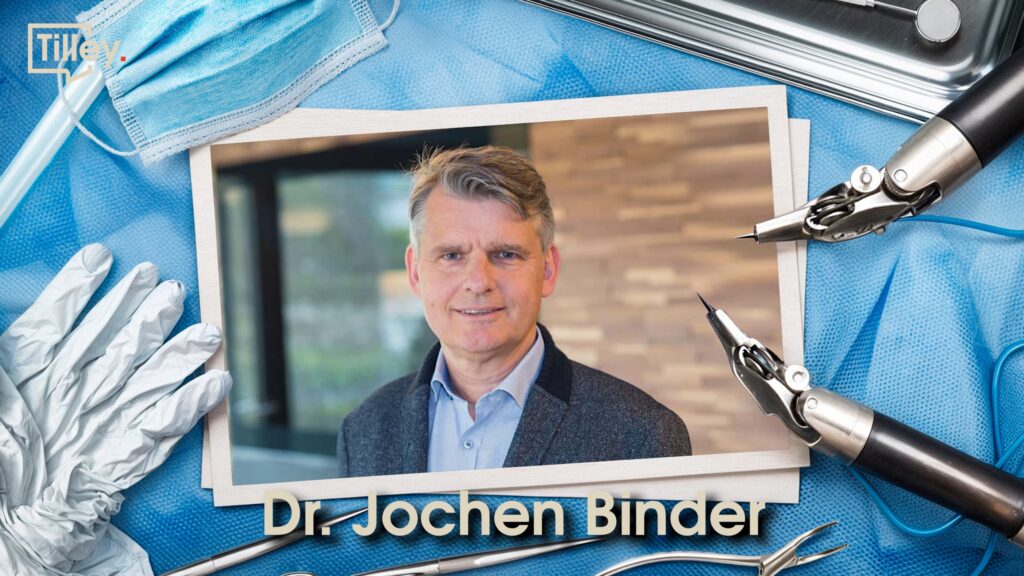
Now, remember I’ve mentioned that this is a deeply personal article to me. Well here’s why. Eventually a breakthrough for the robot came from urology. A Swiss urologist working in Frankfurt, Jochen Binder, saw that da Vinci could help with prostate surgery. He showed it to a colleague, to Mani Menon, a surgeon at Henry Ford Health System in Detroit who later became an enthusiastic user.
In 2001, the FDA approved the system for prostate surgery. And sales exploded. All because prostate removal surgery is incredibly complex. The prostate is surrounded by critical nerves that control sexual function and the bladder. Damage these nerves, and the patient faces impotence and urinary incontinence for life. With traditional open surgery, the rate of these complications was high. With la paroscopy it was even worse – the instruments were too clumsy for such precise work. But with da Vinci? Surgeons could see nerves at 10x magnification in 3D. Could manipulate instruments with precision that was impossible by hand. Results were dramatically better.
By the 2010s, more than 90% of prostate removals in the U.S. were performed with da Vinci. In the UK – over 85%. The robot became the standard of care. And this was just the beginning. Intuitive started expanding into other specialties: gynecology, general surgery, thoracic (or chest) surgery, cardiology.
However, dominating the operating room was only half the battle. Intuitive still had to face a massive financial wall: the “da Vinci” cost. Even though doctors loved the technology, hospital boards were terrified of the price tag.
In the early 2000s, the system cost $1.5 million. Today, depending on the model, prices range from $500,000 to $2.5 million. That’s huge money for a hospital. Plus, annual maintenance costs of $100,000 to $200,000. And then Add, disposable instruments for each surgery on top of that that range from $700 to $3,500. Guthart 5 had to convince hospitals that this investment was worth it. And he did it using facts.
Hospitals were fixated on the cost of capital equipment. But there are all kinds of costs beyond the equipment: the surgeon, the anesthesiologist and scrub nurse, the overhead of running the hospital. What really matters is the total cost of treating the patient. And the data showed: patients operated on with da Vinci recovered faster. Fewer days in the hospital. Fewer complications. Fewer readmissions. In the long run, da Vinci made money for the hospital.
Community hospitals signed on first. Smaller facilities were looking for efficiencies. Robotic surgery also provided a marketing tool – hospitals could advertise: “We have the da Vinci robot!” And patients wanted it. They read about robotic surgery. Saw the news. And they asked their doctors: “Can I get robotic surgery?” Patient demand drove adoption.
But Intuitive’s success wasn’t without problems. The company faced hundreds of lawsuits alleging device failures, inadequate training warnings, and more than 70 deaths linked to da Vinci since 2009. In 2014, Intuitive settled around 3,000 claims totalling $67 million. Critics pointed to high costs – an additional $2,200 per procedure – with mixed evidence of superiority over laparoscopy. Plus a steep learning curve raising error risks early on.
That triggered a research. A 2024 meta-analysis – a study that combines data from 230 existing reports – analyzed over a million cancer surgeries. It found that da Vinci procedures resulted in lower complication rates, fewer readmissions, and lower mortality than laparoscopic or open surgery. Patients also had shorter hospital stays, even though the operating times were longer. So Yes, da Vinci isn’t perfect. Yes, there are risks. But the data shows: on average, it’s safer and better than the alternatives.
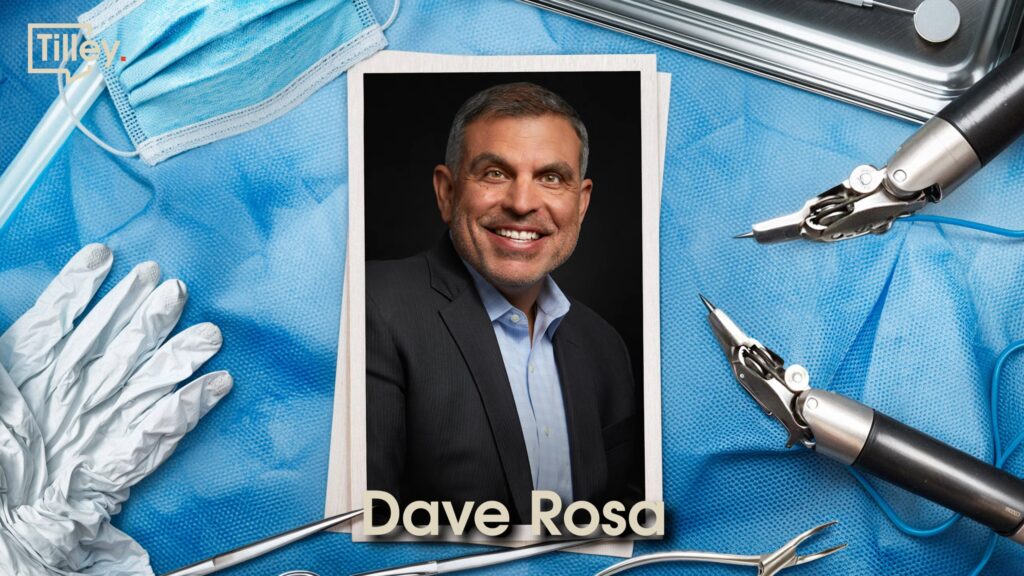
Today, Intuitive Surgical is the undisputed king of the operating room. By 2026, they’ve surpassed 11,000 systems installed globally, with over 15 million lives touched by their technology. Under the leadership of Dave Rosa – a veteran who has been with the company since its early days – they’ve released the da Vinci 5. It finally solves the last great hurdle of robotics: force feedback. For the first time, a surgeon sitting at a console doesn’t just see the tissue – they feel it. The robot has become a true extension of the human nervous system.
But the real revolution is not in hardware; it’s in software. Intuitive is now pouring billions into Artificial Intelligence. Their “Case Insights” platform analyzes every millimeter of a surgeon’s movement, comparing it against millions of previous hours of data to offer real-time coaching.
We are witnessing a fundamental shift in human history. The biggest challenges in the physical world have already been solved. We’ve exhausted the “easy wins” in fields like physics and math; the next great leap for our species is happening right here, at the intersection of medicine and information technology.
But what’s most incredible about this story is that it wasn’t written by a government agency or a massive global foundation. It was written by a private company. It was driven by the same force that drives most of the world: someone identified a problem that people were desperate to solve, and they risked everything to build a product worth paying for. That profit motive didn’t just build a company – it built a future where “incurable” and “inoperable” are becoming words of the past.
As these machines begin to see, feel, and “think” better than the doctors who use them, where does the human end and the technology begin? We are entering an era where the surgeon’s greatest skill might not be their hands, but their ability to operate a machine. If a robot could perform your surgery with a 0% error rate, but no human was in the room, would you still get on the table? Share your comments down below. I read all of them. And if you enjoy articles that explore different brands and how they have shaped our world, take a look at our previous deep dives, such as GE Aerospace and McKinsey. I think you’ll find them just as interesting as this one.