

How we helped turn a 1–3%-margin business profitable with a self-service portal
Aleksey, the founder of the Meccanica Middle East, found me through my YouTube channel. A company based in Dubai. Their business is...
Read case study →Choosing your first CRM, living with a system that never fit, or carrying a failed implementation behind you: the answer starts the same way. Nobody can name the right system for your company without seeing how it works. Not a comparison site, not a vendor, and not us.

So that is where we start. We map how your distribution or wholesale business actually works, find the gaps, and hand you a written report: which system, what it will cost, and what to fix first. Yours to keep, whether you work with us or not.
7 days · Written report · Free. It begins with one short call to check the fit. No pitch, no obligation.
You see the symptoms every day. We know where they come from.
A regular customer calls for a quote and the rep promises to send it. Three days later the customer has bought the same product somewhere else, at a higher price, because it shipped the next day. Customers who want to place orders in the evening or on the weekend, while the sales team works nine to six. A website with no stock levels and no arrival dates, so buyers cannot tell whether to order or to wait. And reps making check-in calls every few months, while not one of those calls produces an order.
These four repeat in almost every distribution and wholesale company we meet. What nobody can see from the outside is how they play out in your company, which ones cost you money, and what to fix first. That is exactly what the audit finds.
Every pattern above comes from the same root, and it is the reason 77% of CRM projects fail. The software was never the problem. The tool got picked before anyone understood how the company actually works.
So we sit with you for a few hours and figure out exactly that. How you find customers. How you sell to them. How orders get taken, consolidated into purchase orders, and shipped. How you keep customers reordering month after month. Which of those approaches are working, and which quietly cost you orders. And what was tried before: if a CRM already failed here once, we want to know why, because most of the time the tool took the blame for a broken approach. We draw it all out as a Customer Journey Map.
That structured conversation is the CRM Audit, and it is the first step of working with us. Only once that picture exists does any decision make sense: which CRM to implement, whether to rescue the one you have, whether the real gap sits in your warehouse software or your online store, or whether you need a CRM at all. It is free, and everything we produce is yours to keep whether you go any further or not.
A full written report built around your company, not a generic summary.
A visual Customer Journey Map showing every stage a customer moves through, from first contact to the reorder, or the quiet leave nobody notices. Most owners have never seen their business drawn out like this.
One clear recommendation, with a plain explanation of why that system fits your process, your team size, and your budget. If more than one could work, we explain the difference.
Sometimes a process needs fixing before software can help. We tell you exactly what those things are and in what order to tackle them.
Usable with us or any other vendor you like. It is yours. No invoice attached, no pressure to proceed.
If the audit shows we are not the best people to help you, we say so directly and point you to someone in our network who is. We would rather lose the project than do it badly.
The first step of working together is the audit, and it is free. Here is how you get to it.
A couple of questions on size, what you distribute, and where the process hurts most. Decides fit before anyone's time goes in.
A conversation about what you sell, how orders move through your company, and what has been tried before. By the end, we both know whether the audit is worth your time. If it is not, we say so on the call.
A working session, usually remote, where we map your business process together. Within 5 to 7 business days, you receive your full written report. That is it.
Aleksey, the founder of the Meccanica Middle East, found me through my YouTube channel. A company based in Dubai. Their business is...
Read case study →
A while back, Andris Zigurs reached out through the form on my website. He is the Business Development Executive at Vervo. Vervo...
Read case study →
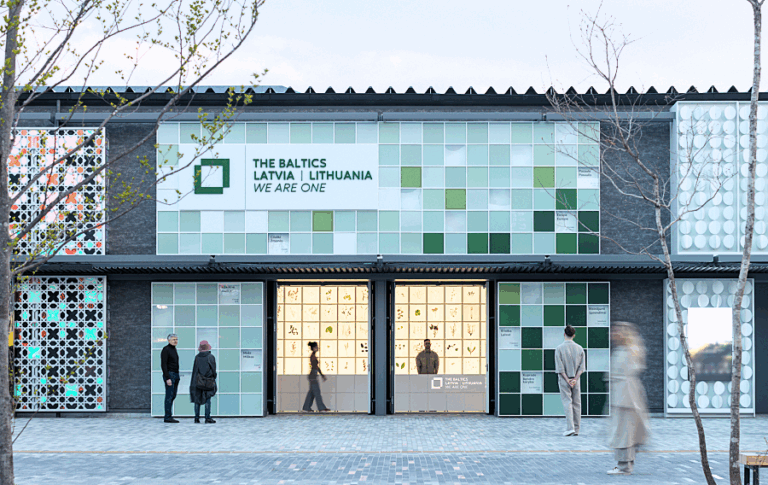
In early 2025, the Investment and Development Agency of Latvia (LIAA) reached out to us. They were heading to Japan. LIAA had...
Read case study →

We had been sitting in a Proks conference room in Riga for about an hour when one of their senior leaders said,...
Read case study →

We met Mida in Gargždai, Lithuania, at a roofing plant where you could hear the extrusion line from the car park. The...
Read case study →

A few years ago, a call came in from Centrs Dardedze. A nonprofit in Riga, Latvia. Around 25 people. They work with...
Read case study →

A few years ago, I got a call from Credo Autoprieks. It’s a driving school in the Baltics, headquartered in Riga. They...
Read case study →

A few years ago, a call came in from Rio Verti. It’s a family-owned Italian outerwear brand, founded in 1989 in Florence....
Read case study →

I remember the first long conversation with the Fintera team in Warsaw. They wanted to rebuild their customer portal on Salesforce. Fintera...
Read case study →There is no catch. A few of the companies that go through the audit decide to have us implement it. That is where we make our money.
We have found this works better than any sales call. Instead of telling you we are good at this, we show you. You walk away with a real deliverable that took real expertise to produce, and you keep it whether you go further or not. No invoice, no chasing, no pressure.
The only thing we ask: show up ready to talk openly about how your company actually works.
Never touched a CRM? Good. Figuring that out is our job, not yours.
Dear visitor,
Many distribution and wholesale companies contact me after a CRM implementation that did not work out. The software handled new sales well enough, but the business runs on repeat orders, and the software did nothing to make reordering easier. In the end the team went back to spreadsheets and phone calls.
I know what it costs when nobody can see what is really happening in a business. Before Muncly, I watched our family business go under for exactly that reason. That experience shaped how I work: I treat a CRM as a decision about revenue and customer retention first, and as software second.
I work directly with owners, without account managers in between. I also do not resell any platform. When I recommend a system, the recommendation is based on your size and your sales process, and my fee is the same in every case.
The first step is a free audit. I study how your company sells, then send you a clear written report: what to fix, and which system fits. It costs nothing, and the report is yours whether we continue working together or not.
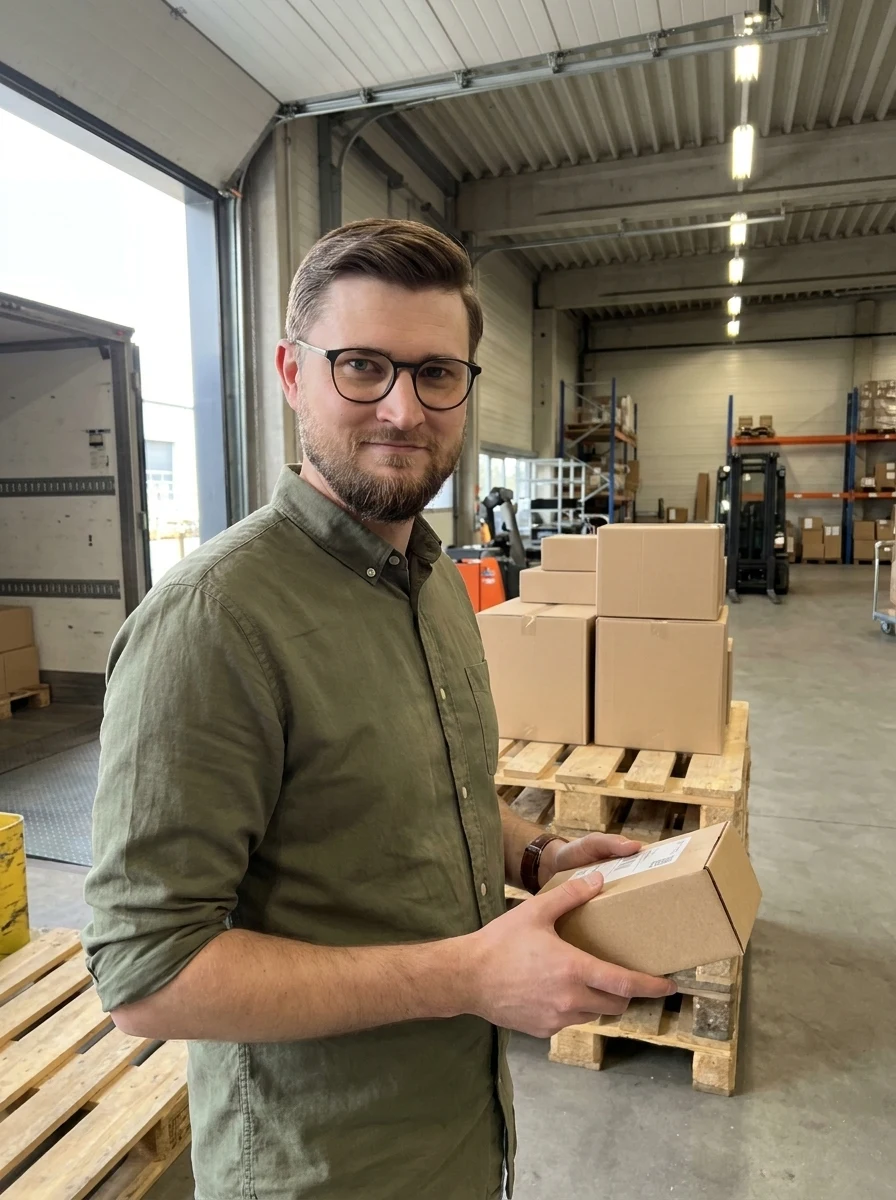
This is not my actual photo, I played with AI to put me at a warehouse loading dock. But isn't it cool how far this AI technology has come?
We worked with Jeff to organize our sales process for a small sales and service team. He set up pipeline tracking, reports, and dashboards that give me a clear view of tasks, key accounts, and opportunities. The biggest change is visibility. I know what the team is working on remotely, and I have more control and predictability in managing opportunities and forecasting. I recommend working with Jeff and will turn to him again for the next step.

This is the second time I have worked with Jeff, now I know him for already 6 years. 6 years ago we built a very successful project for a local driving school, now we have created another sales system based on rules and tools. I should say that Jeff is an exceptional professional, a bit opinionated which creates a lot of debates, and sometimes we even argue, but all arguments are purely professional which I love and I definitely could recommend him as a great CRM professional.

Jeff helped us implement Salesforce to collect and manage leads coming from the stands in Japan. He built a simple process for tracking leads and worked closely with developers of other stand components to ensure the whole project was integrated and ran smoothly. We have worked with Jeff for a long time, and this is already our second project together. He is my go-to person for CRM implementations, and I would definitely recommend Jeff and his team.

Concrete working deliverables on time of what we needed. Extremely knowledgeable about the Salesforce platform. Incredibly smart team that understood our business and objectives right away. Highly recommended!

Thank you to Jeff, Vishal, and their team for the support. They prepared the assets in record time, quickly adapted to our feedback, and handled every question with care. We definitely recommend working with them and look forward to the next set of assets together.

There is no catch. You pay nothing and owe nothing. Some of the companies that go through the audit later hire us for the implementation, and that is how we earn. If you decide to stop after the audit, you keep the full report.
A 30 to 45 minute conversation about your company: what you distribute, how your sales process works today, and what you want to improve. By the end, both sides know whether the audit makes sense. If it does not, we say so on the call.
In distribution, that is the right question. Winning new customers needs very simple tooling; a well-run pipeline board covers the journey from first contact to first order. Keeping customers reordering is the hard part, and it depends less on a CRM than on stock the customer can see, ordering that works around the clock, and terms that make you easy to buy from. A CRM starts to make a real difference when a small team looks after many customers and every account needs attention. The audit tells you which of these to invest in first.
Often a fix costs less than a rebuild. The audit answers this directly: what can stay, what needs to change, and what the fix would take, before you commit to either path.
For CRM, Pipedrive, Bigin, Salesforce, and Attio cover most companies at most sizes, which is why they come up most often. In distribution the recommendation is often wider than a CRM: it can name the warehouse system or the online store when that is where the gap sits. If your situation calls for something else, we say so, even when it means recommending a platform we do not get paid to implement.
Not necessarily. The warehouse system or ERP stays the system of record for stock, orders, and invoices; a CRM should never try to replace it. The question is whether your team needs one place to manage each account: every order, every ticket, every call, and every contact on one screen. That pays off when a small team serves many customers. For smaller companies, dashboards on top of the data you already have often cover it. The audit tells you which side of that line your company is on.
Your first step is a free audit. It begins with one short call to see if we're a good fit. If we are, we map how your company works together and you get the full written report within 5 to 7 business days. No cost, no obligation.
Start with a free audit →No CRM to sell you. Just the system that fits how your company sells.
We use cookies to run muncly.com and, with your permission, to understand how it’s used. Choose what you’re comfortable with — details in our Privacy & Cookie Policy.
Choose which cookies we may use. You can change your mind at any time via the cookie settings link in the footer.
muncly.com session, security & consent storage
Essential for security, caching, and remembering your consent choice. The site cannot function without these, so they can’t be switched off.
Google Analytics 4 · Microsoft Clarity
Usage statistics and session insights that help us improve content and navigation.
Google Ads · Meta · LinkedIn · TikTok · X
Campaign measurement and relevant advertising across partner platforms. Off unless you switch them on.